
U.S. Explores New Methods for Lunar Ice Detection Using Synchrotron X-ray Microtomography and Seismic Models
 Scan to share
On July 31, researchers at Lawrence Berkeley National Laboratory, in collaboration with scientists from the University of Maryland and the University of Hawaii, proposed a new method for locating subsurface ice deposits on the Moon using seismic waves. The findings, published in the journal Science Advances, are expected to provide a reference for interpreting detection data and locating water resources in future lunar landing missions.
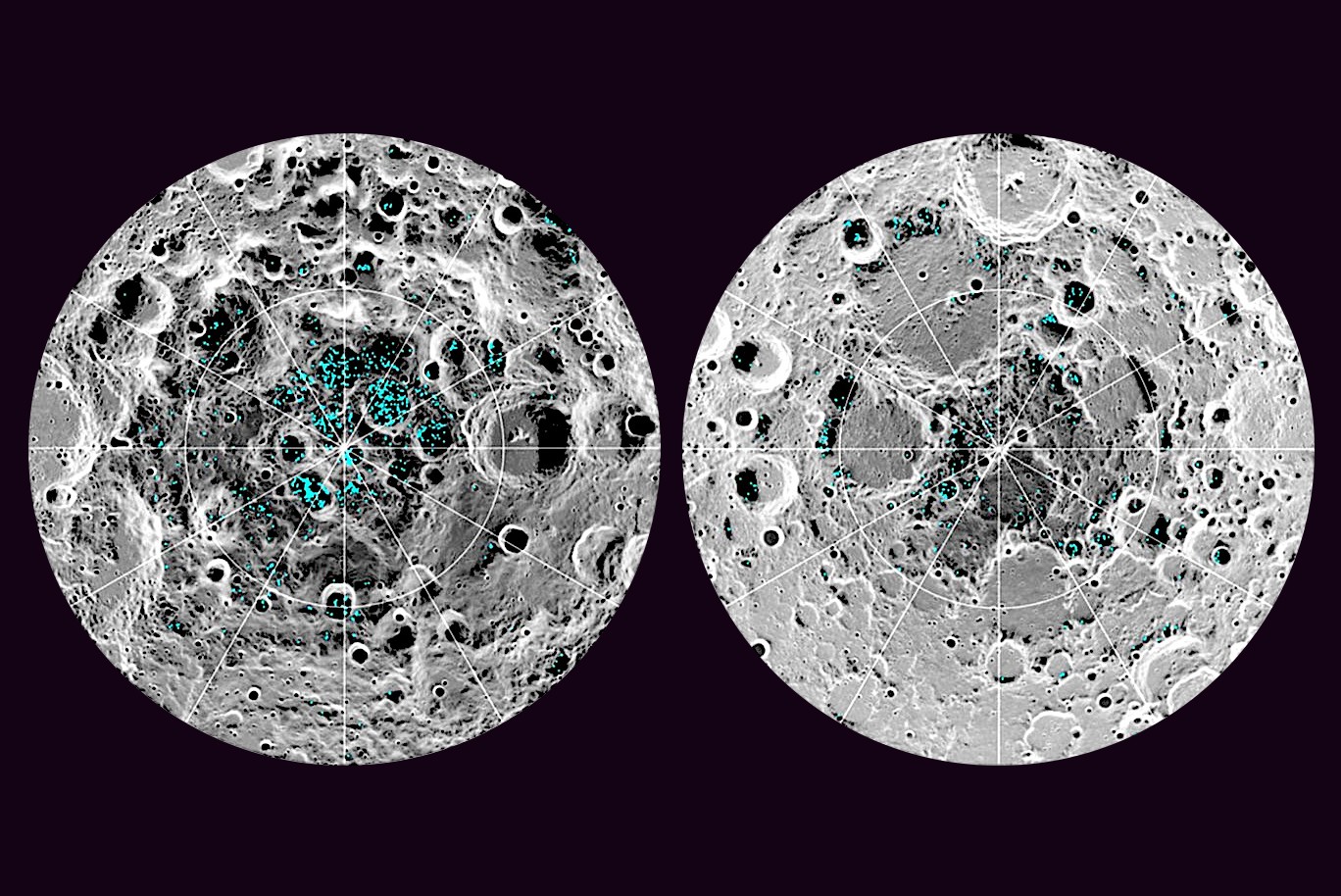
The research centers on how subsurface lunar materials respond to seismic waves. The team established computational models to predict the performance of lunar subsurface media of varying compositions under seismic wave excitation. Experimental results revealed differences in seismic response between ice-bearing rocks and dry rocks, demonstrating that seismological methods hold potential for identifying ice layers buried beneath lunar regolith and rock.
To obtain data closer to lunar conditions, the researchers constructed a cryogenic vacuum chamber named the "Frost Regolith Observation and Sublimation Testing platform" (FROST) and connected it to the X-ray microtomography beamline at the Advanced Light Source. This apparatus enables observation of microscopic changes in rock samples under low-temperature, high-vacuum conditions, helping researchers analyze the bending, deformation, and seismic characteristics of simulated lunar regolith under varying ice-bearing states.
The team also incorporated satellite observation data to simulate potential locations of large lunar ice deposits and the mechanisms by which they remain stable over geological timescales. Building on this, the researchers integrated microscale rock physics experiments, ice distribution models, and seismic simulations to develop a comprehensive method for predicting the effects of subsurface lunar ice layers on seismic waves. Currently, the model can describe relevant motion within approximately 800 meters below the lunar surface.
The researchers noted that the model still requires validation through future field experiments on the Moon. According to available information, the Volatiles Investigating Polar Exploration Rover (VIPER), planned for lunar south pole exploration, will carry a variety of instruments, including an impact drill capable of generating seismic waves and sensors that measure short-frequency wave propagation. In addition to instruments for detecting ice within the top meter of lunar regolith, seismic wave methods may help scientists further observe ice deposits in deeper regolith layers.
The researchers believe that as crewed and uncrewed lunar exploration missions expand, water resource localization will become a critical prerequisite for long-term surface activities on the Moon. This work provides testable hypotheses for designing lunar seismic experiments and offers a new technical pathway for future efforts to locate lunar ice using instruments carried by rovers or astronauts.
Disclaimer: Information republished from partner media, institutions or other websites is provided for reference and communication purposes only. It does not imply endorsement of its views or verification of its accuracy. Please contact us if any content infringes rights or requires correction.