
The Institute of High Energy Physics of the Chinese Academy of Sciences Successfully Held the Fourth "1+1" Youth Forum on Nuclear and Particle Physics — Frontier Technologies Empowering Nuclear Medicine Diagnosis and Treatment
 Scan to share
On July 25, 2026, the fourth "1+1" Youth Forum on Nuclear and Particle Physics (hereinafter referred to as the "1+1 Forum") was successfully held at the Institute of High Energy Physics of the Chinese Academy of Sciences (hereinafter referred to as IHEP). Themed "Frontier Technologies Empowering Nuclear Medicine Diagnosis and Treatment," the forum was organized by the Youth Working Committee of the Beijing Nuclear Society and the IHEP Group of the Youth Innovation Promotion Association of the Chinese Academy of Sciences, co-organized by the Institute of High Energy Physics of the Chinese Academy of Sciences and the School of Nuclear Science and Technology of the University of Chinese Academy of Sciences, and hosted by the R&D Center for Nuclear Technology (Nuclear Detection and Nuclear Imaging) of the China Atomic Energy Authority and the Beijing Engineering Research Center for Radiation Imaging Technology and Equipment. The 1+1 Forum has always upheld the core philosophy of "organically combining demand with technology, academia with science popularization, and talent with projects." The event brought together more than 20 young talents from industry, academia, research, and medical fields, building a bridge for interdisciplinary exchange and promoting the deep integration and innovation of nuclear technology with clinical medicine. To broaden the reach of academic and science popularization, the forum simultaneously opened a Tencent online meeting and was live-streamed through IHEP's official media and the High Energy Forum, as well as public accounts including Modern Physics Knowledge magazine, Jinan CNNC Nuclear Technology Research Institute, and the Beijing Nuclear Society, in conjunction with multiple platforms such as Beijing Daily, Science and Technology Daily, Zhihu, and Bilibili. The live broadcast attracted over 430,000 online viewers, enabling practitioners and enthusiasts in nuclear science and technology, clinical medicine, and related fields nationwide to participate and exchange ideas simultaneously, further enhancing the forum's influence and industry impact.
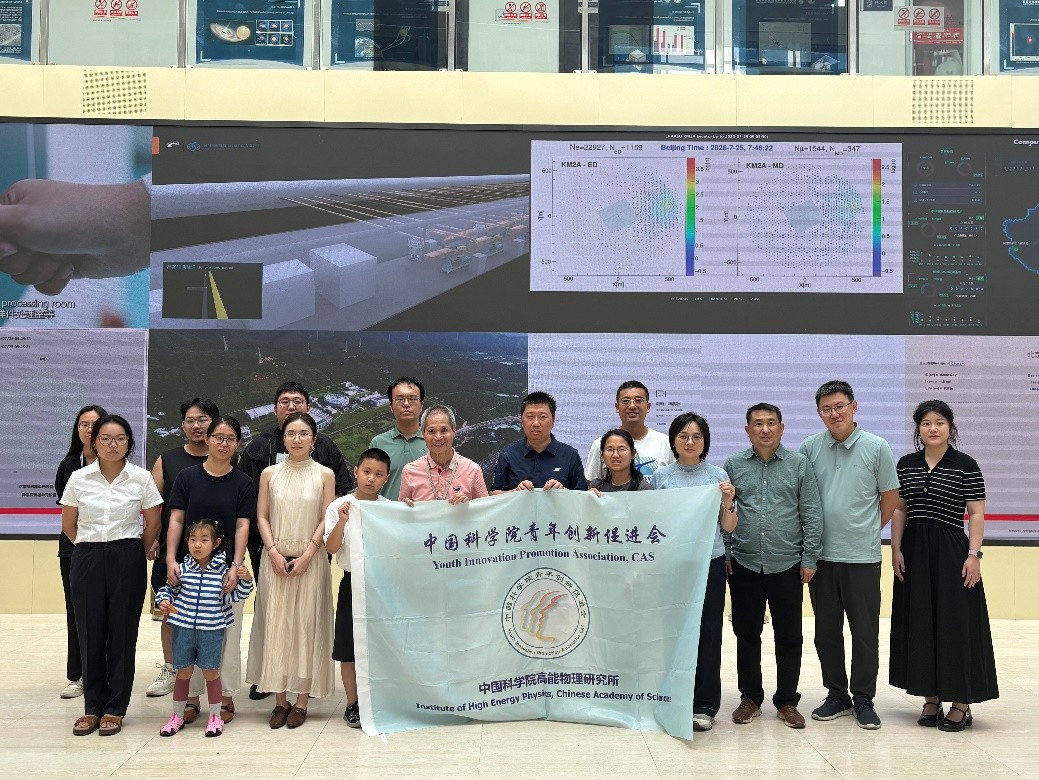
The Fourth "1+1" Youth Forum on Nuclear and Particle Physics Successfully Held at IHEP
Opening Ceremony: Uniting Youth Consensus, Anchoring the Mission of Nuclear Medicine Development
At 9:00 a.m., the opening ceremony was hosted by Dr. Liu Yantao, a young researcher at IHEP. On behalf of the forum organizing committee, he extended a warm welcome to all leaders, experts, and young scholars attending both online and offline, and expressed heartfelt gratitude to all staff who worked diligently for the forum's preparation. According to the introduction, since its inception in 2022 by the IHEP Group of the Youth Innovation Promotion Association of the Chinese Academy of Sciences, the 1+1 Forum has received care and support from leaders across various sectors. It has successfully held three sessions focusing on nuclear detection technology, X-ray technology, and neutron technology, and has been included in the youth forum series of the Nuclear Electronics and Nuclear Detection Technology Branch of the Chinese Nuclear Society and the Beijing Nuclear Society, gaining broad influence among young scientific and technological workers in the nuclear field. This session focused on the frontier directions of nuclear medicine diagnosis and treatment. In addition to IHEP, it attracted young scholars from more than ten institutions, including Peking University First Hospital, Peking University Cancer Hospital, Dongzhimen Hospital of Beijing University of Chinese Medicine, Xuanwu Hospital of Capital Medical University, Tsinghua University, Beihang University, and the China Institute of Atomic Energy, vividly embodying the forum's spirit of "breaking disciplinary barriers and promoting cross-disciplinary integration." The forum also specially invited several senior experts to serve as guiding guests. Among them, Professor Jiang Xingdong, Executive Vice President of the Beijing Nuclear Society, and Professor Wei Long, President of the Nuclear Electronics and Nuclear Detection Technology Branch of the Chinese Nuclear Society, attended the opening ceremony via Tencent Meeting and delivered speeches on behalf of their societies, while Professor Zhang Chuang, former Vice President of the Chinese Physical Society and Editor-in-Chief of Modern Physics Knowledge magazine, attended the full session in person and delivered concluding remarks.
At the opening ceremony, Professor Jiang Xingdong delivered a speech on behalf of the Beijing Nuclear Society, extending warm congratulations on the successful convening of the forum and heartfelt thanks to IHEP for its meticulous hosting. He noted that nuclear medicine is currently undergoing unprecedented transformation: on the diagnostic front, molecular imaging technologies represented by PET/CT and PET/MR are rapidly advancing toward ultra-high sensitivity, whole-body dynamic imaging, and AI-assisted intelligence; on the therapeutic front, targeted radionuclide therapy represented by nuclides such as 177Lu and 225Ac is reshaping the landscape of tumor treatment; on the industrial front, China's long-standing dependence on imported medical isotopes is gradually being broken, especially with IHEP's first-ever curie-level mass production of medical-grade alpha isotopes in March this year, marking a significant breakthrough in the history of China's nuclear medicine development. He emphasized that the Beijing Nuclear Society has always prioritized the cultivation of young talent as a key focus of its work. This forum is a concrete practice of the society in serving, uniting, and empowering young people. He expressed the hope that young scientific and technological workers would seize this opportunity, stand at the forefront, scale new heights, integrate personal aspirations into the national development agenda, align research pursuits with people's health needs, and write a youthful chapter in the full-chain innovation from isotope production to nuclear medicine diagnosis and treatment.
Subsequently, Professor Wei Long delivered a speech on behalf of the Nuclear Electronics and Nuclear Detection Technology Branch of the Chinese Nuclear Society, extending warm congratulations on the successful convening of the forum and expressing heartfelt gratitude on behalf of the IHEP organizers and the R&D Center for Nuclear Technology (Nuclear Detection and Nuclear Imaging) of the China Atomic Energy Authority as the host. He stated that since being officially included in the branch's youth forum series in 2023, the 1+1 Forum has evolved from an institute-level academic activity into a signature event at the branch level, becoming an important showcase platform for the branch to discover young talent and promote academic exchange. The development of nuclear medicine is essentially the development of detection technology—from early photomultiplier tube-coupled scintillation detectors to today's silicon photomultipliers and semiconductor detectors, from single-photon imaging to whole-body dynamic PET, and from qualitative diagnosis to AI-assisted quantitative precision analysis—every leap forward is inseparable from breakthroughs in nuclear electronics and nuclear detection technology. Currently, the localization of nuclear medicine equipment in China is accelerating, but bottlenecks in core detectors, high-speed readout electronics, and data acquisition systems still exist. This is both an industry challenge and an unshirkable mission for the younger generation. He noted that this forum's agenda covers the complete chain from "source" to "diagnosis and treatment," bringing together young representatives from research institutes, clinical frontline, universities, and industry. This deep integration model of "industry-academia-research-medicine" is the essential path to solving complex scientific problems and promoting technology translation. He encouraged young scholars to cherish the exchange opportunities, boldly propose new theories, explore new pathways, and let the "1+1" collision between nuclear physics and clinical medicine, detection technology and artificial intelligence, give rise to more original breakthroughs.
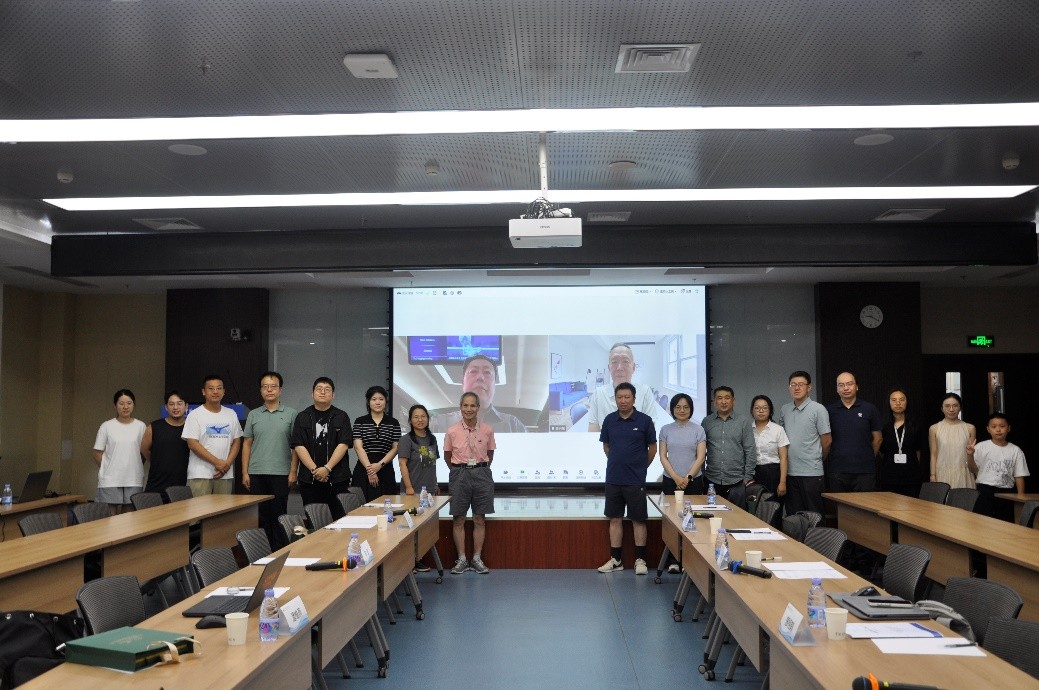
Leadership Addresses and Group Photo at the Fourth "1+1" Youth Forum on Nuclear and Particle Physics
Academic Report Session: Full-Chain Coverage, Multidimensional Cross-Disciplinary Discussion
The forum invited 11 young experts to deliver in-depth presentations on core directions including clinical applications of nuclear medicine, autonomous isotope supply, advanced therapeutic technologies, and artificial intelligence intersections.
The morning academic reports focused on two main themes: clinical demand and upstream supply. On the clinical demand front, Dr. Liao Xuhe, Associate Chief Physician at Peking University First Hospital, delivered a presentation titled "Current Status and Prospects of Integrated Nuclear Medicine Diagnosis and Treatment in the Context of Precision Medicine," systematically reviewing clinical progress and development trends in theranostics; Dr. Liu Futao from Peking University Cancer Hospital shared research findings on medical isotope-based radiopharmaceutical applications, showcasing progress in the development and clinical translation of tumor and neurological radiodiagnostic and radiotherapeutic probes; Dr. Zhang Jin, Associate Chief Physician at Dongzhimen Hospital of Beijing University of Chinese Medicine, drew on over a decade of integrated traditional Chinese and Western medicine clinical practice to interpret the current status, clinical applications, and future development of nuclear medicine instrumentation. On the upstream supply front, Associate Researcher Li Jian from Tsinghua University, in a presentation titled "High-Flux Reactors and the Path to Autonomous Medical Isotope Supply," elaborated on the core value of the high-flux research test reactor—a major scientific facility officially approved during the "14th Five-Year Plan" period—in the production of scarce nuclides, as well as possible pathways for the autonomous development of medical isotopes; Associate Researcher Wang Yizheng from IHEP introduced the latest achievements of the R&D Center for Nuclear Technology (Nuclear Detection and Nuclear Imaging) of the China Atomic Energy Authority in producing theranostic isotope pairs using cyclotrons, responding to clinicians' demands for medical isotope drugs.
The afternoon academic reports continued to focus on frontier technologies and cross-disciplinary innovation. In the direction of advanced therapeutic technologies, Engineer Fan Yuxuan from the China Institute of Atomic Energy shared technical pathways and optimization directions for producing medical isotopes using linear accelerators; Dr. Chen Kui, a young researcher at IHEP, introduced the fundamental principles of boron neutron capture therapy (BNCT), research progress on boron drugs, and clinical application prospects; Dr. Cui Bixiao from Xuanwu Hospital of Capital Medical University shared clinical practice experience in the application of radiopharmaceuticals to the diagnosis and treatment of neurological diseases. In the direction of artificial intelligence intersections, Professor Zhao Wei from Beihang University explained the technical applications and industrial translation outcomes of AI technology throughout the entire process of tumor radiotherapy; Associate Researcher Sun Xiaoli from IHEP elaborated on the application methods and clinical value of AI technology in precision image reconstruction for nuclear medicine; Dr. Pan Weiyan from IHEP introduced her team's latest progress in the development of nuclear medicine imaging systems such as PET and SPECT, as well as frontier technology research.
Science Popularization Linkage Session: Modern Physics Knowledge Empowering the Dissemination of Academic Achievements
This forum received full and in-depth support from Modern Physics Knowledge magazine. Professor Zhang Chuang, former Vice President of the Chinese Physical Society, former Deputy Director of IHEP, and Editor-in-Chief of Modern Physics Knowledge, attended the session in person and provided professional commentary on all presentations. Modern Physics Knowledge is supervised by the Chinese Academy of Sciences and hosted by the Institute of High Energy Physics of the Chinese Academy of Sciences, serving as the official journal of the High Energy Physics Branch of the Chinese Physical Society. The magazine, formerly known as High Energy Physics founded in 1976, was officially renamed Modern Physics Knowledge in 1989. After fifty years of development, it has become a mid-to-advanced popular science journal covering multiple disciplines including high energy physics, nuclear physics, and medical physics, building a comprehensive all-media dissemination platform integrating print editions, new media matrices, and offline science popularization activities. In recent years, the magazine has planned special series on directions such as medical physics and boron neutron capture therapy, continuously promoting the science popularization of frontier achievements in nuclear technology. It was reported that outstanding report content from this forum will be further disseminated through the magazine's columns and all-media platforms, further expanding the reach of academic achievements and facilitating public understanding of nuclear medicine knowledge. During the forum, the organizing committee also arranged for participants to visit the IHEP Exhibition Hall and the Nuclear Imaging Laboratory, providing direct insight into the achievements of major scientific facilities and nuclear imaging technology development.
With this, the fourth "1+1" Youth Forum on Nuclear and Particle Physics came to a successful conclusion. This forum not only showcased the frontier progress and youthful innovative strength in China's nuclear medicine field but also built a solid bridge for collaborative innovation across industry, academia, research, and medicine. In the future, the forum will continue to uphold the philosophy of "three combinations," persistently focus on national needs and frontier directions, support the growth of young talent, and promote nuclear technology to better serve people's health and the national development agenda.
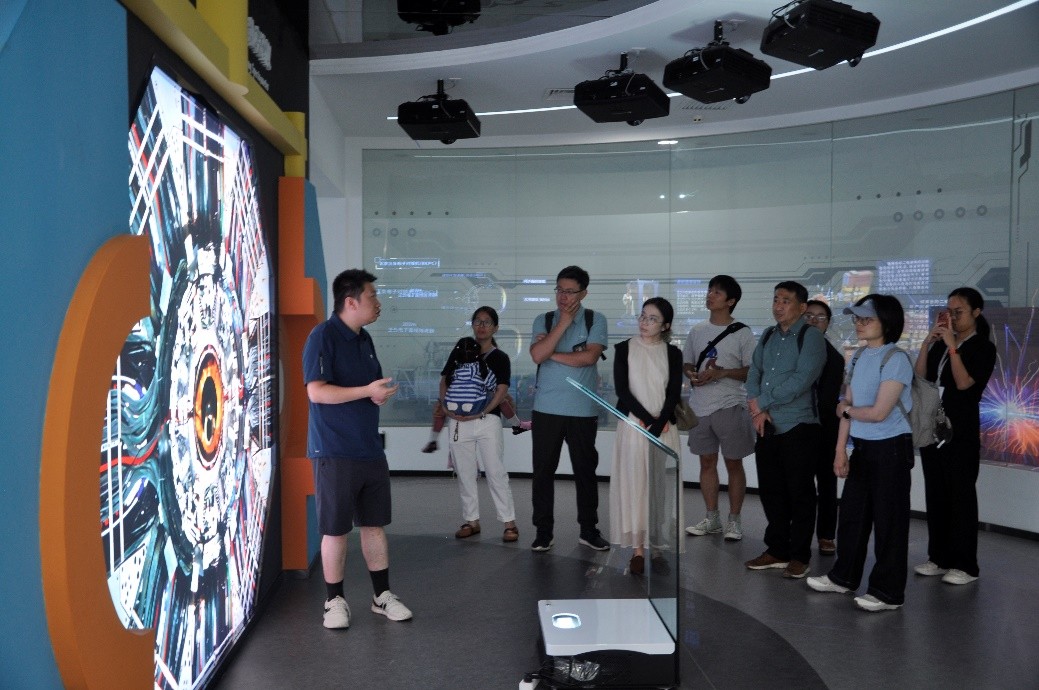
On-Site Exchange at the IHEP Exhibition Hall
Disclaimer: Information republished from partner media, institutions or other websites is provided for reference and communication purposes only. It does not imply endorsement of its views or verification of its accuracy. Please contact us if any content infringes rights or requires correction.