
Two Joint Laboratories for Radiation Injury Treatment under the Institute of Radiation Medicine, Chinese Academy of Medical Sciences, Inaugurated in Shanghai and Wuxi
 Scan to share
From July 30 to 31, Zhou Jiaxi, Director of the Institute of Radiation Medicine, Chinese Academy of Medical Sciences, Liu Qiang, Deputy Director, Su Xu, Distinguished Professor, along with relevant heads from the National Nuclear Radiation Medical Treatment Base (Tianjin), the Science and Technology Department, and the Industry Department, successively visited Shanghai Pulmonary Hospital and the Affiliated Hospital of Jiangnan University for cooperation exchanges, and jointly inaugurated the two joint laboratories for radiation injury treatment.
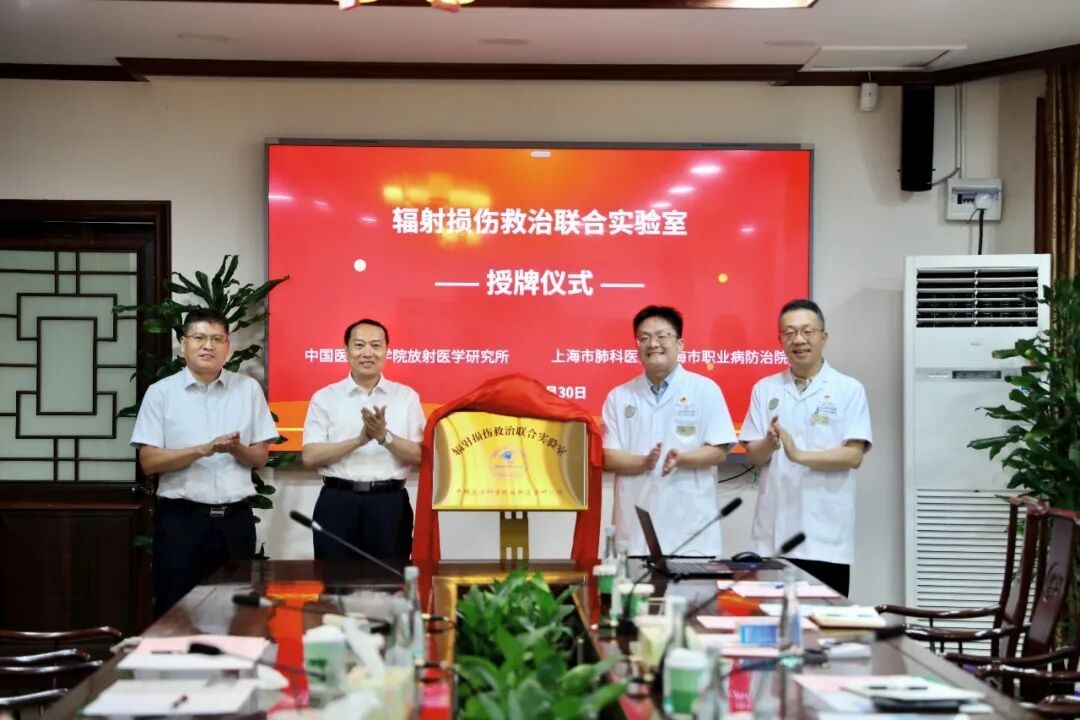
On the afternoon of July 30, the plaque presentation ceremony for the joint laboratory between the Institute of Radiation Medicine and Shanghai Pulmonary Hospital was held in Shanghai. Chen Chang, Deputy Secretary of the Party Committee and President of Shanghai Pulmonary Hospital, Liu Haipeng, Vice President, and heads of relevant departments attended the event. Zhou Jiaxi stated that the co-establishment of the joint laboratory serves as an important vehicle for the deep integration of medical and research resources. The two sides will leverage their respective strengths to carry out collaborative efforts in areas such as radiation injury and medical radiation protection, working to resolve key issues in related fields. At the ceremony, Liu Qiang and Liu Haipeng jointly unveiled the plaque for the joint laboratory.
Following the unveiling ceremony, both sides presented their respective disciplinary layouts, research platform development, pathways for achievement translation, and clinical specialty advantages, and exchanged views on topics including radiation injury cohort studies, nuclear radiation emergency treatment, collaborative research project tackling, and industrial translation of achievements.
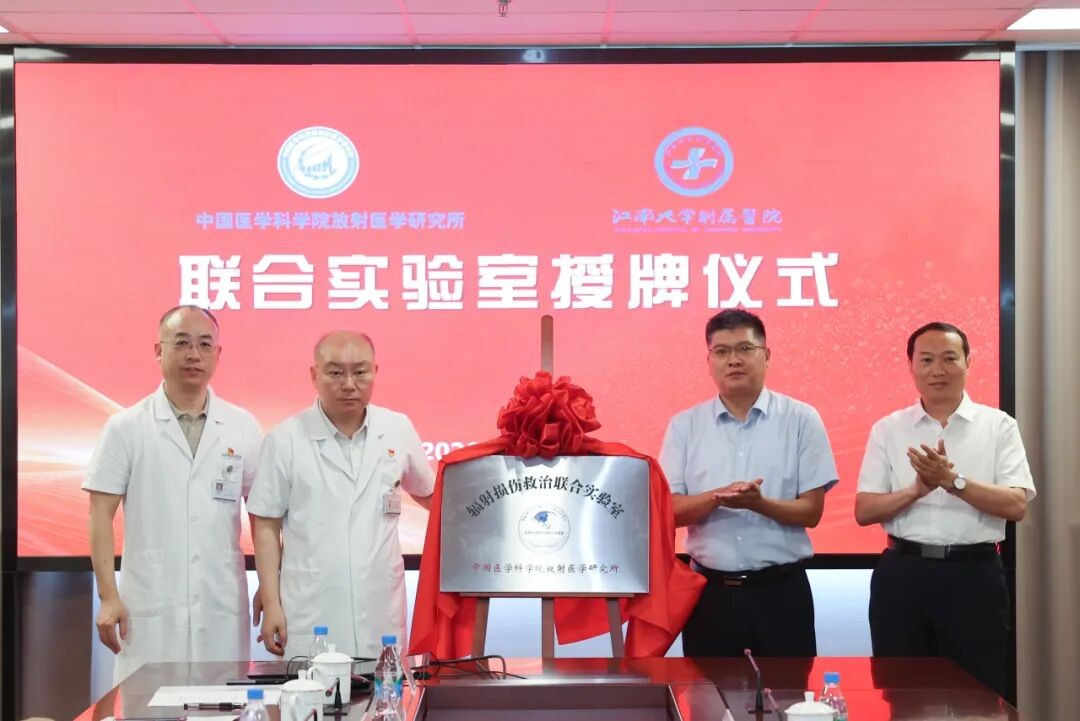
On the afternoon of July 31, the delegation from the Institute of Radiation Medicine visited the Affiliated Hospital of Jiangnan University to attend the joint laboratory plaque presentation ceremony and academic exchange conference co-hosted by the Wuxi Municipal Health Commission and the Wuxi Medical College of Jiangnan University. The meeting was chaired by Guo Yi, President of the Affiliated Hospital of Jiangnan University, with addresses delivered by Guo Dong, Secretary of the Hospital Party Committee, Lu Junying, Deputy Director of the Wuxi Municipal Health Commission, and Zhou Jiaxi, Director of the Institute of Radiation Medicine.
Zhou Jiaxi stated that this cooperation will leverage the Institute of Radiation Medicine's strengths in basic research and connect them with the clinical resources of the Affiliated Hospital of Jiangnan University in areas such as tumor radiotherapy, burn and trauma repair, and diagnosis and treatment of digestive system diseases, promoting deep integration between the two sides in scientific research and clinical application.
During the academic exchange session, Su Xu delivered a special report titled "Current Status and Prospects of Medical Radiation Protection in China," presenting the challenges and development directions facing the field of medical radiation. Liu Qiang gave a report on "Industry-Academia-Research Practice of Radiation Injury Prevention and Treatment Technologies," sharing the scientific research achievements and application scenarios developed by the Institute of Radiation Medicine in the fields of radiation protection and radiation injury prevention and treatment. After the meeting, the delegation from the Institute of Radiation Medicine toured the Nuclear Medicine Diagnosis and Treatment Center, Burn Diagnosis and Treatment Center, and Digestive Endoscopy Center of the Affiliated Hospital of Jiangnan University, and communicated with frontline medical teams regarding future cooperation.
According to the exchange arrangements, the Institute of Radiation Medicine will take the inauguration of the two joint laboratories as an opportunity to conduct scientific research focused on clinical needs such as radiation injury and radiopharmaceutical development, share experimental platforms and diagnosis and treatment resources, and promote the translation of basic research achievements into clinical applications. At the same time, the two sides will jointly build a nuclear emergency treatment network, conduct joint nuclear emergency drills and training, and improve the emergency response system for radiation incidents.
Once the two joint laboratories are established, they will serve as important platforms for medical-research collaboration, further integrating medical, research, industrial, and nuclear emergency resources, promoting technological innovation in radiation medicine and nuclear medicine, and better serving the health needs of radiation workers and patients.
Disclaimer: Information republished from partner media, institutions or other websites is provided for reference and communication purposes only. It does not imply endorsement of its views or verification of its accuracy. Please contact us if any content infringes rights or requires correction.