
Guangzhou Taihe Proton Therapy Center Surpasses 1,000 Patients Treated
 Scan to share
Since the ProBeam proton radiotherapy system at the Proton Therapy Center of Guangzhou Taihe Cancer Hospital was officially put into clinical use in December 2024, the center has provided proton radiotherapy services to more than 1,000 patients within 19 months, with consecutive single-day treatment volumes exceeding 100 patient sessions.
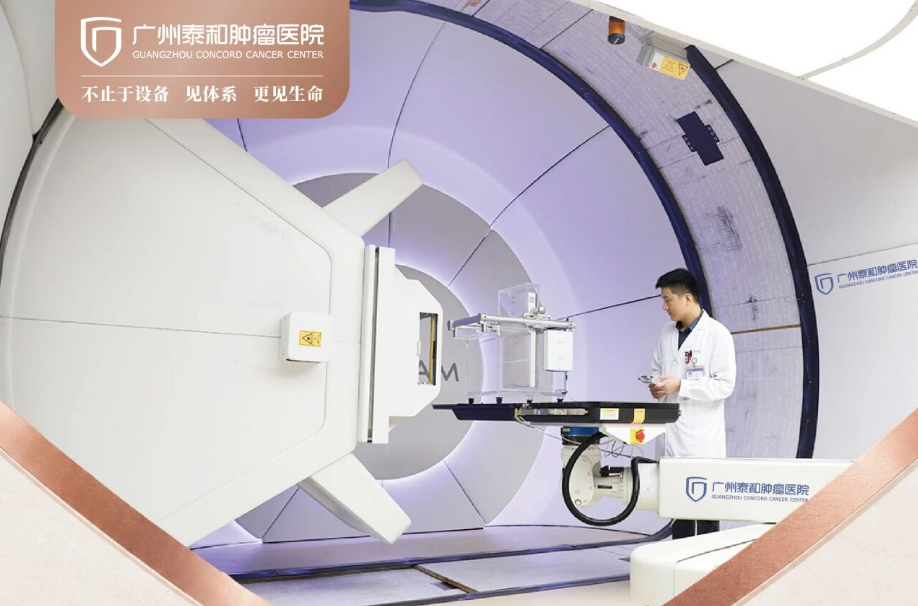
According to information released by the hospital, compared with the time taken by some internationally comparable proton centers to complete 1,000 clinical cases, Guangzhou Taihe took 19 months. Relevant comparisons include: Emory Proton Therapy Center in the United States took 2 years to complete 1,000 cases after launching in December 2018; MIBS Proton Therapy Center in Russia took approximately 2 years after trial operation began in September 2017; University College London Hospitals Proton Centre in the United Kingdom took nearly 4 years after launching in December 2021; Tata Memorial Centre in Mumbai, India, took nearly 3 years after launching in 2023; and the Proton Centre at the National Cancer Centre Singapore took 26 months to complete 500 cases after launching in June 2023.
In terms of disease coverage, the center has treated patients with dozens of solid tumor types, including head and neck tumors, intracranial tumors, lung cancer, breast cancer, digestive system tumors, urological tumors, gynecological tumors, ocular tumors, bone and soft tissue sarcomas, and lymphomas. The hospital stated that preliminary clinical observations show generally good patient tolerance, with a lower incidence of acute-phase side effects compared with conventional radiotherapy. Proton therapy, while irradiating the tumor lesion, helps reduce the radiation dose to adjacent critical organs, allowing patients to maintain a better quality of life, with tumor shrinkage observed in most patients.
In terms of patient age, the center has admitted patients ranging from 13 months to 91 years old, including more than 120 pediatric patients under the age of 14. Patients come from all 32 provincial-level administrative regions across the country, with demand from Hong Kong and Macau continuing to grow in recent years—dozens of patients from these regions have received treatment. Meanwhile, international patients from more than 20 countries, including Europe, the Americas, and Southeast Asia, have also successively visited the hospital for proton therapy.
In terms of the clinical workflow, Guangzhou Taihe has assembled a team for proton therapy patients comprising radiation oncologists, medical physicists, radiation therapists, nurses, and case managers, covering disease assessment, treatment plan formulation, treatment planning design, dose verification, equipment quality control, immobilization, simulation and positioning, image-guided treatment, and care coordination. Patients typically enter the process through outpatient assessment, undergo MDT multidisciplinary case discussion, followed by immobilization, simulation and positioning, and individualized mold fabrication, with target volume delineation based on multimodal imaging. After the radiation oncologist completes target contouring and dose prescription, the medical physicist designs and verifies the plan, and the radiation therapist delivers treatment under image guidance, with each session lasting approximately 20 to 30 minutes.
Hospital data show that, supported by full-process quality control, 97.7% of patients completed their treatment course as planned. Among patients who have completed efficacy evaluation, the recent objective response rate was 77.7%, and the disease control rate was 97.9%.
In terms of payment support, Guangzhou Taihe Cancer Hospital stated that insured minors and enrolled students covered by Guangzhou municipal employee basic medical insurance or urban-rural resident basic medical insurance who visit the hospital for tumor-related conditions can have eligible medical expenses directly settled through medical insurance accounting. The hospital has also established one-stop direct settlement channels with nearly 30 insurance companies and TPA service providers, including AIA, CPIC, MSH China, Cigna & CMB, Ping An Health, and Taikang Pension. In addition, proton therapy has been included in the coverage scope of supplementary commercial medical insurance products such as Guangzhou's "Sui Xin Bao" and Shenzhen's "Hui Min Bao." The hospital stated that it will continue to optimize treatment processes, advance clinical research and technology applications, and improve the accessibility of proton therapy services.
Disclaimer: Information republished from partner media, institutions or other websites is provided for reference and communication purposes only. It does not imply endorsement of its views or verification of its accuracy. Please contact us if any content infringes rights or requires correction.