
Unveiling Extreme Heat: Z Boson Probes New Mechanisms of the "Hottest Matter in the Universe"
 Scan to share
Using Z boson probes at the Large Hadron Collider (LHC), scientists have revealed new details about how the hottest matter in the universe—the quark-gluon plasma (QGP)—absorbs energy, challenging existing theoretical models. This research provides important clues for understanding the state of the early universe shortly after the Big Bang.
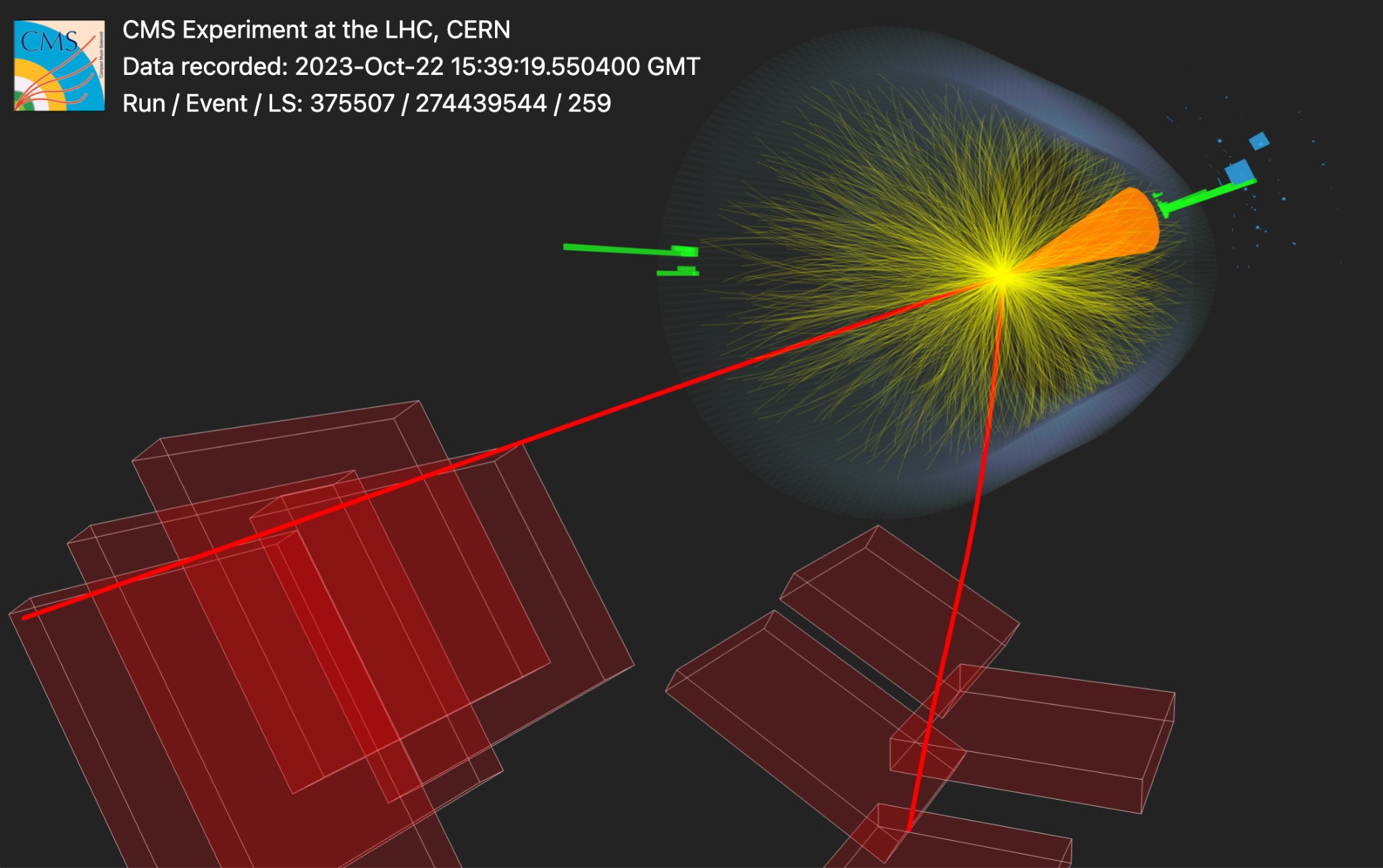
To gain deeper insights into the QGP, physicists cleverly employ Z bosons as messengers. Since Z bosons do not interact with the QGP, they can traverse the plasma almost unaffected, precisely recording information about the initial state. By analyzing the momentum differences between μons produced from Z boson decays and their recoiling jets, scientists were able to determine the energy lost by quarks as they traverse the QGP.
This study utilized data from proton-proton and lead-lead collisions collected by the CMS detector to precisely measure the momentum imbalance parameter xZj. By applying the "unfolding" technique to eliminate detector effects, researchers were able to directly compare experimental results with theoretical predictions. The results indicate that quarks experience significant energy loss when traversing the QGP, leading to a reduction in both the number and momentum of associated jets.
More importantly, the jet quenching effects observed by the CMS team challenge existing theoretical models. Current leading models can reasonably explain jets with moderate energy loss, but they underpredict the effects of high-intensity energy quenching, showing discrepancies with actual measurements.
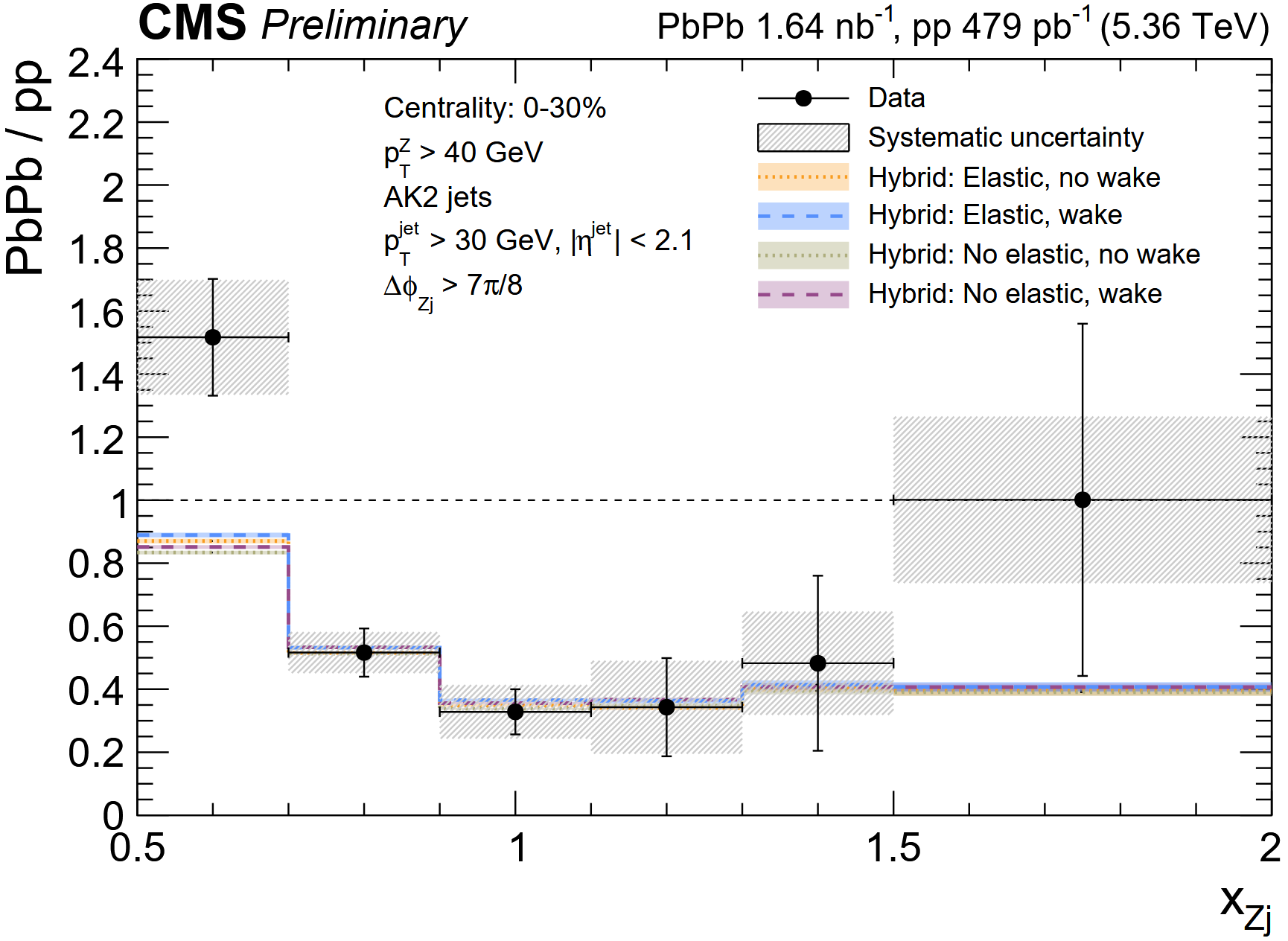
The figure shows the ratio of jet momentum to Z boson momentum (x Zj ) in unfolded lead-lead collisions relative to proton-proton collisions, presented as a ratio, and compared with the latest theoretical predictions for quark-gluon plasma effects (colored dashed lines). The figure demonstrates significant jet quenching effects and indicates that more theoretical work is needed to better describe the experimental data.
Raffaele Del Gatti, a PhD student at the University of Trieste, stated: "Thanks to the unique properties of the Z boson, we can precisely know the initial energy of the recoiling quark. However, the observed highly quenched quarks survive at a higher rate than predicted by current best models. This suggests that our understanding of how the plasma transfers energy to quarks remains incomplete."
In the future, with the High-Luminosity Large Hadron Collider (HL-LHC) coming into operation and accumulating more data, along with in-depth studies of jet internal structures and different sizes, scientists hope to more comprehensively reveal the mechanisms of the QGP and further understand the fundamental interactions of the early universe.
Disclaimer: Information republished from partner media, institutions or other websites is provided for reference and communication purposes only. It does not imply endorsement of its views or verification of its accuracy. Please contact us if any content infringes rights or requires correction.