
KEPCO E&C seeks government R&D project for offshore SMR "BANDI"
 Scan to share
KEPCO E&C is accelerating the development of its proprietary offshore small modular reactor "BANDI." Under relevant plans, the company intends to include BANDI in a government R&D project led by the private sector, leveraging national R&D funding to advance standard design, engineering verification, and subsequent commercialization preparation.
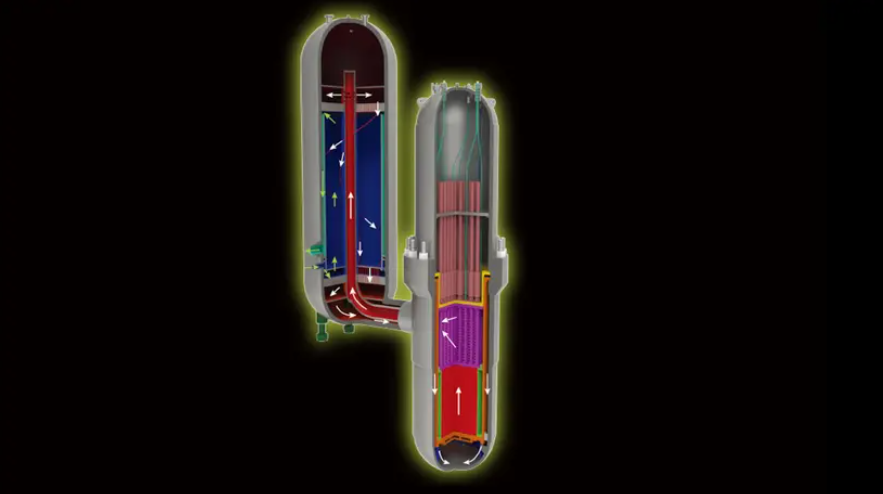
It is understood that KEPCO E&C is organizing a government R&D initiative for offshore SMRs, with the company aiming to serve as the lead organization to develop a standard design for offshore SMRs applicable to power generation ships and nuclear-powered vessels. The project is currently in the preliminary planning stage, with plans to submit a project proposal and tender documents early next year, and following review, to secure the launch of state-funded R&D in 2029.
Offshore small modular reactors refer to technology in which SMRs are deployed on ships or floating platforms for offshore power generation or as propulsion power for vessels. The BANDI developed by KEPCO E&C is based on proven light water reactor technology and is positioned as a Generation III+ offshore SMR, with applications including power generation ships and nuclear-powered vessels. As the International Maritime Organization (IMO) pushes the international shipping industry toward net-zero emissions by 2050, offshore SMRs are regarded as one of the key technology pathways for carbon-free ship propulsion, and related R&D is gaining momentum in the global shipbuilding sector.
South Korean shipbuilders are also accelerating their efforts. Samsung Heavy Industries is collaborating with U.S. nuclear engineering firm Sargent & Lundy (S&L) to develop a standardized floating small modular reactor platform; in parallel, Samsung Heavy Industries is working with the Korea Atomic Energy Research Institute (KAERI) and the Korea Research Institute of Ships and Ocean Engineering (KRISO) to study nuclear-powered container ships equipped with Generation IV molten salt reactors. HD Hyundai Heavy Industries, meanwhile, is advancing R&D on SMR-based offshore power generation facilities and ship propulsion technologies for applications such as offshore data centers.
Unlike some shipbuilders focusing on advanced reactor designs, KEPCO E&C has chosen to build on its existing light water reactor engineering experience to enhance BANDI's engineering feasibility and commercialization potential. Given the large R&D investment and long verification cycles required for offshore SMRs, the company plans to leverage government R&D projects to accelerate breakthroughs in key technologies and establish partnerships with shipbuilders.
Currently, KEPCO E&C is in discussions with Hanwha Ocean regarding a joint development partnership. If the government project is officially launched, the company plans to establish a broader cooperation framework covering shipyards, nuclear fuel suppliers, equipment manufacturers, and maritime regulatory research institutions.
According to the phased roadmap proposed by KEPCO E&C, the BANDI project aims to clarify the business model and complete preliminary investment decisions by 2027, complete the standard design and initiate license application preparation by 2030, and subsequently complete offshore testing, major system verification, marine environment demonstration, and comprehensive license applications by 2035, with the goal of achieving commercial operation by 2038. A company official stated that given the high technology development costs in the offshore SMR sector, the company plans to accelerate BANDI development through the government project.
Disclaimer: Information republished from partner media, institutions or other websites is provided for reference and communication purposes only. It does not imply endorsement of its views or verification of its accuracy. Please contact us if any content infringes rights or requires correction.