
Jiangsu's First uLinac HalosTx Integrated Ring-Gantry CT Linac Enters Clinical Use
 Scan to share
On August 7, the first uLinac HalosTx integrated ring-gantry CT linear accelerator in Jiangsu Province was officially put into clinical use at the Third Affiliated Hospital of Nanjing Medical University (Changzhou Second People's Hospital). The system integrates a diagnostic-grade CT scanner and a ring-gantry accelerator on a single platform, shifting regional tumor radiotherapy from the traditional “step-by-step positioning” model to a “same-platform real-time” approach.
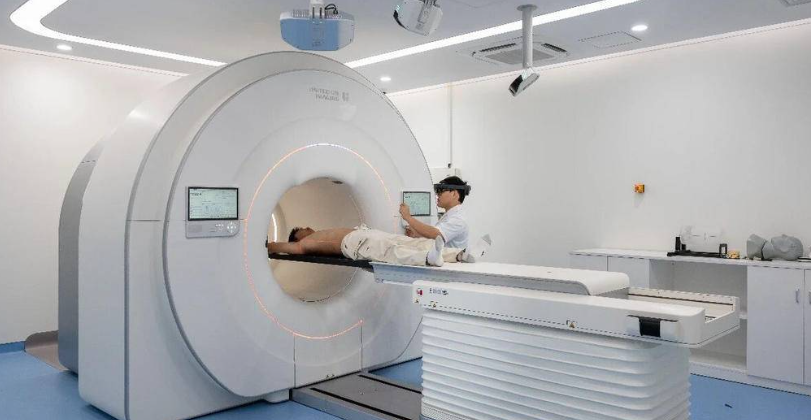
Radiotherapy is one of the important modalities for cancer treatment. In the conventional split-system radiotherapy workflow, patients typically need to be transported between the CT room and the treatment room, and treatment plans are mostly formulated based on static images acquired beforehand. In cases such as tumor regression or changes in patient weight, previous images may not fully reflect the actual condition on the day of treatment.
The uLinac HalosTx put into use this time is equipped with an “imaging–dose dual-sensing” system, which enables high-definition thin-slice scanning while the patient remains in the same position, reducing errors caused by patient transfer and repeated setup. The system features an ultra-large ring-shaped bore design, accommodating different treatment needs such as obese patients and those with extremity tumors. According to the hospital, a single thoracic or abdominal radiotherapy session can be shortened to 5 to 8 minutes.
During treatment, the system is equipped with a panoramic EPID dose detection panel and intelligent AI modules, enabling real-time capture of tumor position changes and optimization of the radiotherapy plan accordingly. As the treatment course progresses, the treatment plan can be dynamically adjusted based on tumor changes to improve irradiation accuracy while minimizing impact on surrounding normal tissues such as the heart, lungs, and esophagus.
In addition, the SGRT optical surface-guided radiotherapy system uses multiple 3D cameras to capture patient body surface points, achieving sub-millimeter setup accuracy and displacement monitoring. When slight patient movement or coughing occurs, the system can automatically pause the radiation beam to enhance treatment safety.
The Third Affiliated Hospital of Nanjing Medical University (Changzhou Second People's Hospital) stated that, building on the clinical application of this system, it will continue to advance research and clinical translation of intelligent radiotherapy technologies, explore a “medical–industry” collaborative innovation model, and accumulate experience for regional comprehensive cancer prevention and treatment as well as the application of domestically produced high-end radiotherapy equipment.
Disclaimer: Information republished from partner media, institutions or other websites is provided for reference and communication purposes only. It does not imply endorsement of its views or verification of its accuracy. Please contact us if any content infringes rights or requires correction.