
CMS records highest-energy lepton pairs to date, testing the possibility of a composite Higgs boson
 Scan to share
The CMS experiment recently used the complete proton-proton collision dataset collected during Run 2 of the Large Hadron Collider and the first two years of Run 3, namely 2022 to 2023, to search for clues that the Higgs boson may be composed of smaller constituents. The analysis results show that the experimental data are consistent with Standard Model predictions, with no evidence pointing to new physics yet.
Whether the Higgs boson is an elementary particle or a composite particle with deeper structure is a long-standing question in particle physics. To test this possibility, the CMS team adopted two complementary approaches: on one hand, directly searching for new heavy particles that could be produced at the Large Hadron Collider; on the other hand, indirectly probing the effects of new particles with higher masses that are difficult to produce directly through subtle deviations in high-energy electron pair and muon pair production processes.
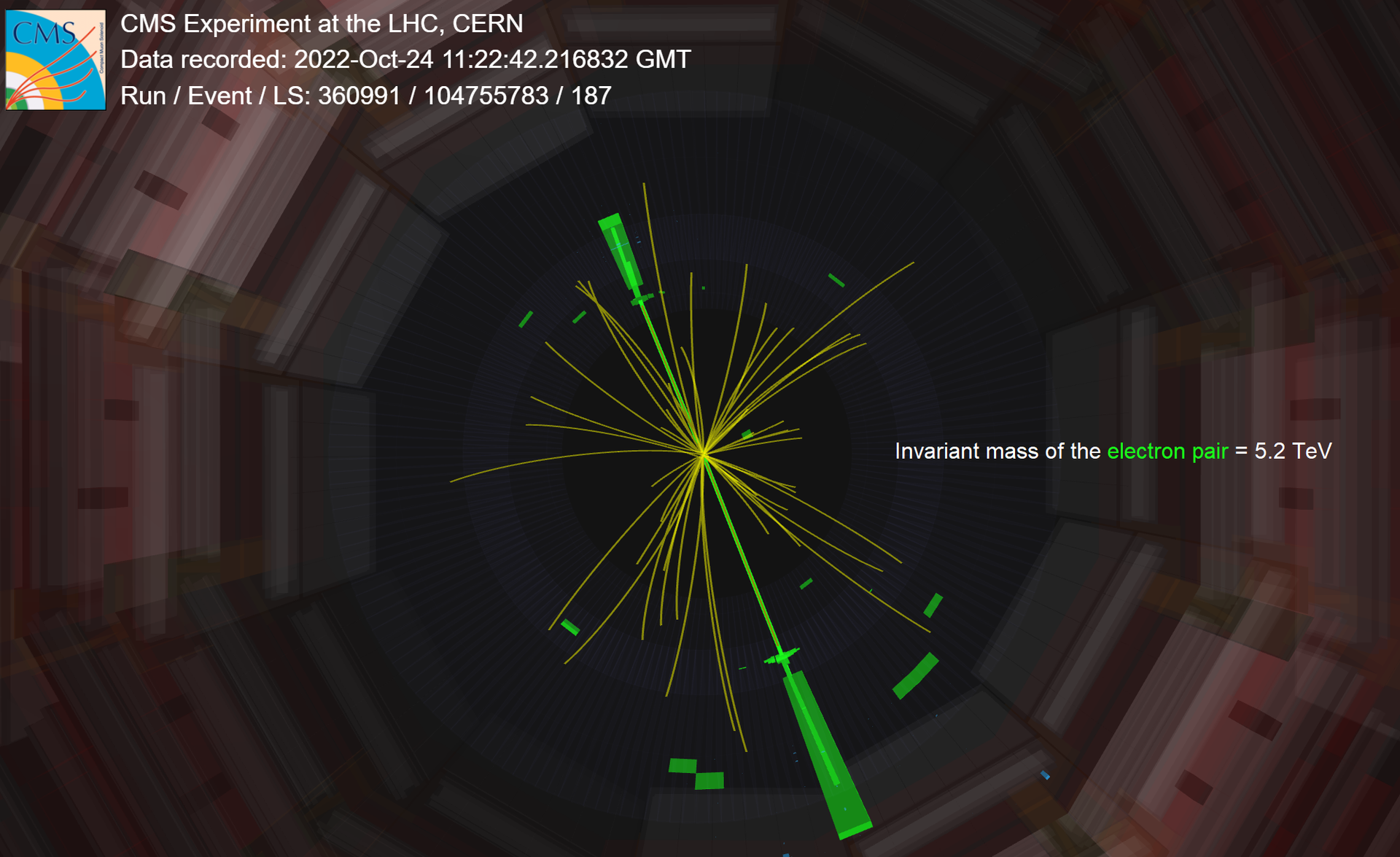
This study analyzed proton-proton collision events at center-of-mass energies of 13 TeV and 13.6 TeV, selecting events containing two high-energy electrons or two high-energy muons to study lepton pairs with masses up to several TeV. Among them, CMS recorded an event consisting of two electrons with a mass reaching 5.2 TeV, which is the highest-mass dielectron event ever observed by the experiment. Such high-energy, rare events provide an important window for searching for new particles and interactions beyond the Standard Model.
The study also adopted a new simulation method. This method does not require generating separate simulated samples for each new physics hypothesis; instead, it reweights the Standard Model simulation results to predict the effects that different new physics scenarios might produce while maintaining theoretical precision.
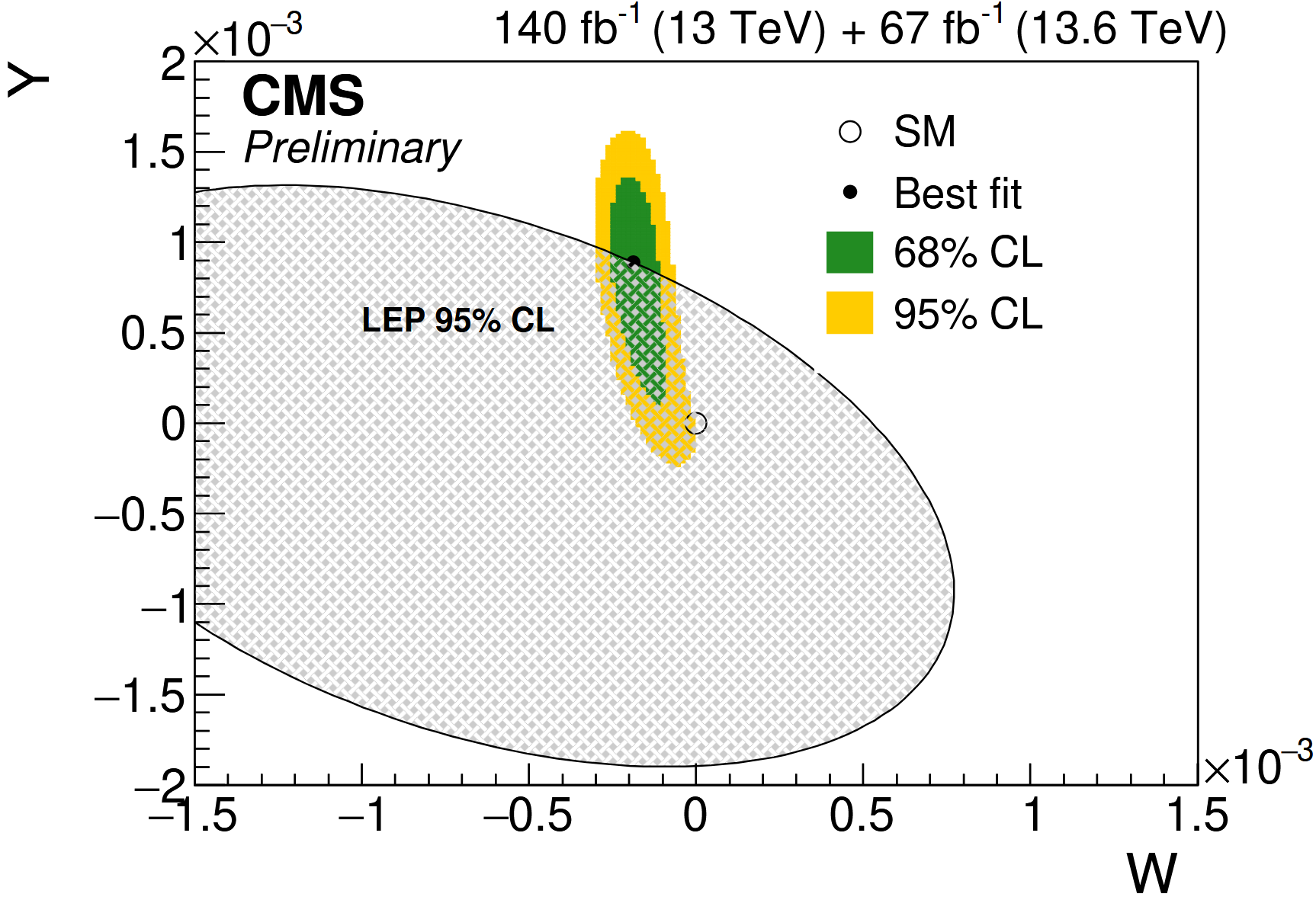
Although no signal deviating from the Standard Model was found, this analysis provides the most stringent constraints to date from CMS on the electroweak oblique parameters W and Y. The Standard Model predicts these two parameters to be zero, and they can be used to describe the potential effects of new heavy particles in a way that is less dependent on specific models. Combined with the search results for heavy W′ bosons during Run 2 of CMS, this study also provides the strongest constraints to date from CMS on several composite Higgs boson models, further narrowing the parameter space of related new physics theories.
Oliver Carretero, a PhD student at CIEMAT in Madrid involved in the study, stated that although no evidence of a composite Higgs boson has been found so far, this result demonstrates that precision measurements at the Large Hadron Collider have significant capability in the search for new physics; as more data accumulate in future runs, the relevant techniques are expected to further enhance the ability to detect indirect signs beyond the Standard Model.
Disclaimer: Information republished from partner media, institutions or other websites is provided for reference and communication purposes only. It does not imply endorsement of its views or verification of its accuracy. Please contact us if any content infringes rights or requires correction.