
Hungary's New Government Questions Paks II Nuclear Project, Audit Dissatisfaction May Lead to Contractor Replacement
 Scan to share
Hungary's new government (Prime Minister Péter Magyar) has continued to send unclear signals regarding the Paks II nuclear power plant expansion project contracted to Russia's Rosatom, bringing this major energy project involving the Russian state nuclear corporation back into the spotlight. The government is dissatisfied with the interim results of the contract audit and has hinted that Budapest does not rule out the possibility of replacing the contractor.
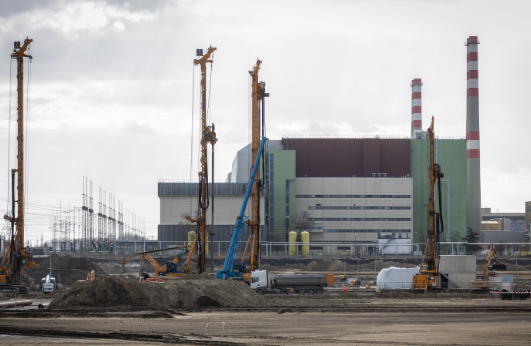
The "Paks II" project was originally regarded as a key component of Hungary's long-term energy security strategy. Nuclear power holds fundamental significance for Hungary's electricity supply, and the expansion of the Paks nuclear plant was also seen as a measure to reduce energy import pressure and stabilize electricity prices. However, the new government's re-examination of the contract signed with the Russian side after taking office indicates that the project is no longer merely a technical and energy issue, but is also influenced by fiscal transparency, political orientation, and changes in foreign relations.
For Rosatom, the Hungarian side's statements have undoubtedly increased uncertainty in project advancement. The company's CEO Alexey Likhachev previously emphasized that the Russian side remains willing to continue fulfilling the project and is ready to answer all questions raised by the Hungarian side. This shows that the Russian side hopes to maintain contract stability through communication and avoid substantive disruption to the project due to political transitions or audit disputes.
If Hungary seriously considers replacing the contractor, it will face multiple challenges including contracts, financing, technical handover, and schedule delays. Nuclear power plant construction is highly complex, and a change of contractor would not only mean re-evaluating engineering plans but could also trigger compensation claims, permitting issues, and supply chain adjustments. For Budapest, how to balance energy security, fiscal responsibility, and diplomatic equilibrium will determine the future direction of "Paks II."
Disclaimer: Information republished from partner media, institutions or other websites is provided for reference and communication purposes only. It does not imply endorsement of its views or verification of its accuracy. Please contact us if any content infringes rights or requires correction.