
South Korea's Honam Region Visits Busan Gijang for SMR Experience, Seeking New Solutions for Stable Semiconductor Power Supply
 Scan to share
South Korea's South Jeolla Province and Gwangju region are paying attention to Small Modular Reactors (SMR) as a potential alternative for semiconductor industry power supply. On August 7, members of the "South Jeolla-Gwangju SMR-AI Energy Forum" visited the Gijang-gun Jangan-eup Gilcheon-ri Village Hall in Busan to hold discussions with the local nuclear safety consultative body, village representatives, the Gori headquarters of Korea Hydro & Nuclear Power, and relevant Gijang-gun departments, focusing on understanding Gijang's autonomous pursuit process and resident communication experience in the siting of the innovative Small Modular Reactor (i-SMR).
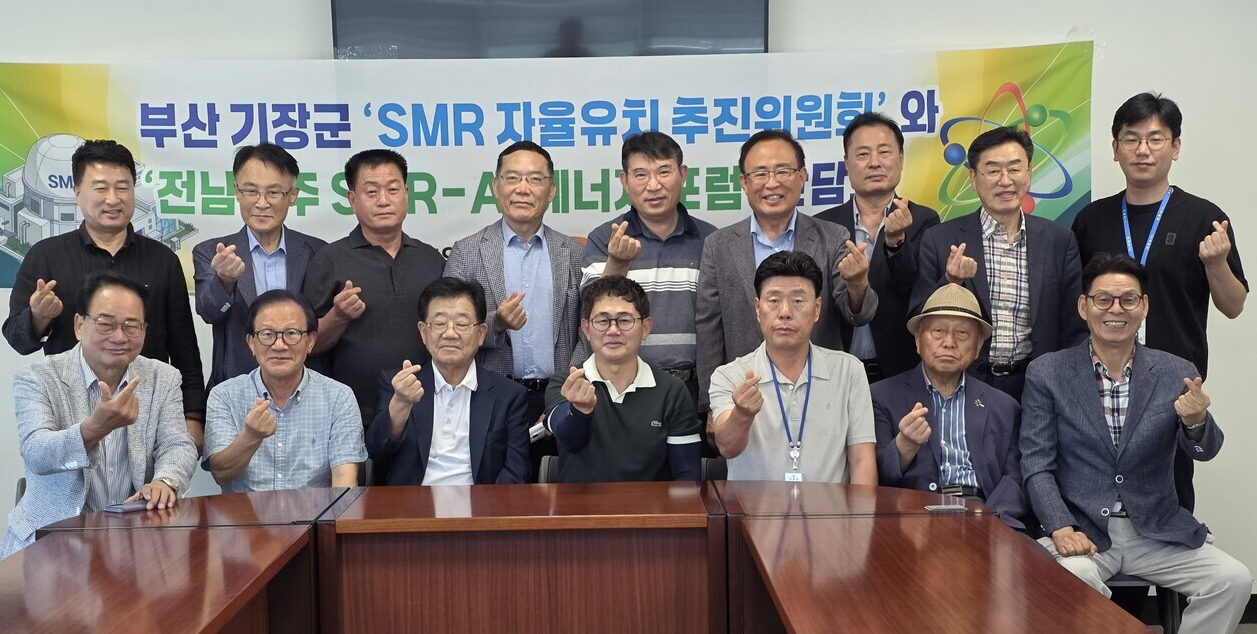
The direct background of this visit is the potential stable power supply challenge that the semiconductor industry in the Honam region may face in the future. Semiconductor manufacturing has a high dependence on continuous, reliable large-scale power supply, and once the local industrial layout expands, pressure on conventional power sources and grid dispatch will also rise accordingly. Therefore, the forum hopes to observe through an on-site visit to Gijang, which has already been selected as the construction site for the i-SMR, whether SMR can serve as an energy option to support emerging industrial clusters, while also learning from Gijang's successful selection practices in its competition with Gyeongju.
The reasons for Gijang's local push for SMR are not limited to energy supply, but are also related to development changes in areas surrounding nuclear power plants. As Gori Unit 1 enters the decommissioning and dismantling phase, some of the support previously provided to surrounding areas has decreased, making residents' perception of changes in the regional economy and public resources more pronounced. Meanwhile, the construction of industrial complexes in the Jangan-eup area has brought new electricity demand, and the locality also hopes to leverage the SMR project to attract specialized talent, create youth employment opportunities, and drive population inflow, seeking new growth momentum for communities around nuclear power plants.
Resident acceptance is the issue of greatest concern to the South Jeolla and Gwangju delegation. Gijang officials explained that not all residents supported the SMR from the outset; instead, village heads from 191 villages across 5 eup and myeon districts first formed an autonomous pursuit promotion organization, which then repeatedly explained the project to residents through the village heads. Since village heads have closer daily contact with residents, they are more likely to gain trust compared to one-way explanations from administrative agencies. Local representatives stated that first gaining the understanding and approval of the majority of village heads, who then led community communication, was an important experience in building a supportive atmosphere.
The discussion also addressed the possibility of local enterprise participation in the SMR project. Gijang officials noted that existing nuclear projects are constrained by regulatory and qualification barriers, making it difficult for local enterprises to participate, but as a new project, SMR should be designed from an early stage to create space for local enterprise involvement, allowing the local industrial chain and experts to participate together. The South Jeolla and Gwangju side stated that no specific SMR site or policy direction has been determined locally yet, and this visit was more of a preliminary investigation aimed at drawing on Gijang's experience to provide a reference for future semiconductor power security and regional energy strategy.
Disclaimer: Information republished from partner media, institutions or other websites is provided for reference and communication purposes only. It does not imply endorsement of its views or verification of its accuracy. Please contact us if any content infringes rights or requires correction.