
Kyoto Fusioneering and Oak Ridge to Build World's First Fusion Blanket Verification Facility UNITY-3
 Scan to share
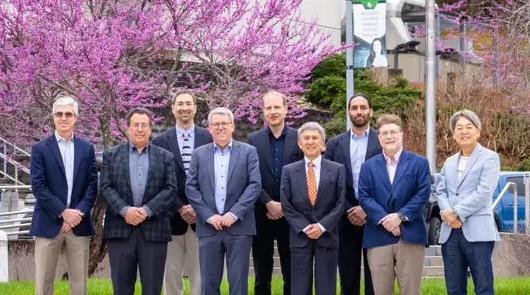
Kyoto Fusioneering (KF), a Japanese fusion energy engineering company, announced that it will jointly build a facility named “UNITY-3” with the U.S. Oak Ridge National Laboratory (ORNL) to verify the breeding blanket technology required for commercial fusion power plants. The project is described as the world's first facility dedicated to breeding blanket demonstration, and KF will also relocate its U.S. business base to Oak Ridge, Tennessee. The project has received support from the U.S. Department of Energy's relevant roadmap, Tennessee's nuclear energy supply chain investment fund, and the DOE, indicating that the fusion industry is shifting from purely plasma physics breakthroughs toward engineering, system integration, and supply chain development.
The breeding blanket is an indispensable component for the commercialization of deuterium-tritium fusion power plants. Commercial D-T fusion plants need the blanket to generate tritium through neutron interactions, thereby achieving fuel self-sufficiency. However, the blanket and fuel cycle currently remain among the lower technology readiness level areas in the fusion industry. Over the past few years, the global fusion industry has attracted substantial private capital, with cumulative financing exceeding $12 billion and more than $3.5 billion flowing in over the past year alone. Yet without reliable tritium breeding capability, these investments could ultimately remain constrained by fuel cycle bottlenecks. The significance of UNITY-3 lies precisely in filling this gap, providing a shared verification platform for fusion companies pursuing different technical routes.
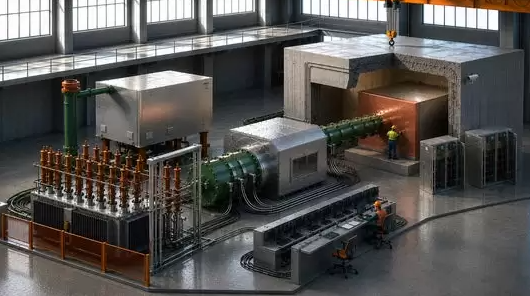
UNITY-3 will utilize an accelerator-driven large-volume D-T fusion neutron source to measure the neutron spectrum and tritium production rate of the breeding blanket under conditions close to a real nuclear environment. These data can not only be used to verify blanket performance but will also help calibrate and reduce the risk of simulation codes relied upon in fusion power plant design. The U.S. Department of Energy has identified “integrated neutron and blanket systems” as critical infrastructure connecting current experiments with future fusion demonstration power plants in its “Fusion Science & Technology Roadmap.” UNITY-3 directly addresses this need and will provide the DOE's AI-driven fusion digital design platform with high-precision experimental data never previously available.
From an industrial positioning perspective, KF aims to serve as an “enabler” of critical engineered systems for fusion power plants, focusing on blankets, fuel cycles, heat transfer systems, and related auxiliary systems. Many fusion companies concentrate their capital and technical expertise on plasma confinement approaches, but transforming physics experiments into power-generating devices requires substantial nuclear engineering, materials, manufacturing, and fuel handling capabilities. If every company were to vertically integrate all these capabilities independently, costs, timelines, and technical risks would increase significantly. Therefore, UNITY-3 is designed as open, shared infrastructure not limited to any specific fusion reactor design, and has already received support from companies including General Atomics, OpenStar Technologies, Realta Fusion, Thea Energy, Type One Energy, and Xcimer Energy.
KF's choice of Oak Ridge also reflects the accelerating geographic and supply chain landscape of the fusion industry. Oak Ridge has long been a major center for U.S. nuclear science, materials science, neutron science, advanced manufacturing, and supercomputing, and ORNL possesses deep expertise in nuclear technology. KF will bring Japan's engineering capabilities in breeding blankets, tritium fuel cycles, and plasma heating systems into the U.S. domestic ecosystem, promoting local manufacturing, talent development, and allied supply chain construction. Combined with KF's existing UNITY-1 in Japan and UNITY-2 in Canada, UNITY-3 will complete the nuclear technology verification link under real fusion neutron environments, forming a phased verification system under the UNITY program that covers non-nuclear thermal-hydraulic behavior, end-to-end fuel cycle, and nuclear-environment blanket testing.
Disclaimer: Information republished from partner media, institutions or other websites is provided for reference and communication purposes only. It does not imply endorsement of its views or verification of its accuracy. Please contact us if any content infringes rights or requires correction.