
Australia's OPAL Multipurpose Reactor Marks 20 Years of Operation: Supporting Nuclear Medicine, Industrial Silicon Irradiation, and Neutron Science
 Scan to share
The OPAL multipurpose reactor at the Lucas Heights campus of the Australian Nuclear Science and Technology Organisation (ANSTO), located south of Sydney, has marked the 20th anniversary of achieving first criticality. On August 12, 2006, OPAL achieved a self-sustaining controlled nuclear chain reaction, marking the facility's transition from the construction phase to the scientific operations phase. ANSTO stated that over the past 20 years, OPAL has become one of Australia's key nuclear science infrastructures, serving multiple fields including medicine, industry, and scientific research.
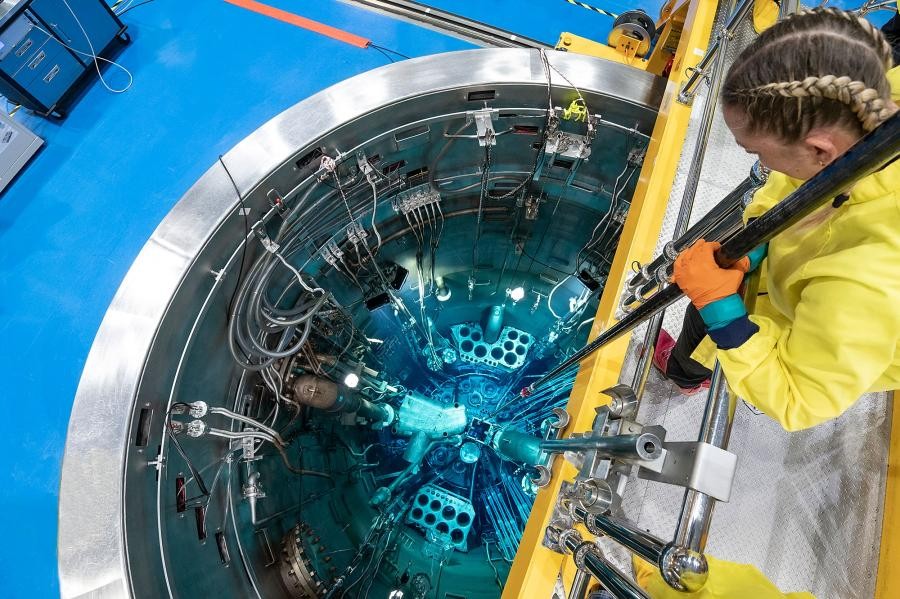
OPAL is not a power reactor and is not used for electricity generation. According to available information, Australian federal law and relevant state and territory legislation prohibit the construction of nuclear power reactors, fuel fabrication, and waste disposal facilities. Unlike power reactors that generate steam to drive turbines for electricity production, OPAL's primary mission is to produce neutrons for scientific research, medical radioisotope production, and industrial irradiation applications.
OPAL is a light water reactor that uses ordinary water as both coolant and neutron moderator. The reactor has a thermal power of 20 megawatts and can produce approximately 1.5×10¹⁸ neutrons per second. In comparison, power reactors such as the Westinghouse AP1000 typically operate at around 3,000 megawatts thermal power and are equipped with steam generators, turbines, and grid-connected power generation facilities. While research and multipurpose reactors like OPAL also require cooling, shielding, control, and safety systems, they do not possess the power generation infrastructure of nuclear power plants.
In medical applications, OPAL supports the production of radioisotopes such as molybdenum-99. Molybdenum-99 is the precursor to technetium-99m, one of the most commonly used medical diagnostic radioisotopes. ANSTO reports that over the past 20 years, OPAL has supported the production of more than 10 million doses of nuclear medicine, which have been used for the diagnosis and treatment of various diseases and delivered weekly to hospitals and clinics across Australia.
In the industrial sector, OPAL is also a globally significant neutron transmutation doped silicon irradiation facility. The high-performance semiconductors produced through silicon irradiation treatment can be used in applications such as electric vehicles, smart grids, renewable energy infrastructure, robotics, and aerospace technology. According to available data, OPAL's irradiation pool has processed more than 900 tonnes of silicon ingots.
In scientific research, neutrons produced by OPAL are directed to multiple scientific instruments at the Australian Centre for Neutron Scattering, where they are used to study the structure and motion of materials at the atomic scale. Over the past 20 years, more than 8,000 scientific experiments have been conducted using the facility, with research areas covering human health, the environment, climate change, advanced manufacturing, materials science, food, engineering, mining, cultural heritage, planetary and space research, and more.
ANSTO Chief Executive Officer Shaun Jenkinson stated that OPAL has delivered sustained contributions to Australian hospitals, businesses, universities, and communities over the past 20 years, and has also provided an important platform for cultivating talent in nuclear science and technology. OPAL was designed, constructed, and commissioned by Argentine nuclear technology company INVAP in partnership with Australian partners John Holland Construction and Engineering and Evans Deakin Industries Limited, with construction taking four years. The reactor succeeded the HIFAR research reactor, which had operated for nearly 50 years, and is currently Australia's only operating multipurpose nuclear reactor.
Disclaimer: Information republished from partner media, institutions or other websites is provided for reference and communication purposes only. It does not imply endorsement of its views or verification of its accuracy. Please contact us if any content infringes rights or requires correction.