
Egypt Plans to Expand Dabaa Nuclear Power Plant, Talks on New Reactors Signal Energy Transition
 Scan to share
Egypt's Minister of Electricity Mahmoud Esmat stated that President Sisi has instructed to increase the number of reactors at the Dabaa Nuclear Power Plant. The Egyptian side is in negotiations with relevant companies, planning to add two new reactors to the existing project, with the possibility of increasing to four in the future. This means that the Dabaa Nuclear Power Plant is not only Egypt's first nuclear power project, but may also be further expanded into a core project in the country's energy structure adjustment.
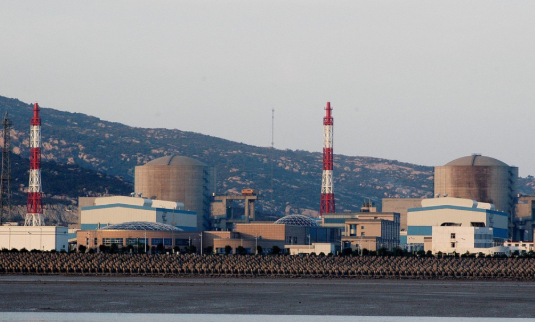
Located on the Mediterranean coast of Matrouh Governorate in northwestern Egypt, the Dabaa Nuclear Power Plant currently has plans for 4 nuclear power units, each with an installed capacity of 1,200 megawatts, totaling 4,800 megawatts. According to the timeline previously disclosed by the Egyptian government, the project is expected to begin power generation in 2028 and achieve full commercial operation between 2029 and 2030. If the new reactor plan materializes, the total power generation capacity of the Dabaa project will be significantly enhanced, exerting a greater impact on Egypt's medium- and long-term electricity supply landscape.
Judging from the information released by the Egyptian government, one of the key considerations for expanding the nuclear power plant is to reduce dependence on natural gas. Esmat stated that every additional 4.8 gigawatts of power capacity could save approximately 8 million cubic meters of natural gas, and depending on gas price levels, reduce import expenditures by approximately $1.1 billion to $3.4 billion. For Egypt, which faces foreign exchange pressure and volatility in energy import costs, nuclear power expansion has practical significance in lowering fuel import bills and stabilizing energy supply costs.
The expansion plan for the Dabaa Nuclear Power Plant also reflects Egypt's diversified approach in its energy strategy. In recent years, Egypt has sought to consolidate its position as a regional energy hub while meeting the growing electricity demand from domestic industry and residential consumers. As a stable baseload power source, nuclear power can complement natural gas generation and renewable energy, reducing the impact of single-energy price fluctuations on the national fiscal system and the power grid.
However, the new reactors are still in the negotiation stage, and subsequent progress will depend on multiple factors including financing arrangements, technical cooperation, regulatory approvals, construction timelines, and nuclear safety management. If the relevant negotiations proceed smoothly, the expansion of the Dabaa Nuclear Power Plant will further strengthen Egypt's energy self-sufficiency and serve as an important case for nuclear energy development in the North Africa region.
Disclaimer: Information republished from partner media, institutions or other websites is provided for reference and communication purposes only. It does not imply endorsement of its views or verification of its accuracy. Please contact us if any content infringes rights or requires correction.