
Red Fort Address: Modi Reaffirms "Developed India" Vision for 2047, Sets 100 GW Nuclear Power Target
 Scan to share
On August 15, India celebrated its 80th Independence Day, with Prime Minister Narendra Modi addressing the nation from the ramparts of the Red Fort in Delhi. The core message centered on the national vision of "building a developed India by 2047." He called on citizens to move beyond "small-target" thinking and embrace greater developmental ambitions, emphasizing that unwavering resolve could chart a path forward for the nation amid complex circumstances. This statement continues India's recent political narrative of using the 100th anniversary of independence as a long-term development milestone.
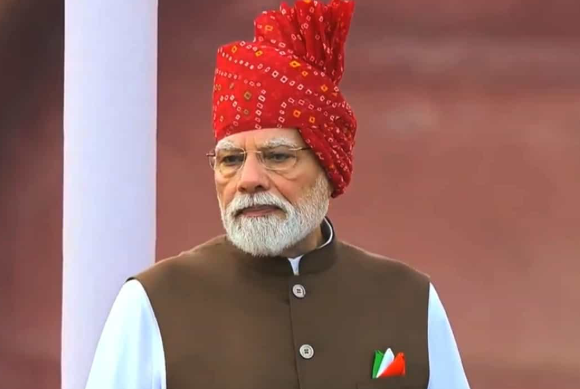
In his address, Modi highlighted India's economic and industrial transformations over the past 12 years. He noted that India, once regarded as one of the "fragile five" economies, has now become one of the fastest-growing major economies globally. As examples, he cited growth in defense production, khadi and village industries, electronics manufacturing, modern railway coaches, and mobile phone output, aiming to illustrate that India's manufacturing capabilities and industrial base are expanding.
Modi also emphasized that achieving the 2047 goals cannot rely solely on past accomplishments and requires further accelerating reforms. He expressed gratitude for the contributions of various social segments, including Dalits, tribal communities, urban and rural populations, the underprivileged, the middle class, youth, the elderly, and women, and stated that India needs to transform traditional mindsets and working methods. This reflects the government's intention to integrate long-term development goals with public participation, institutional reform, and industrial upgrading.
Energy security was another major focus of the address. Modi stated that with the advancement of relevant legislation, the institutional framework for developing nuclear energy in India is now in place, with the future goal of achieving 100 GW of nuclear power capacity and plans to launch 5 nuclear reactors within this decade. For India, with its continuously growing energy demand, nuclear power is endowed with strategic significance in ensuring energy security, supporting industrialization, and reducing external dependence.
Additionally, Modi proposed a so-called "seven streams" development direction, emphasizing that India must catch up with world standards in cost, quality, and manufacturing capabilities. He also mentioned promoting agricultural products, traditional foods, and spices in global markets, building artificial intelligence and innovation centers, promoting "Made in India" 6G, and strengthening port and connectivity infrastructure. These elements indicate that the Indian government is attempting to shape a comprehensive development roadmap toward 2047, anchored on manufacturing, technology, energy, and infrastructure.
Disclaimer: Information republished from partner media, institutions or other websites is provided for reference and communication purposes only. It does not imply endorsement of its views or verification of its accuracy. Please contact us if any content infringes rights or requires correction.