
India Releases Draft Rules Accompanying SHANTI Act, Requiring Nuclear Power Operators to Provide Nuclear Damage Insurance or Financial Guarantees
 Scan to share
The Department of Atomic Energy (DAE) of India recently released the draft SHANTI Rules 2026 and the draft SHANTI Regulations 2026 for public consultation. The two documents set out provisions on nuclear project licensing, safety authorization, and nuclear damage liability, aiming to provide an institutional framework for India's expansion of nuclear power capacity and the introduction of more market players into nuclear energy development.
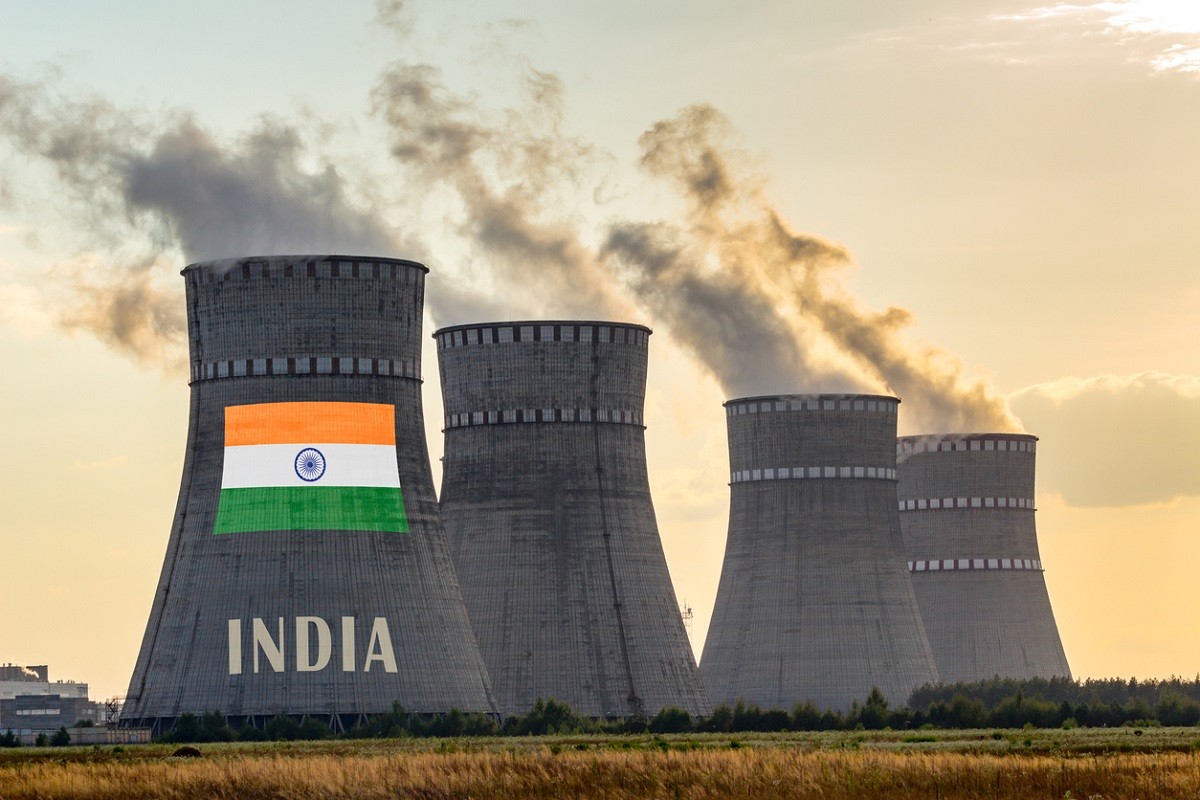
Under the drafts, operators of nuclear power plants or reactors must purchase insurance, provide financial guarantees, or adopt both approaches for nuclear damage. Such financial security must remain in effect until all spent fuel has been removed from the corresponding storage pools. The drafts also propose the establishment of a nuclear liability fund, with funding sources linked to the civil liability limits borne by operators; the central government of India will form an expert group every five years to review the maximum civil liability limits of operators for nuclear damage.
The full name of the SHANTI Act is the India Nuclear Energy Sustainable Utilization and Advancement Act. The Act replaces the Atomic Energy Act of 1962 and the Civil Liability for Nuclear Damage Act of 2010, establishing a new legal framework for safety regulation, project licensing, and liability assumption in the nuclear energy sector. India plans to increase its nuclear power installed capacity from the current approximately 8.8 GW to 100 GW by 2047, with an interim target of approximately 22 GW by 2031—2032.
Regarding licensing, the drafts propose that before a site or technology route is finalized, the licensing authority may grant "in-principle approval" after accepting an application. Upon obtaining such approval, the applicant may enter into negotiations with reactor technology suppliers and proceed with land acquisition and other necessary infrastructure preparations. However, "in-principle approval" does not equate to a final license. The drafts stipulate that such approval may be revoked in cases involving public interest, national security, public health and safety, or where the applicant has made false statements or concealed material facts.
The drafts also allow for the issuance of a consolidated license authorizing the construction, ownership, operation, and decommissioning of a nuclear power plant or reactor. Such activities may not be separately applied for, granted, split, or individually released from licensing requirements. The scope of the consolidated license covers power generation, captive nuclear power, hydrogen production, scientific research, and other peaceful uses. Among these, captive nuclear power is listed as an option that can serve energy-intensive industries, data centers, semiconductor manufacturing, and artificial intelligence applications.
For nuclear power plants or reactors adopting foreign designs, the drafts require that the design must be certified or approved by the regulatory authority of the country of origin, and that the reactor type should have been operated in the country of origin or other countries. The drafts define "country of origin" as a country with indigenous capabilities in nuclear reactor design and supply chain ecosystems, whose regulatory approvals are trusted globally.
The drafts also clarify that license holders must obtain design approval and safety authorization from the Atomic Energy Regulatory Board (AERB) of India before undertaking site selection, construction, commissioning, operation, and decommissioning activities. Safety review content includes site conditions, reactor design, accident analysis, safety systems, accident impact assessment, emergency preparedness, waste management, and radiation protection measures.
Before a nuclear power plant obtains an operating license, operators must also submit commissioning results, safety reports, technical specifications, radiation protection plans, and accident emergency plans, and obtain waste management-related permits. Applicants must also demonstrate financial, managerial, and technical capabilities, including fuel supply arrangements, spent fuel and radioactive waste management plans, and the ability to fulfill nuclear damage liability and subsequent obligations.
The drafts also retain restrictions on the mining of nuclear materials such as uranium and thorium. Activities exceeding the mining thresholds prescribed by the government remain limited to state-designated entities under existing mining rules.
Disclaimer: Information republished from partner media, institutions or other websites is provided for reference and communication purposes only. It does not imply endorsement of its views or verification of its accuracy. Please contact us if any content infringes rights or requires correction.