
Adani Group in Talks with Odisha on Nuclear Power Projects, Plans Two 3,000 MW Clean Energy Facilities
 Scan to share
India's Adani Group is accelerating its industrial footprint in Odisha, with nuclear power, clean energy, mining, aluminum, and port infrastructure emerging as key priorities in recent discussions. Senior executives of the group recently held talks with Odisha government officials to discuss advancing a range of energy and industrial projects in the state, including two proposed 3,000 MW power generation facilities and an integrated coal gasification and coal-to-chemicals project with an investment of approximately INR 800 billion.
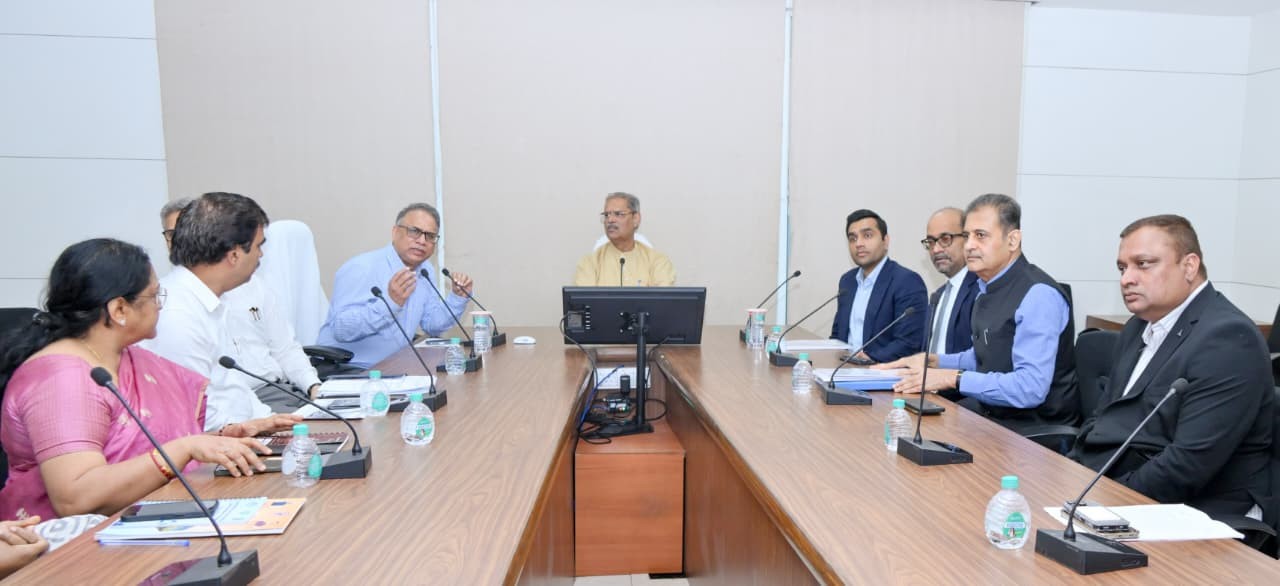
Karan Adani, CEO of Adani Ports and Special Economic Zone Ltd, met with Odisha Chief Minister Mohan Charan Majhi and Deputy Chief Minister K.V. Singh Deo. The discussions centered on projects already underway and proposed by the Adani Group in the state, covering topics such as nuclear power plant construction, clean energy infrastructure, mining development, industrial investment, and port expansion.
According to information released by the Odisha government, one of the key focuses of the talks between the Adani Group and Singh Deo was accelerating the deployment of clean energy infrastructure, including pumped storage, solar power, and nuclear power projects. These projects are regarded as vital components for enhancing the state's long-term energy security, grid reliability, and sustainable energy supply capacity.
During the meeting, the Adani Group reaffirmed its intention to invest in Odisha's clean energy sector, including the construction of two power generation facilities, each with a capacity of 3,000 MW. According to available information, the proposed nuclear power projects are positioned to provide stable, low-carbon baseload electricity to support the state's future energy-intensive industrial development. In addition to nuclear power, the two sides also discussed pumped storage and solar projects as part of the group's overall energy plans in Odisha.
Alongside the energy projects, a number of mining and industrial projects are also being advanced. The Adani Group has proposed building an alumina refinery and captive power plant in Rayagada district, developing bauxite resources at Kurlumali in Rayagada district and Bhalada in Koraput district, and constructing an aluminum smelter in Cuttack district. The group also plans to build an integrated coal gasification and coal-to-chemicals plant at Bedabahal in Sundargarh district, with an estimated investment of approximately INR 800 billion, which has already received approval from a high-level committee.
In the meeting with Majhi, several senior Odisha government officials participated in discussions focusing on project approvals, land identification and acquisition, and obstacles in actual implementation. The two sides decided to set timelines for each proposed project and coordinate on a case-by-case basis to resolve issues causing project delays.
The Adani Group is also evaluating a larger-scale aluminum industry chain investment. According to related plans, the group had previously signed a memorandum of understanding with the UAE's International Resources Holding (IRH) for an aluminum complex in Odisha, with a tentative project timeline of approximately 4 to 5 years. The planned complex includes manufacturing capacity for 4 million tonnes of alumina, 2 million tonnes of primary aluminum, and 1 million tonnes of downstream aluminum products per year, supported by a captive power plant of approximately 4,000 MW and green energy facilities of approximately 400 MW.
Based on information disclosed so far, the Adani Group's expansion plan in Odisha is not a single industrial investment but rather a comprehensive industrial system built around mineral resources, baseload power, clean energy, and port logistics. If the nuclear power projects continue to advance, they will play the role of ensuring stable power supply within this system; however, these projects remain at the proposal and planning stage, and subsequent progress will depend on multiple factors including land, approvals, regulation, and project timelines.
Disclaimer: Information republished from partner media, institutions or other websites is provided for reference and communication purposes only. It does not imply endorsement of its views or verification of its accuracy. Please contact us if any content infringes rights or requires correction.