
India Unveils Nuclear Energy Self-Reliance Roadmap, Targeting 100 GW Nuclear Capacity by 2047
 Scan to share
India's Minister of State for the Prime Minister's Office, Jitendra Singh, recently stated in a written reply to the Lok Sabha that India is accelerating the development of its domestic nuclear energy ecosystem, with key focus areas including advanced reactor technologies, small modular reactors, domestic manufacturing capabilities, private sector participation, and the long-term development and utilization of thorium resources.
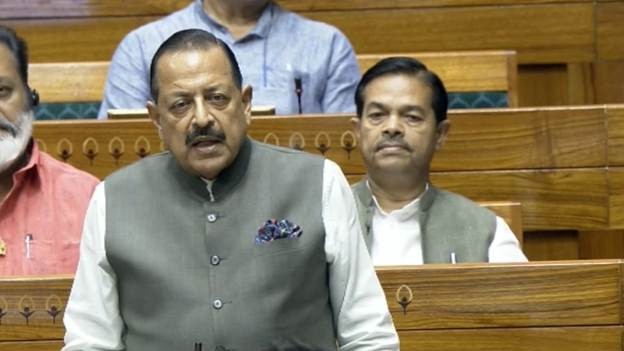
Singh stated that India's long-term nuclear energy strategy remains based on the "three-stage nuclear power program," aiming to gradually utilize the country's relatively abundant thorium resources while ensuring long-term energy security. India proposed a "Nuclear Energy Mission" in its 2025–2026 federal budget, planning to expand nuclear power capacity to 100 GW by 2047.
Under the relevant arrangements, India will pursue two pathways to expand nuclear power capacity: on one hand, deploying large-scale domestic reactors at new sites, including 700 MWe-class pressurized heavy water reactors (PHWRs) and advanced reactor designs; on the other hand, developing and deploying small modular reactors (SMRs) at existing sites, retired fossil fuel power plants, captive power plants of high-energy-consuming industries, and off-grid applications in remote areas.
A key objective of India's Nuclear Energy Mission is to develop and commission at least five domestically built small modular reactors by 2033. The Bhabha Atomic Research Centre (BARC), under the Department of Atomic Energy (DAE), is conducting design and R&D for indigenous SMR technologies, including the 220 MWe "Bharat Small Modular Reactor" (BSMR-200) and the 55 MWe SMR-55 for power generation. The centre is also developing a high-temperature gas-cooled reactor with a thermal power of up to 5 MW, which can be coupled with suitable thermochemical cycle processes for hydrogen production research.
Regarding the second stage of India's nuclear power program, the Indira Gandhi Centre for Atomic Research (IGCAR) is continuously advancing scientific research and engineering development of sodium-cooled fast reactors and associated closed fuel cycle facilities. India believes that fast reactor technology and the closed fuel cycle remain important pillars of its long-term nuclear strategy.
Singh also stated that India is expanding the scope of participation of public and private entities in the nuclear energy sector through the "Sustainable Harnessing and Advancing Nuclear Technology for India Act" (SHANTI Act) 2025. The related reforms aim to promote greater private sector participation in nuclear manufacturing, engineering services, R&D, and supply chain development, while maintaining stringent nuclear safety, security, and safeguards requirements. The Act also grants statutory status to the Atomic Energy Regulatory Board to strengthen the regulatory framework.
The Department of Atomic Energy is encouraging domestic industry participation in the development of new small modular reactor technologies through knowledge sharing and industrial support, while nurturing domestic nuclear suppliers. Certain critical components have already been indigenously developed by Indian companies, including low-alloy steel forgings for reactor pressure vessels and reactivity control drive mechanisms; R&D for other critical equipment has also been initiated, in collaboration with domestic enterprises and startups.
Regarding thorium resource utilization, Singh stated that India is advancing its three-stage nuclear power program based on the closed fuel cycle to optimize uranium resource usage and progressively develop thorium resources. Thorium itself is not a directly fissile material; it must be converted into fissile uranium-233 in a reactor before it can be used for power generation.
Under India's three-stage nuclear power roadmap, the first stage is primarily based on pressurized heavy water reactors using natural uranium fuel, with plutonium extracted from spent fuel through reprocessing; the second stage utilizes fast breeder reactors to produce more fissile material from plutonium; the third stage envisions large-scale thorium utilization through thorium breeding into uranium-233, once fast reactors have sufficient capacity.
India has already undertaken multiple R&D efforts on thorium utilization. Thorium oxide fuel pellets have been used in the initial cores of operating pressurized heavy water reactors, and research reactors at the Bhabha Atomic Research Centre have conducted irradiation tests on thorium oxide-based fuels. Irradiated thorium oxide fuel pellets have been reprocessed to obtain uranium-233, which has been fabricated into fuel for the KAMINI reactor located at Kalpakkam.
Singh stated that the Indian government is working through the Nuclear Energy Mission, indigenous small modular reactor development, domestic manufacturing and supply chain building, enhancements in reactor design and nuclear fuel cycle capabilities, and the construction of isotope production reactors, to foster a globally competitive, technologically advanced, and more self-reliant nuclear energy ecosystem.
Disclaimer: Information republished from partner media, institutions or other websites is provided for reference and communication purposes only. It does not imply endorsement of its views or verification of its accuracy. Please contact us if any content infringes rights or requires correction.