
TerraPower Plans to Deepen South Korean Supply Chain Cooperation to Advance K-Sodium SMR Business Model
 Scan to share
TerraPower CEO Chris Levesque recently stated that South Korea possesses strong nuclear supply chain capabilities, with both a foundation in small modular reactor (SMR) construction and familiarity with the stable power demands of AI data centers, semiconductors, and other industries. TerraPower plans to further strengthen cooperation with South Korean companies in supply chain and project manufacturing.
Levesque stated that small modular reactors are not a technology intended to replace traditional large-scale nuclear power plants, but rather a new class of energy solution targeting incremental electricity demand in the AI era. He recently visited South Korea together with TerraPower Chairman Bill Gates and held discussions with South Korean government agencies and multiple local companies.
According to reports, TerraPower and SK Group have agreed to advance the "K-Sodium" business model. This model is based on TerraPower's sodium-cooled small modular reactor technology, combined with South Korea's industrial capabilities in design, manufacturing, construction, fuel, and operations and maintenance. Levesque stated that TerraPower's goal is to build 5 to 10 units per year in the future and supply hundreds of units over a longer period, with South Korea's industrial system serving as an important pillar for achieving this scaling target.
TerraPower plans to expand cooperation with companies including SK Innovation, HD Hyundai, Hyundai Engineering & Construction, Doosan Enerbility, and KEPCO E&C. Levesque noted that while the United States has a relatively large number of operating nuclear units, new nuclear construction projects have been limited in recent decades; South Korea, by contrast, has accumulated experience in consecutive nuclear power plant construction and possesses the ability to deliver projects on schedule and within budget.
In overseas markets, TerraPower is focusing on countries with rapidly growing electricity demand such as Vietnam, Malaysia, and Indonesia, while also advancing efforts in the United Kingdom and Japan. Levesque believes the K-Sodium model has the potential to be applied in these markets in the future.
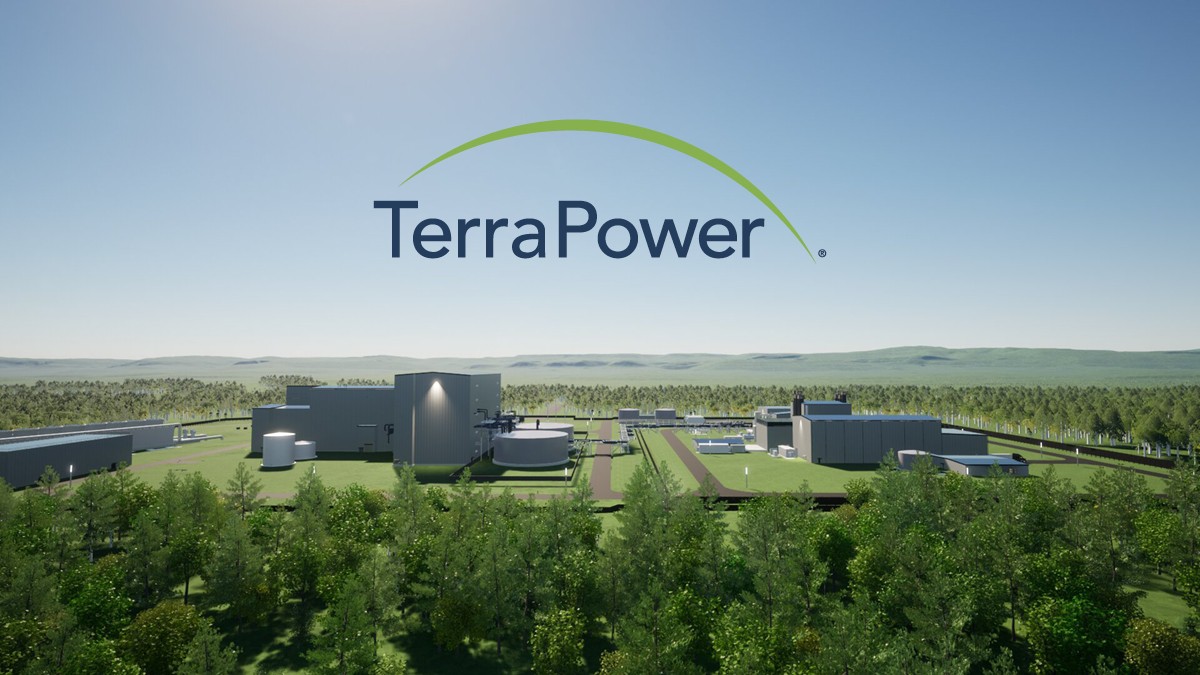
TerraPower's first demonstration project is planned for Wyoming in the United States. Levesque stated that the project has received a construction permit from the U.S. Nuclear Regulatory Commission (NRC) and completed preliminary design, with plans to complete construction by 2030 and begin commercial power generation in 2031. TerraPower is also evaluating candidate sites for subsequent projects together with Meta and preparing to advance other projects.
Regarding construction timelines, Levesque stated that traditional nuclear power plants typically require 8 to 10 years to build, while the construction period for sodium-cooled small modular reactors is approximately three and a half years. Because this type of reactor uses a sodium cooling system with lower operating pressure, it can reduce the large concrete containment structures and some steel quantities required for high-pressure reactors, thereby shortening construction time while ensuring safety.
Regarding the possibility of building projects in South Korea, Levesque stated that TerraPower is in communication with relevant South Korean parties to evaluate potential sites for the first sodium-cooled small modular reactor project. Areas requiring stable, carbon-free electricity—such as semiconductor industry clusters, AI data centers, and large industrial parks—may become priority candidate locations.
Levesque also stated that public concerns about nuclear safety need to be addressed through transparent communication and regulatory review. TerraPower will explain the safety features of small modular reactors to South Korean regulators and the public, using relevant U.S. review experience as a foundation for project advancement.
Chris Levesque was born in 1962 and graduated from Rensselaer Polytechnic Institute with a bachelor's degree in mechanical engineering, later earning a master's degree in mechanical engineering from the Massachusetts Institute of Technology. He previously worked on nuclear power projects and manufacturing at Areva and Westinghouse Electric Company, joined TerraPower in 2015, and has served as CEO since 2018.
Disclaimer: Information republished from partner media, institutions or other websites is provided for reference and communication purposes only. It does not imply endorsement of its views or verification of its accuracy. Please contact us if any content infringes rights or requires correction.