
Russia and China Prepare Package of Nuclear Energy Cooperation Agreements
 Scan to share
Recently, State Atomic Energy Corporation Rosatom is preparing a package of new cooperation agreements with the People's Republic of China, covering the construction of "water-water high-power reactors" (VVER), the development of the nuclear fuel cycle, and Generation IV nuclear power plant projects. Alexei Likhachev, Director General of State Atomic Energy Corporation Rosatom, stated during an event in Shenzhen that these agreements are aimed at consolidating the long-term technological partnership between the two countries in the most promising areas of the nuclear industry.
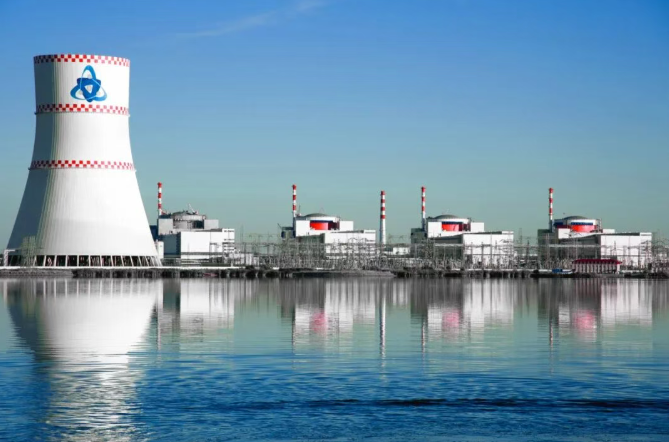
According to reports, the package of agreements not only plans to build "gigawatt-class" units based on "water-water high-power reactors" (a reactor type already recognized as an industry bestseller), but will also expand cooperation in the nuclear fuel cycle. Particular attention in the cooperation is given to Generation IV projects, which focus on the closed fuel cycle, recycling, and the reintroduction of spent nuclear fuel into the production process—an approach that can improve resource efficiency and reduce the volume of radioactive waste.
A separate area of cooperation will be fast neutron reactors, whose development has been included in a joint roadmap. Alexei Likhachev, Director General of State Atomic Energy Corporation Rosatom, expressed the hope that next year the two sides will be able to reach a specific intergovernmental agreement on this area, which would move the technical justification from the planning stage to the stage of joint project implementation.
It is noted that the expansion of the bilateral partnership reflects State Atomic Energy Corporation Rosatom's strategic direction of deepening international cooperation, namely shifting from equipment and fuel supply to joint development of advanced technologies; for the People's Republic of China, this is an opportunity to enhance its own nuclear power installed capacity and accelerate the deployment of innovative solutions, while for Russia, it is an opportunity to consolidate its position in one of the world's largest energy markets and expand its own technological capabilities.
Disclaimer: Information republished from partner media, institutions or other websites is provided for reference and communication purposes only. It does not imply endorsement of its views or verification of its accuracy. Please contact us if any content infringes rights or requires correction.