
Rosatom masters 3D printing technology for copper and copper alloys
 Scan to share
The additive manufacturing technology business division of Rosatom's Fuel Division recently announced that its experts have successfully manufactured products from copper and copper alloys using the RusMelt industrial 3D printer, marking progress in additive manufacturing with copper materials.
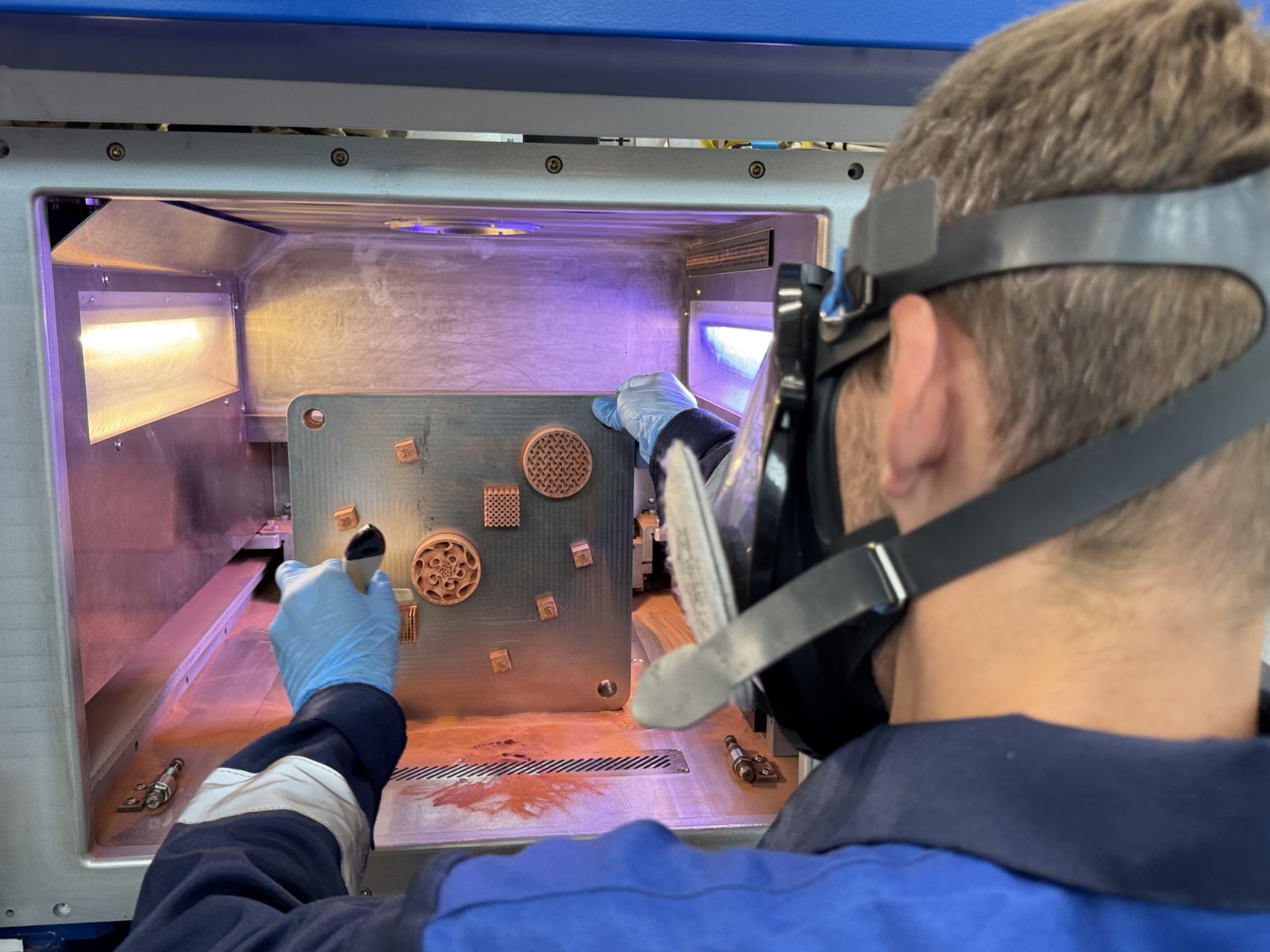
According to reports, Rosatom had previously used selective laser melting (SLM) technology to produce metal 3D-printed equipment of various sizes, with commonly used materials including stainless steel, heat-resistant materials, and titanium. Due to copper's physical properties such as high thermal conductivity and high electrical conductivity, which also pose technical challenges for laser melting, its application in metal 3D printing has long been limited.
Engineers at the company's additive manufacturing technology center in Moscow have developed and optimized the layer-by-layer selective laser melting process for copper powder, enabling printed products to achieve the required quality with low porosity and high thermal conductivity. The R&D team used specially formulated M2 copper powder to print test samples, heat exchanger components, and helical structures suitable for radiator grilles. The relevant products have passed laboratory metallographic inspection. Currently, the technical team is studying post-printing heat treatment methods to further improve the performance of finished products.
Due to its outstanding electrical and thermal conductivity, copper is widely used in the manufacturing of electronics, aerospace, automotive, engineering components, and medical devices. The company stated that SLM printers can now produce small-batch, high-tech copper components with complex internal structures, helping to reduce equipment footprint, improve cooling efficiency, and shorten production cycles.
In terms of application directions, 3D-printed copper components are more suitable for complex and high-cost products, including heat exchangers for power electronics, semiconductors, and telecommunications equipment; engine and generator components; combustion chambers and cooling systems in the aerospace sector; molds and tooling with conformal cooling channels; as well as induction coils, conductive elements, and electrodes.
Ilya Kavelashvili, head of the additive manufacturing technology business division of Rosatom's Fuel Division, stated that traditional manufacturing of copper components in the aerospace or electronics industries typically requires multiple process steps, resulting in long lead times and significant material waste; additive manufacturing can directly print parts with complex geometries and internal structures, thereby reducing waste, compressing production time, and potentially lowering costs.
Disclaimer: Information republished from partner media, institutions or other websites is provided for reference and communication purposes only. It does not imply endorsement of its views or verification of its accuracy. Please contact us if any content infringes rights or requires correction.