
Indian private enterprises lean toward 700 MWe pressurized heavy water reactors to enter nuclear power market
 Scan to share
As India plans to significantly expand its nuclear power capacity, the domestically developed 700 MWe pressurized heavy water reactor (PHWR) is emerging as the primary choice for new entrants in the country's civilian nuclear power sector. Industry players believe this reactor type has established a relatively mature design, supply chain, and engineering service system, making it more suitable as a starting point for private enterprises to enter the nuclear power field.
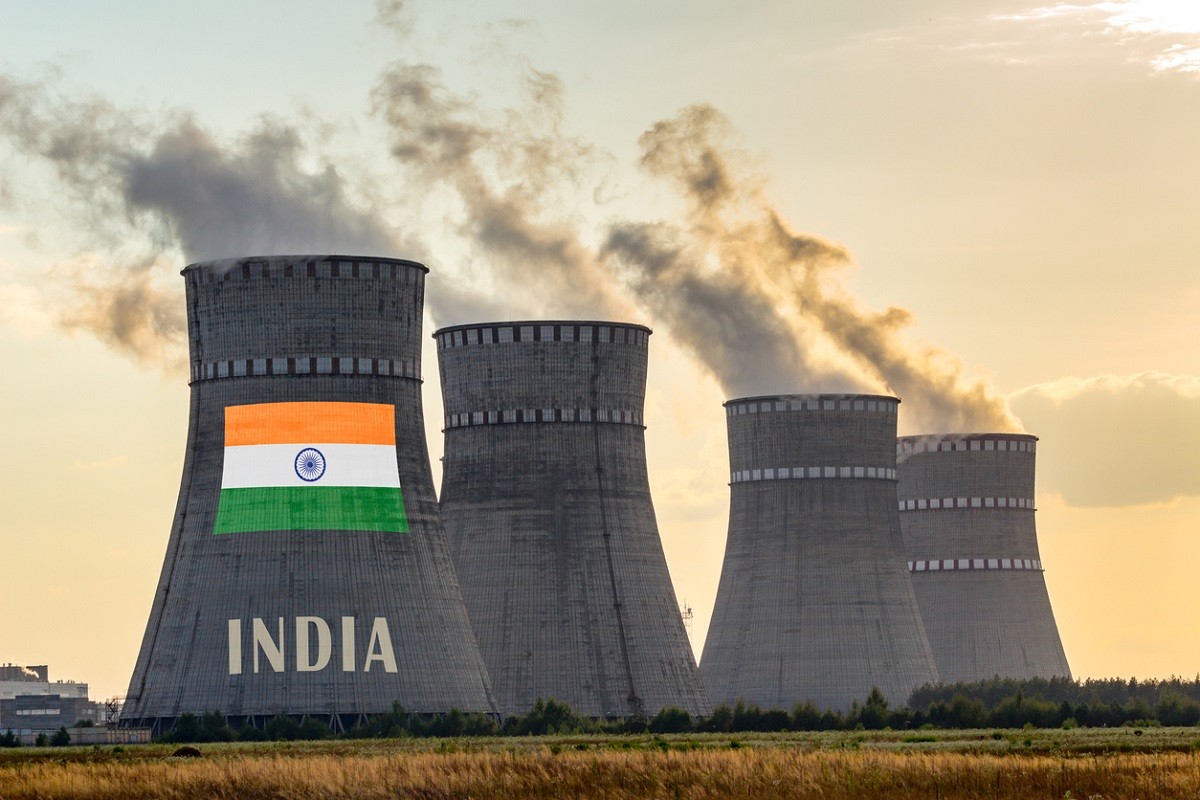
India has proposed increasing its domestic civilian nuclear power capacity to 100 GWe by 2047. Recently, India released the draft rules for the SHANTI Act, establishing a regulatory framework for a broader nuclear power ecosystem, covering private participation, captive power generation, licensing management, safety oversight, and nuclear liability.
At an energy summit held in New Delhi, representatives from NTPC Limited, Adani Nuclear Energy, and Jindal Steel stated that the existing 700 MWe pressurized heavy water reactor technology, with its standardized design, domestic supply chain, and vendor ecosystem, offers a realistic pathway for India's nuclear power expansion. According to the presentations, NTPC's future nuclear capacity target is 30 GWe, Adani Group's target is 10 GWe, and Jindal Steel's target is 18 GWe.
Vivek Sharma, Business Head of Adani Nuclear Energy, said the main challenges for nuclear power expansion are supply chain strength and standardization of reactor designs. He noted that India's 700 MWe PHWR design has been standardized and received regulatory approval, with a well-established supply chain and an indigenization rate of 90% to 95%. In his view, India can first leverage this system to deploy 700 MWe PHWRs in a batch-wise manner, before considering other technology pathways such as pressurized water reactors.
Sharma also stated that relying solely on PHWRs would be insufficient to support India's goal of achieving 100 GWe of nuclear capacity by 2047, and technologies such as boiling water reactors (BWR) and small modular reactors (SMR) will be needed in the future. However, he emphasized that any foreign technology seeking commercial viability in India would need to maximize localization levels to control construction and generation costs.
Naveen Ahlawat, President and Head of Sustainability and Decarbonization at Jindal Steel Limited, also said the company plans to adopt 700 MWe PHWRs in the initial phase, given the technology's mature supply chain and industrial ecosystem. As regulatory approvals, quality assurance programs, and standardization requirements become further clarified, the company can evaluate other reactor types in subsequent phases.
Ahlawat revealed that Jindal Steel has held in-depth negotiations with Rosatom and EDF (Électricité de France) regarding potential nuclear project deployment in later phases, but the company currently remains firmly committed to the 700 MWe PHWR as its initial-phase solution.
K Shanmugha Sundaram, Project Director at NTPC, said that of the company's planned 30 GWe nuclear capacity, at least 80% is expected to comprise PHWRs and pressurized water reactors (PWR), with small modular reactors potentially introduced at a later stage. He noted that the currently available indigenous nuclear technology in India is primarily the PHWR, which offers relatively lower costs; on the PWR front, the Kudankulam Nuclear Power Plant already has operating units. In contrast, small modular reactors still have limited commercial deployment globally, and discussing large-scale application at this stage would be premature.
Disclaimer: Information republished from partner media, institutions or other websites is provided for reference and communication purposes only. It does not imply endorsement of its views or verification of its accuracy. Please contact us if any content infringes rights or requires correction.