
Uzbekistan Approves Radiation Accident Emergency Procedures for Nuclear Power Plants
 Scan to share
Uzbekistan has approved radiation accident emergency procedures for nuclear power plants, specifying the handling procedures when nuclear power plants face the threat of or actually experience radiation accidents. The document was approved by the Industrial, Radiation and Nuclear Safety Committee under the Cabinet of Ministers, registered with the Ministry of Justice, and entered into force on August 20.
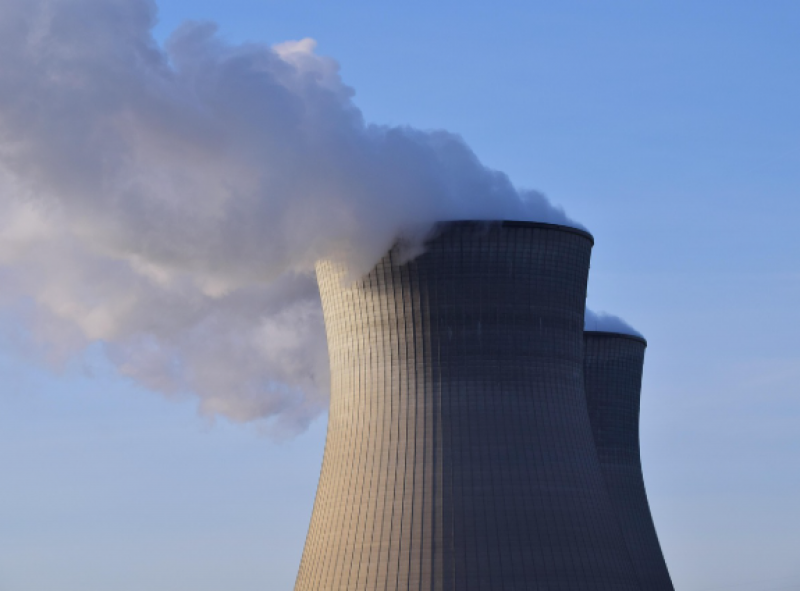
The procedures apply to the siting, design, construction and operation stages of nuclear power plants, covering the conditions for activating emergency states, radiation dose rate criteria, operational information reporting processes, and requirements for emergency rescue organizations.
According to the procedures, the emergency states of nuclear power plants are divided into two levels: "emergency preparedness" and "emergency condition." When the former is activated, it generally means that the safe operation limits or conditions of the nuclear power plant have been exceeded, while the ionizing radiation dose rate has reached the corresponding threshold. If external natural or man-made events such as earthquakes, explosions, fires, or floods occur at the site and affect safety-related systems or safe operating conditions, an "emergency preparedness" state may also be declared.
The radiation criteria for the "emergency preparedness" level are: 10 microsieverts per hour in areas within the controlled zone where personnel are present on a long-term basis; 2.5 microsieverts per hour in the plant site and sanitary protection zone; and 0.1 microsieverts per hour above natural background radiation levels in the observation zone.
When the dose rate in areas within the controlled zone where personnel are present on a long-term basis reaches or exceeds 600 microsieverts per hour, in the plant site and sanitary protection zone reaches or exceeds 200 microsieverts per hour, and in the observation zone reaches or exceeds 20 microsieverts per hour, a higher-level "emergency condition" will be declared. This emergency level should also be entered when a decision is made to activate the severe accident management guidelines.
The emergency state is declared by the head of the nuclear power plant operating organization. If the head is absent or unreachable, the decision is made by the shift supervisor of the nuclear power plant. After the emergency state is activated, the shift supervisor must immediately report initial information to the relevant departments responsible for emergency prevention, emergency response and radiation monitoring, including the cause and circumstances of the accident, the status of the nuclear power plant, and the potential impact on workers, the public and the environment.
Before the emergency state is lifted, the operating organization must report to the relevant authorities every 12 hours on the radiation situation at the nuclear power plant and surrounding areas, the safety status of the facility, the development of the accident, and the response measures taken.
The procedures also require the nuclear power plant to establish a scientific and technical support team, an emergency assistance team, and on-site and off-site emergency management centers. The on-site command center should be located in a protected facility within the plant site; the off-site command center should be located at a safe place outside the plant site and assume emergency coordination functions when the on-site command center is unavailable or does not meet safety conditions.
Before the first batch of nuclear fuel is delivered to the nuclear power plant, the equipment and materials required for radiation accident emergency response must be prepared and in place. Workers and other personnel temporarily entering the plant site and sanitary protection zone must also receive training in advance on actions to be taken after the emergency alert is issued. The nuclear power plant should conduct at least one emergency drill per year involving emergency rescue teams and equipment to prevent accident escalation and mitigate consequences.
Uzbekistan is advancing its first nuclear power project. On June 4, 2026, Uzbek President Shavkat Mirziyoyev and Russian President Vladimir Putin launched the construction of the first unit of the nuclear power project in the Farish district of Jizzakh region via video link. The project is being implemented by the Uzbek side in cooperation with Rosatom, Russia's state atomic energy corporation, and plans to build two VVER-1000 units and two RITM-200N small reactor units.
The Uzbek side has previously stated that the project is being implemented under the supervision of the International Atomic Energy Agency (IAEA) and complies with international safety standards. Once the project reaches its design capacity, it is expected to generate approximately 15.4 billion kilowatt-hours of electricity annually, meeting more than 15% of the country's electricity demand. Mirziyoyev recently also announced that Uzbekistan has begun preparations for the construction of a second nuclear power plant.
Disclaimer: Information republished from partner media, institutions or other websites is provided for reference and communication purposes only. It does not imply endorsement of its views or verification of its accuracy. Please contact us if any content infringes rights or requires correction.