
Uzbekistan Plans to Raise Localization Rate of Nuclear Power Project to Over 30%
 Scan to share
Uzbekistan plans to improve the localization level of the integrated nuclear power plant project in the Jizzakh region, aiming to increase the share of domestically produced goods and equipment from the preliminary estimate of 21% to at least 30%. The project has a total investment of approximately $9.5 billion and is regarded by Uzbekistan as one of the important future sources of baseload electricity.
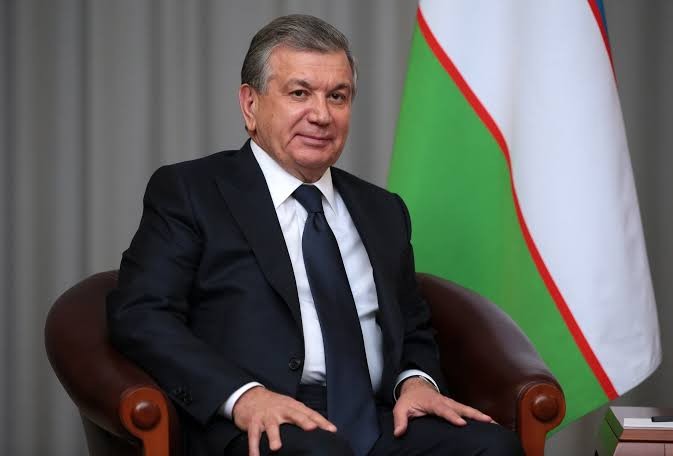
President Shavkat·Mirziyoyev of Uzbekistan stated during an inspection of the project construction site and the planned satellite city for nuclear industry personnel that the current localization rate still needs to be raised, and called for expanding the participation of domestic enterprises in equipment supply, engineering construction, and supporting infrastructure. Based on the total project investment, if the localization rate reaches 30%, the value of domestically supplied goods and equipment will be approximately $2.85 billion.
The integrated nuclear power plant project entered the active construction phase on June 4. To date, earthwork excavation for the reactor building has been completed, with an excavation volume exceeding 1 million cubic meters; concrete pouring for the foundation slab has reached 916 cubic meters; and earthwork within the 100-hectare construction and installation base has also been completed. Approximately 450 workers and specialists are currently involved in the construction, with over 100 units of specialized equipment deployed on site.
According to the plan, the project will use approximately 3,000 types of products and equipment. The Uzbek side requires domestic enterprises to undertake 65% of the construction and installation work, and the project will also require about 7,000 local workers and professionals. Mirziyoyev emphasized that construction quality and nuclear safety must remain top priorities, and all work must comply with the requirements of the International Atomic Energy Agency (IAEA) and relevant international standards.
To support the localization of the nuclear power project, Uzbekistan plans to build an industrial zone covering 200 hectares in the Farish district, focusing on the development of supporting industries such as building materials. According to the plan, at least 100 joint ventures are expected to be introduced into the park, and technology transfer will promote localized production in 15 fields. Relevant departments have been required to submit draft decisions before the end of the year to provide tax and customs incentives for enterprises settling in the zone.
External infrastructure construction for the project is advancing in parallel, including 388 kilometers of transmission lines, one 110 kV substation, 21 kilometers of drinking water pipelines, 120 kilometers of technical water supply networks, 39.5 kilometers of highways, and 11 kilometers of railways. The Uzbek side has proposed that the share of locally produced products and services in related infrastructure procurement should reach 60% to 70%.
The International Atomic Energy Agency conducted an integrated assessment mission on Uzbekistan's national nuclear infrastructure development from June 22 to 26, giving a positive evaluation of the relevant work. Meanwhile, Uzbekistan is advancing the training of nuclear professionals. Since 2023, 216 students have graduated from the Tashkent branch of the National Research Nuclear University MEPhI, of whom 83 have continued to pursue master's and doctoral degrees at universities in China, Hungary, France, Italy, and South Korea, while another 100 professionals are undergoing training at four universities in Uzbekistan.
In terms of supporting living facilities, Uzbekistan plans to build a satellite city covering 200 hectares for workers, specialists, and their families involved in the nuclear power project. The town is planned to include approximately 10,000 apartments, accommodating nearly 33,000 people. The first phase will construct 3,000 apartments, along with schools, kindergartens, medical, sports, cultural, and recreational facilities. The project also plans to adopt modern thermal insulation technologies, alternative energy sources, and smart lighting systems.
Disclaimer: Information republished from partner media, institutions or other websites is provided for reference and communication purposes only. It does not imply endorsement of its views or verification of its accuracy. Please contact us if any content infringes rights or requires correction.