
Taishan Nuclear Power Achieves Full-Process Digitalization for Two Major Environmental Monitoring Inspections
 Scan to share
Recently, the central station inspections of the Plant Environment and Meteorological Monitoring System (KRS) and the Hydrological and Water Quality Monitoring System (YSI) buoy inspections at Taishan Nuclear Power Plant have officially entered full-process digital operation, with all related inspection tasks integrated into the GFIS (Taishan Inspection Data Monitoring System) for online workflow, marking the end of the paper-based inspection sheet era. In the central station equipment room of the environmental laboratory, inspectors can complete online data entry and upload via mobile office devices after verifying data accuracy.
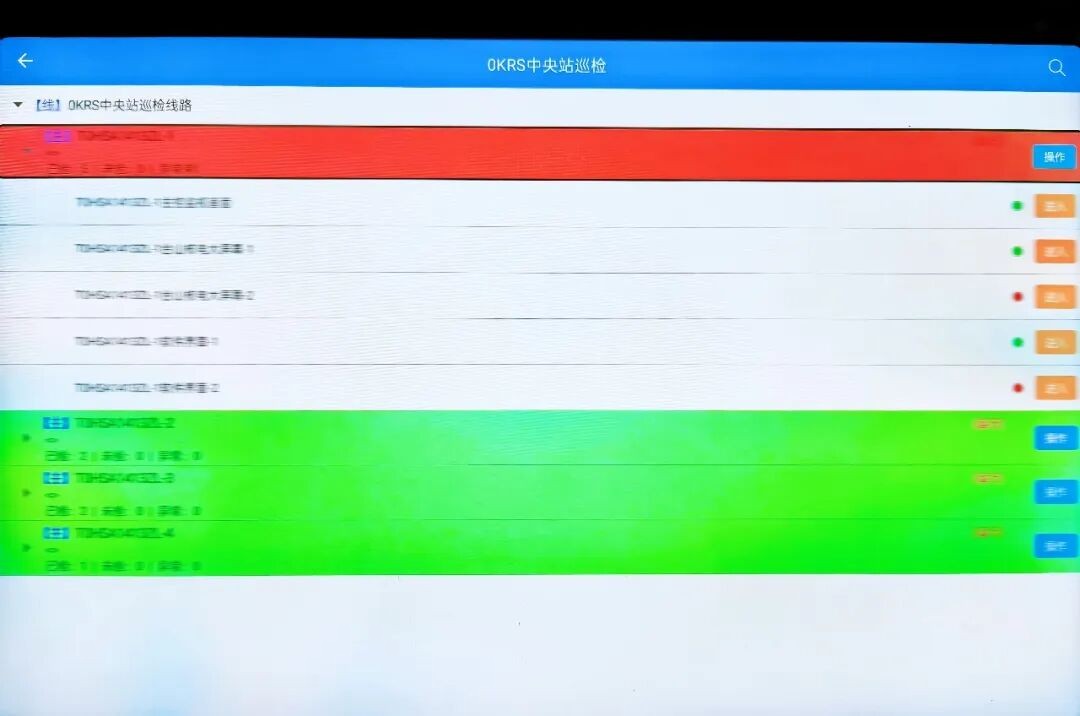
△Inspection interface
Previously, these two inspection tasks relied on paper-based recording, with inspection data manually transcribed on site and handed over offline for review, making real-time verification and sharing of information impossible. The mountains of paper forms not only made data retrieval time-consuming and laborious but also hindered equipment operation and maintenance quality assessments. Driven by the company's digital transformation initiative, these two inspection tasks have now embarked on the path of digitalization.
The Chemistry and Environmental Protection Department proactively coordinated with the Equipment Management Department and the Information and Documentation Department (GFIS System Management Team), with Yan Yijie and Zhao Tingdong forming a task force. Adopting a closed-loop working approach of "proactive learning - problem identification - problem solving - review and summarization," they broke down the entire inspection process into three core stages: on-site data entry, data upload, and data review, completing the configuration of electronic forms, optimization of mandatory fields, and setup of approval workflows item by item, thereby streamlining the entire business chain of online inspection data entry, tiered review, and automatic archiving.
The full-process digitalization of KRS and YSI system inspections has not only significantly improved inspection efficiency but also enhanced inspection quality, further ensuring the authenticity and reliability of inspection data. First, the system's built-in inspection positioning function ensures that the inspection process is traceable and verifiable. Second, the system's built-in automatic data comparison and verification process ensures that any abnormal data is immediately pushed to the responsible person for verification and handling, making information reporting more timely and efficient. Third, all inspection records are retained in the system long-term, supporting rapid retrieval by multiple dimensions such as time, equipment, and personnel, providing reliable data support for equipment condition trend analysis and operation and maintenance decision-making.

△Inspector Yan Yijie is reviewing inspection data
After the system was put into operation, to help inspectors quickly become proficient with the electronic inspection application, the task force also organized a series of specialized training sessions and hands-on coaching, and compiled operation guides to ensure that inspectors can skillfully operate the system and complete digitalized inspection tasks in a standardized manner.
From proactively addressing pain points to the full implementation of the electronic inspection system, and further to comprehensive staff training coverage and the codification of operating guidelines, this digital transformation has provided replicable experience for other similar inspection tasks at Taishan Nuclear Power Plant.
The digital upgrade of these two major inspection systems is also a significant achievement in the full-scale deployment of the GFIS digital inspection system at Taishan Nuclear Power Plant. As a key project in the company's digital transformation, GFIS has been widely applied across multiple areas including operations, maintenance, and technical services, realizing functions such as digitalized on-site inspections, anomaly alerts, and inspection task linkage, effectively driving dual improvements in both quality and efficiency of on-site inspection work.
Disclaimer: Information republished from partner media, institutions or other websites is provided for reference and communication purposes only. It does not imply endorsement of its views or verification of its accuracy. Please contact us if any content infringes rights or requires correction.