
U.S. STREAMLINE Project Advances Nuclear Quantum Many-Body Research with Artificial Intelligence
 Scan to share
On August 25, 2026, a new project named STREAMLINE is combining artificial intelligence, machine learning, and supercomputing to address the nuclear quantum many-body problem in nuclear physics research, aiming to more accurately simulate the interactions between protons and neutrons within atomic nuclei and provide theoretical support for frontier topics such as neutron stars and fundamental interactions.
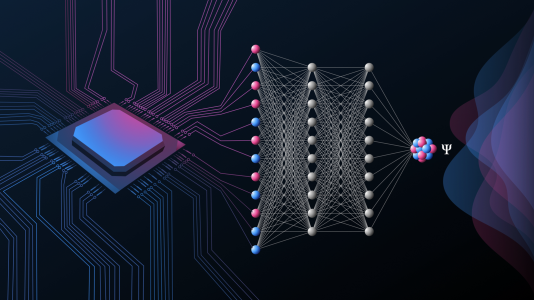
The difficulty of the nuclear quantum many-body problem lies in the fact that as the number of particles increases, the possible interactions among them grow rapidly, and traditional computational methods quickly hit the ceiling of computing power. Even with high-performance supercomputers, only quantum systems of relatively limited scale can typically be handled. The STREAMLINE project hopes to enhance the capability of approximate simulations of complex quantum systems through machine learning methods, allowing computational scales to expand in a more controllable manner.
The research teams involved in the project are using neural networks to represent quantum wave functions. Wave functions contain key information about quantum systems that can be theoretically described. By replacing traditional equation forms with neural networks, researchers can model systems that were previously difficult to handle. According to the project, the relevant methods have expanded from simulating approximately a dozen interacting particles in the past to about 100 particles, providing a new computational pathway for studying systems closer to real atomic nuclei.
The theoretical results produced by the project include observable physical quantities such as the size, energy, and structure of atomic nuclei, which can be compared with experimental data obtained from facilities such as the Argonne Tandem Linac Accelerator System (ATLAS) at Argonne National Laboratory, thereby strengthening the connection between nuclear theory and experimental measurements.
The STREAMLINE project is a collaborative effort involving multiple universities and national laboratories. The Facility for Rare Isotope Beams at Michigan State University is leading the relaunched STREAMLINE 2 collaboration, with participants also including the U.S. Department of Energy's Fermi National Accelerator Laboratory, Oak Ridge National Laboratory, Florida State University, North Carolina State University, The Ohio State University, Ohio University, the University of Tennessee, and Argonne National Laboratory, among other institutions.
At Argonne National Laboratory, nuclear theory research capabilities are combined with advanced supercomputing resources, including the Aurora supercomputer located at the Argonne Leadership Computing Facility. The project also aligns with the U.S. Department of Energy's "Genesis Project" initiative, which aims to accelerate scientific discovery and innovation using artificial intelligence. Researchers believe that artificial intelligence can be used not only for data analysis but also holds promise as an important tool for constructing and solving complex models in fundamental physics research.
Disclaimer: Information republished from partner media, institutions or other websites is provided for reference and communication purposes only. It does not imply endorsement of its views or verification of its accuracy. Please contact us if any content infringes rights or requires correction.