
U.S. Interlune injects helium-4 into lunar soil simulant, simulating 15,000 years of solar wind exposure on the Moon in 4 hours
 Scan to share
U.S. space infrastructure and resources company Interlune announced on August 26, 2026, that it has successfully injected helium-4 into and released it from simulated lunar soil material, with experimental results consistent with the behavior of real lunar samples collected by the Apollo program. The company stated that this capability can simulate nearly 15,000 years of solar wind exposure on the lunar surface in approximately 4 hours, providing a material basis closer to real conditions for testing lunar resource development equipment on Earth.
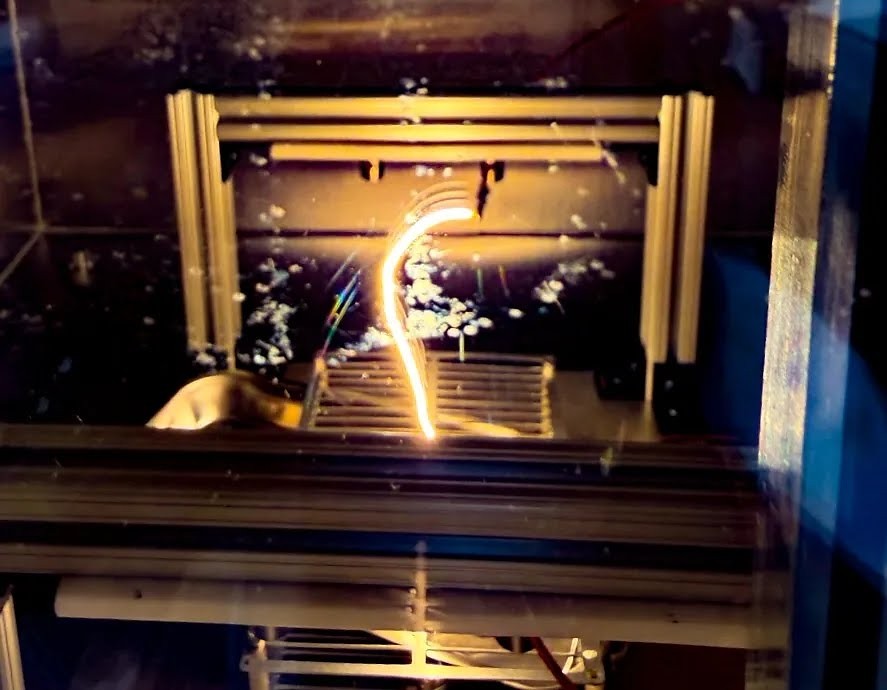
The experiment focused primarily on ilmenite. According to studies of Apollo mission samples, ilmenite is the main helium-bearing mineral in lunar soil. Interlune formed a plasma by ionizing helium gas in a vacuum environment, then accelerated helium ions into the ilmenite simulant, creating microscopic defects at the crystal lattice edges similar to those formed by long-term solar wind bombardment, thereby providing retention space for volatile gases such as helium.
To verify the injection effect, the research team gradually heated the treated ilmenite in a vacuum chamber and used a mass spectrometer to measure the composition of the released gas. The results showed that helium was primarily released in the temperature range of 300 to 800 degrees Celsius, consistent with the temperature range observed in Apollo sample studies conducted in the 1970s. Interlune stated that this indicates the method can effectively reproduce the process by which solar wind injects helium into lunar soil.
The company plans to use this helium-bearing lunar soil simulant to test its self-developed volatile gas collection system. Unlike many extraction approaches that require heating lunar soil to nearly 1,000 degrees Celsius, Interlune proposes using mechanical methods to release volatile gases from lunar soil at scale, reducing reliance on extensive heating. The company stated that this method aims to save up to 10 times more energy compared to thermal extraction approaches.
Interlune stated that it currently has the capability to produce gas-bearing lunar soil simulant at gram-to-kilogram scale, supporting larger-scale prototype equipment and integrated hardware testing. The company also plans to provide related materials and testing services to commercial companies, research institutions, and government customers.
As a next step, Interlune plans to add hydrogen to the simulant injection process. The company believes that hydrogen plays a key role in modifying the crystal structure of ilmenite and helping to capture and retain solar wind gases. In the future, Interlune also hopes to adjust the mineral composition of the simulant and the concentration of injected gases to simulate surface conditions in different lunar regions, providing testing support for lunar resource extraction systems and long-term lunar surface operations technology development.
Disclaimer: Information republished from partner media, institutions or other websites is provided for reference and communication purposes only. It does not imply endorsement of its views or verification of its accuracy. Please contact us if any content infringes rights or requires correction.