
NPCIL plans new design unit to support indigenous PHWR deployment
 Scan to share
Months after India's tightly regulated nuclear power sector opened up to private capital, Nuclear Power Corporation of India Limited (NPCIL) plans to establish a new design unit to provide technical support to private companies and state governments interested in adopting indigenous nuclear reactor technology. The proposal for this business segment is still under approval.
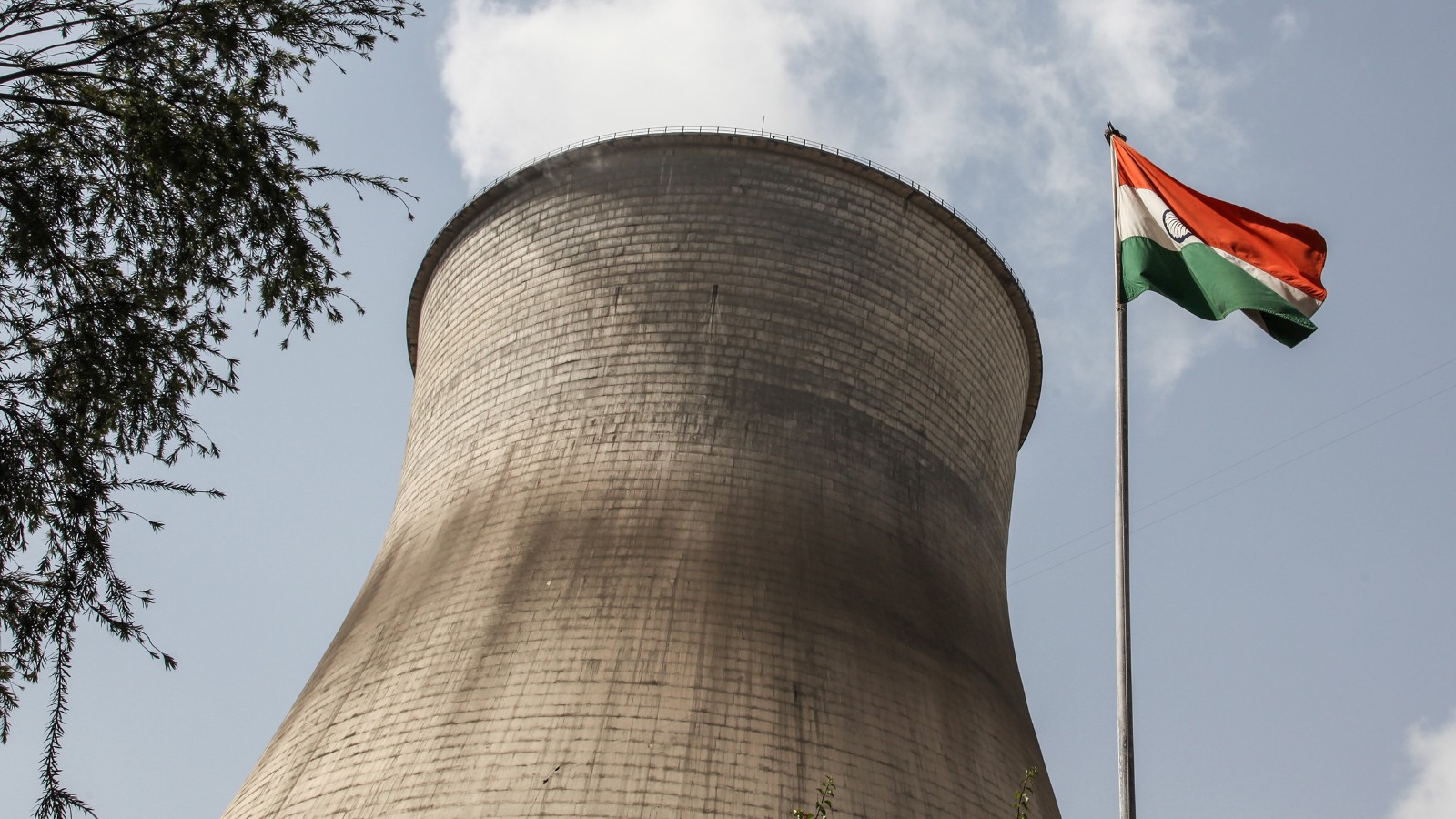
Under the plan, the new unit will offer technical support, design review, and quality assurance services to entities seeking access to Pressurized Heavy Water Reactor (PHWR) technology and related engineering expertise. With the release of draft rules under the Sustainable Harmonious Advancement of Nuclear Technology in India (SHANTI) Act, the legal framework for licensing new nuclear projects in India is expected to be further clarified, and NPCIL also hopes to reorganize its internal functions accordingly.
Currently, NPCIL builds and operates nuclear projects primarily based on PHWR technology developed indigenously. India's existing nuclear power capacity stands at approximately 8.7 GWe, all of which is operated and managed by NPCIL. Given the mature supply chain and industrial ecosystem already established domestically, PHWRs are regarded as a more viable technology pathway for the initial phase of India's nuclear expansion, attracting growing interest from public sector enterprises and private companies alike.
The Central Electricity Authority (CEA) of India, in its roadmap targeting 100 GWe of nuclear power capacity by 2047, has also listed PHWRs as the preferred technology option for other public sector enterprises and private companies. The authority believes that since NPCIL itself is also tasked with expansion projects, it cannot provide end-to-end guidance to all new entrants planning to build heavy water reactors, making it necessary to establish a dedicated institution to provide technical support to other power utilities.
The CEA has suggested that the relevant institution could be placed under the Department of Atomic Energy (DAE), with experts drawn from the Bhabha Atomic Research Centre (BARC), the Indira Gandhi Centre for Atomic Research, and other specialized units under the DAE.
Among global nuclear technology pathways, India's indigenous PHWRs are considered better suited to the price-sensitive Indian power market. Industry insiders point out that excessively high project costs would weaken nuclear power's competitiveness against other power sources. India's earlier push for the French-supported nuclear project at Jaitapur in Maharashtra has long been hampered by slow progress, with the expected high tariff identified as one of the major obstacles.
According to industry estimates, India's indigenous reactors cost approximately INR 18 million per MW of electricity, Russian technology costs around INR 34 million per MW, and French and American reactor technologies are expected to be even more expensive. A nuclear industry expert noted that foreign technology would only become cost-viable under bulk procurement conditions, but it is unlikely at this stage to see orders for 15 to 25 reactors at once. Therefore, until foreign reactor costs decline, private companies are more likely to prioritize the cost-effective PHWR option.
Indian private companies are also accelerating their entry into nuclear power. Adani Nuclear Energy and Jindal Steel have recently stated that the existing 700 MWe-class PHWR design has mature standards, and the domestic supply chain, vendor ecosystem, and technical capabilities are relatively well-established, making it a realistic starting point for expanding nuclear capacity. The two companies plan to develop 10 GWe and 18 GWe of nuclear power capacity respectively over the coming years. Industry insiders believe that as India's nuclear industry matures further, foreign reactor technology and Small Modular Reactors (SMRs) may play a role in subsequent phases.
Disclaimer: Information republished from partner media, institutions or other websites is provided for reference and communication purposes only. It does not imply endorsement of its views or verification of its accuracy. Please contact us if any content infringes rights or requires correction.