
Qinshan Nuclear Power Membrane Deoxygenation Retrofit Project Put into Operation
 Scan to share
Recently, the membrane deoxygenation retrofit project at Qinshan Nuclear Power completed commissioning and was put into operation. The project applies membrane deoxygenation technology to the auxiliary feedwater system (ASG) and reactor boron and water makeup system (REA) of Units 1 and 2 at Qinshan Nuclear Power Plant Phase II, optimizing and upgrading the original deoxygenation process.
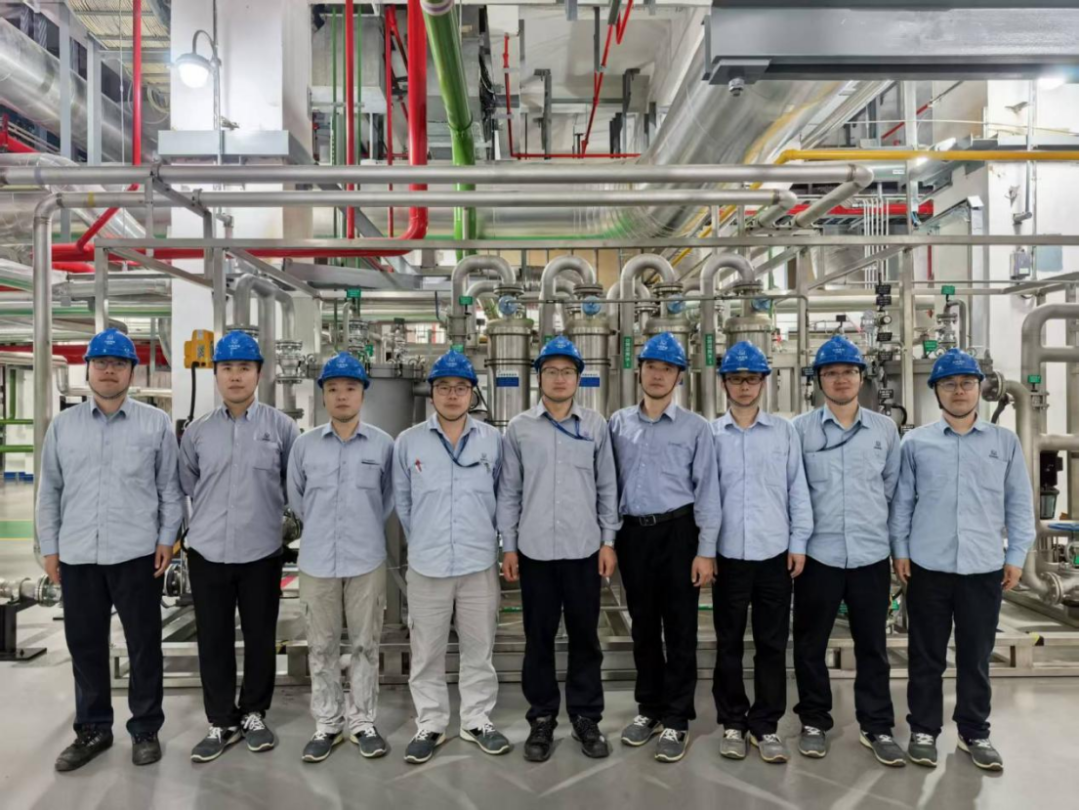
Units 1 and 2 of Qinshan Phase II originally adopted thermal deoxygenation. During long-term operation, this method presented issues such as insufficient redundancy in single-train equipment operation, high temperature and humidity on site, and potential exceedance of auxiliary feedwater tank temperature limits during summer peak temperature periods. To enhance system operational reliability, Qinshan Nuclear Power initiated relevant technical retrofits, introducing membrane separation packaged units to form a parallel standby and flexibly switchable operation mode with the original thermal deoxygenation system.
During project implementation, multiple disciplines including operations, maintenance, technical services, and engineering worked in coordination. Due to the large size of the membrane deoxygenation units and the limited width and height of transport passages within the conventional island, the equipment could not be moved as a whole. The construction team disassembled the equipment for batch transport and adopted measures such as slow-speed transport and installation of shock-absorbing pads in the high-temperature environment to minimize impact on adjacent operating equipment.
After equipment arrival on site, the team also faced challenges including limited installation windows and a heavy workload for scaffold dismantling. By optimizing work sequences and conducting parallel operations, the construction team completed installation within the planned schedule. For the piping layout requiring a 1.2-meter-diameter opening in the conventional island floor slab, the project team coordinated structural assessments and proceeded after confirming that the impact on overall plant rigidity was negligible.
During the commissioning phase, the project team rectified and improved piping arrangements, instrumentation configurations, sampling point locations, and control logic, and conducted single-train and dual-train joint commissioning tests to verify equipment operational reliability. The on-site units feature a four-stage deoxygenation membrane design and are equipped with an upper-computer monitoring system, enabling logic interlocking and one-key switching between the membrane deoxygenation units and the original thermal deoxygenation system. The two trains can operate simultaneously or individually, serving as backups for each other.
This retrofit also involved laying communication fiber optic cables to transmit equipment operational data in real time to display terminals in the control room, allowing operators to remotely perform start/stop operations and full-process monitoring, reducing on-site duty time in high-temperature and noisy environments. In response to the compatibility requirements of membrane modules in the ETA alkaline environment, the project team completed verification during commissioning, confirming stable unit operation and water quality meeting requirements.
After commissioning, the dissolved oxygen content in the effluent of the membrane deoxygenation units is stably controlled at no more than 10 ppb, better than the design requirement of no more than 20 ppb. Compared with the original thermal deoxygenation process, the membrane deoxygenation process requires no steam consumption and reduces electricity consumption. It is estimated that electricity costs alone can save approximately RMB 180,000 per year for the two units.
Qinshan Nuclear Power stated that this project validated the applicability of membrane deoxygenation technology in specific systems of nuclear power plants, providing replicable and scalable engineering experience for subsequent retrofits of similar units.
Disclaimer: Information republished from partner media, institutions or other websites is provided for reference and communication purposes only. It does not imply endorsement of its views or verification of its accuracy. Please contact us if any content infringes rights or requires correction.