
First Application and Verification of Intelligent Monitoring and Adjustment System for Nuclear Power Plant Personnel Status at "Hualong One" Nuclear Power Plant
 Scan to share
The system, built upon the personnel fatigue status monitoring principle prototype developed under the Intelligent Nuclear Power strategic special project, has been iteratively improved with continuous support from the Yangjiang Chuangbao High-tech Research Project and the National Key Laboratory research projects, and has now evolved into a mature product suitable for engineering and large-scale application. Previously, relevant functional modules of the system had been deployed and data collected in applications such as human factors verification in the main control room of Yangjiang Nuclear Power Base and simulator training at Taishan Nuclear Power Base. The on-site testing and data collection at the San'ao Nuclear Power Base further verified the system's environmental adaptability and reliability across multiple nuclear power base scenarios, laying a solid foundation for subsequent industry-wide promotion and application.
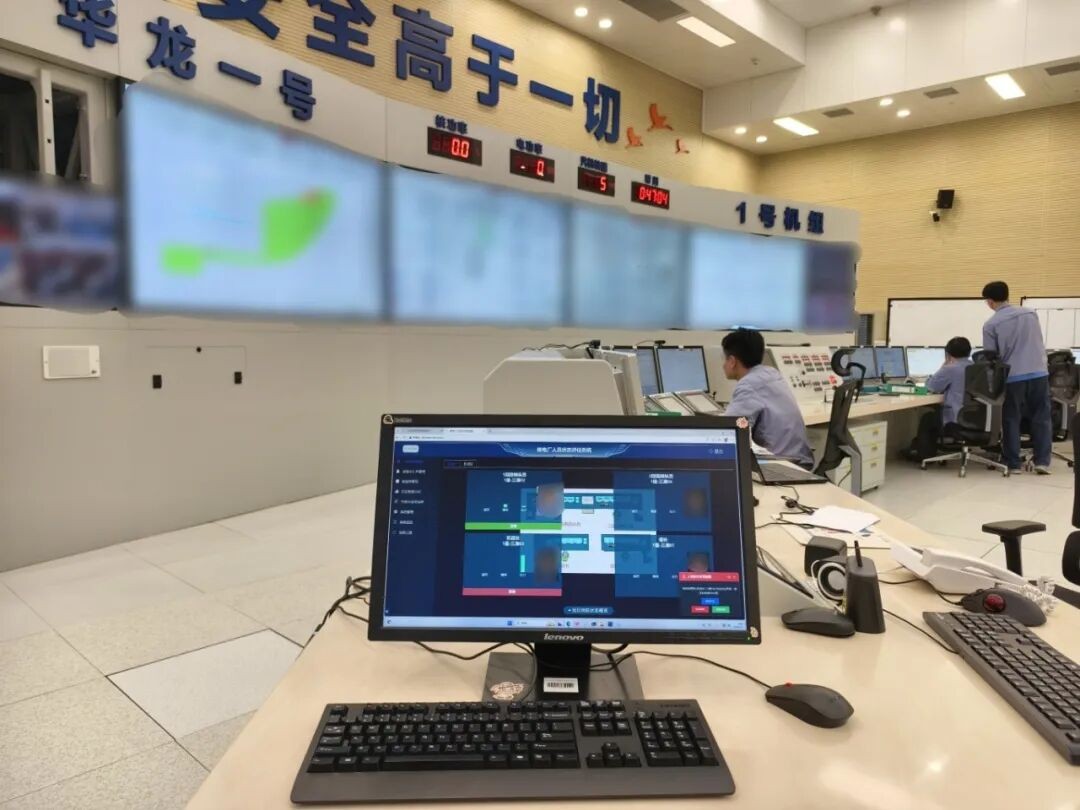
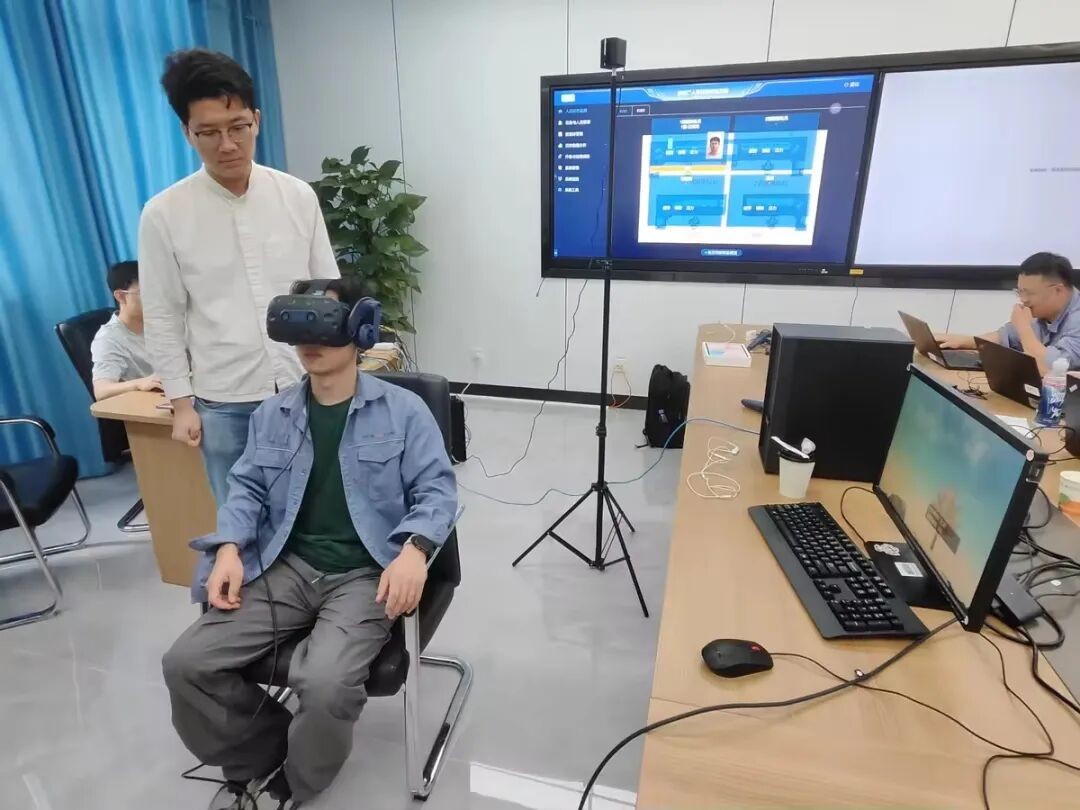
▲The system pioneers the closed-loop management of "Perception—Assessment—Early Warning—Adjustment"
This test focused on verifying the system's operational stability, data collection accuracy, and multimodal fusion capability in real nuclear power environments. Centered on the core concept of "Perception—Assessment—Early Warning—Adjustment," the system achieves 24/7 continuous monitoring of operator fatigue, stress changes, attention decline, and emotional abnormalities through multimodal technologies including visual perception (facial expression, eye state, and head posture analysis) and physiological monitoring (heart rate, skin conductance, activity level, etc.).
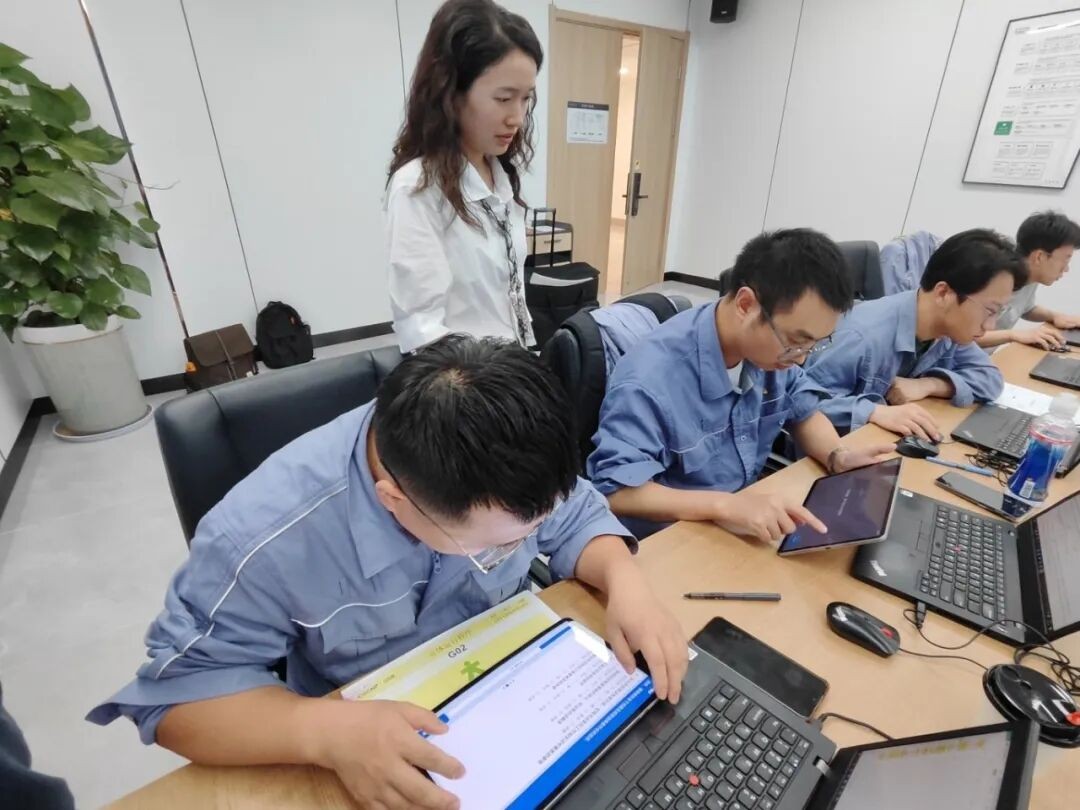
▲Construction and verification of the personnel fitness-for-duty assessment system
During the test, the system successfully collected large volumes of real-time status data from operators and performed precise quantitative analysis using multimodal information fusion algorithms. When the system identified abnormal trends, it could promptly issue three-level early warnings of "Normal, Attention, Abnormal" to management personnel, providing objective evidence for personnel adjustment and risk intervention. Meanwhile, auxiliary facilities configured in the adjustment room, including VR arousal training, psychological adjustment equipment, and biofeedback regulation devices, help operators promptly restore their physical and mental state, achieving closed-loop management of "Problem Detection—Timely Intervention—State Recovery." The system breaks through the traditional manual management model that relied on shift supervisors' experience-based judgment, achieving a fundamental transformation from "detecting problems after the fact" to "identifying risks in advance and proactively preventing risks." The system's abnormal state recognition accuracy has exceeded 90%, with key technical indicators reaching industry-leading levels.
The project team has filed 9 invention patent applications, obtained 1 software copyright, and published 2 EI-indexed core journal papers related to the system, forming a complete intellectual property protection framework. The project achievements have passed appraisal by the China Nuclear Energy Association, reaching an advanced level comparable to international peers, and demonstrate prospects for replication and promotion across industries including nuclear power, thermal power, hydropower, petrochemical, and rail transit.
Disclaimer: Information republished from partner media, institutions or other websites is provided for reference and communication purposes only. It does not imply endorsement of its views or verification of its accuracy. Please contact us if any content infringes rights or requires correction.