
Russia's Kursk Nuclear Power Plant Releases Annual Environmental Report
 Scan to share
Russia's Kursk Nuclear Power Plant recently presented its annual environmental report to local residents in the city of Kurchatov. This year's presentation adopted a cycling event format for the first time, with participants including local residents, city Duma deputies, and relevant personnel, held in the area of “Warm Coast” Park.
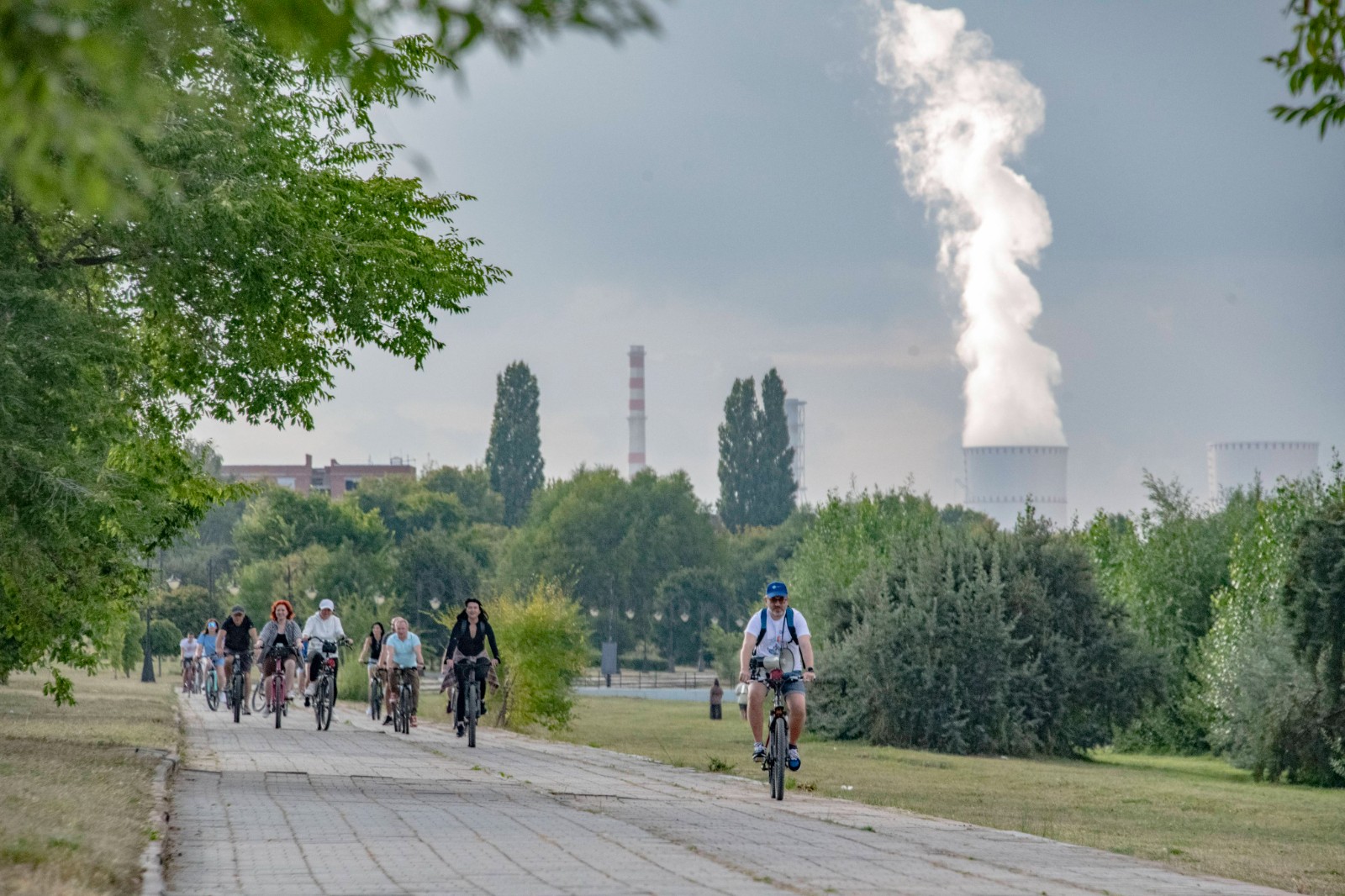
The Kursk Nuclear Power Plant is part of Rosenergoatom, the power generation division operator of Russia's state nuclear corporation Rosatom. The plant stated that the event route was specially designed to allow participants to learn about environmental protection data during the ride and directly observe the environmental conditions in the area surrounding the plant.
Alexander Uvakin, Director of the Kursk Nuclear Power Plant, noted that in 2025, the plant allocated approximately 1.2 billion rubles for environmental protection, primarily directed toward land protection and restoration, surface and groundwater protection, environmental monitoring, atmospheric protection, and disposal of various categories of waste. He stated that the plant's unit operating indicators have long remained within strictly regulated limits, and years of monitoring results show that the ecological environment around the site remains generally stable.
Maxim Metlitsky, an environmental protection expert at the Kursk Nuclear Power Plant, stated that in 2025, due to a reduction in scrap metal generated during equipment decommissioning, the volume of waste sent for disposal decreased by more than 30% year-on-year. The relevant waste consists primarily of Class 4 and Class 5 waste, which is of lower hazard, including ceramic products, site cleaning debris, and natural wood products that have lost their useful value — common waste types from industrial enterprises.
During the event, participants also learned about environmental initiatives undertaken by plant employees, as well as ecological protection measures such as the stocking of juvenile fish in the cooling pond. Kurchatov resident Olesya Zvyagintseva noted that, compared to traditional report presentations, the cycling format is more accessible for families and children and makes the dissemination of environmental information more intuitive.
According to available data, the Kursk Nuclear Power Plant is one of the key nodes of Russia's “Center” power system. Currently, Units 3 and 4 (RBMK-1000) and Unit 7 (VVER-TOI) are in power generation operation, while Units 1 and 2 (RBMK) have been transferred to non-power generation operation mode upon reaching their designated service life.
Radiation levels at the Kursk Nuclear Power Plant and in the surrounding area remain within the range corresponding to normal unit operation and do not exceed natural background values. Rosenergoatom currently operates 11 nuclear power plants in Russia, including one floating nuclear thermal power plant, with a total of 33 units and an installed capacity of 28.5 GW, generating approximately 19% of Russia's national electricity supply.
Disclaimer: Information republished from partner media, institutions or other websites is provided for reference and communication purposes only. It does not imply endorsement of its views or verification of its accuracy. Please contact us if any content infringes rights or requires correction.