
Fourteen academic societies in South Korea call for protection of KRR-1 research reactor auxiliary buildings
 Scan to share
On September 1, fourteen academic societies and associations, including the Korean Nuclear Society, issued a statement welcoming the temporary registration of the "Research Reactor Unit 1 (KRR-1, TRIGA Mark-II) reactor hall and auxiliary buildings" in Gongneung-dong, Nowon-gu, Seoul, as nationally registered cultural heritage, and urged Korea Electric Power Corporation, the owner of the site and buildings, to promptly submit a formal registration application.
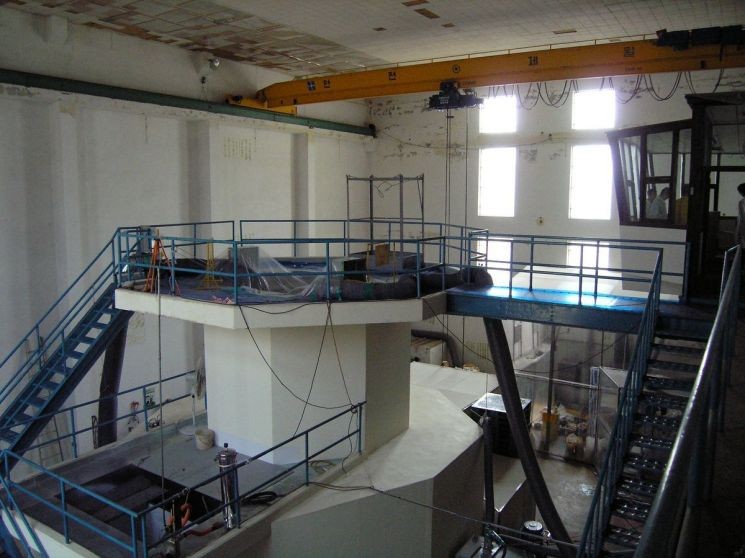
Panoramic view of KRR-1, South Korea's first research reactor. Korea National Heritage Administration
The Korea National Heritage Administration had placed the KRR-1 reactor hall and auxiliary buildings on the temporary list of nationally registered cultural heritage on July 1 through the emergency measures system, suspending related demolition work. However, if a formal registration application is not submitted by the end of December this year, the temporary listing will lapse and demolition work may resume. The academic societies and associations stated that the protection outcome has not yet been finalized, and therefore a decision needs to be made promptly.
KRR-1 is South Korea's first research reactor, introduced in 1959 by General Atomics with U.S. assistance. The reactor operated from 1962 until its shutdown in 1995, and during its 33 years of operation played a significant role in basic nuclear research, production of medical and industrial radioisotopes, development of reactor operation technologies, and training of professionals in the nuclear field.
The organizations noted that the technological and human resource foundation built through KRR-1 later drove subsequent developments, including the self-reliant construction of the HANARO research reactor, the export of a research reactor to Jordan, the development of APR1400, and overseas exports of nuclear power plants.
In 2013, the KRR-1 reactor body was registered as nationally registered cultural heritage for its historical value, but the reactor hall and surrounding auxiliary buildings were not included in the registration scope. The academic societies and associations argued that preserving only the reactor body alone makes it difficult to fully present its historical and educational value. The control room, shielding walls, neutron beam lines, and other actual operational spaces are equally important components that reflect the scientific research and educational activities of that era and should be preserved together.
The statement also noted that the KRR-1 building itself holds architectural historical significance, as it was designed by Kim Jong-seong (Kim Chung-up), a leading figure of modern Korean architecture. The organizations suggested that KRR-1 could serve in the future as an educational, exhibition, and public engagement venue showcasing the development of South Korea's nuclear energy, energy, and science and technology.
Korea Electric Power Corporation responded that Reactor Unit 1 was already registered as cultural property in 2013; regarding the further registration of auxiliary buildings, the company is conducting a comprehensive review, as such registration may restrict KEPCO's exercise of property rights over the Human Resources Development Center.
Disclaimer: Information republished from partner media, institutions or other websites is provided for reference and communication purposes only. It does not imply endorsement of its views or verification of its accuracy. Please contact us if any content infringes rights or requires correction.