
Smolensk NPP Phase II Units Pass State Environmental Review
 Scan to share
Recently, the Russian State Environmental Expert Review body has issued a positive conclusion on the justification materials for the construction license of Units 1 and 2 of the Smolensk NPP Phase II project. This conclusion marks the formal confirmation of the project's environmental feasibility at the national level, and also validates the remarkable achievements made through long-term cooperation between the owner Rosatom State Atomic Energy Corporation and the general designer Rosatom Engineering Design JSC. The conclusion was officially announced at a working group meeting held at the Smolensk NPP, marking a new milestone in the project's advancement.
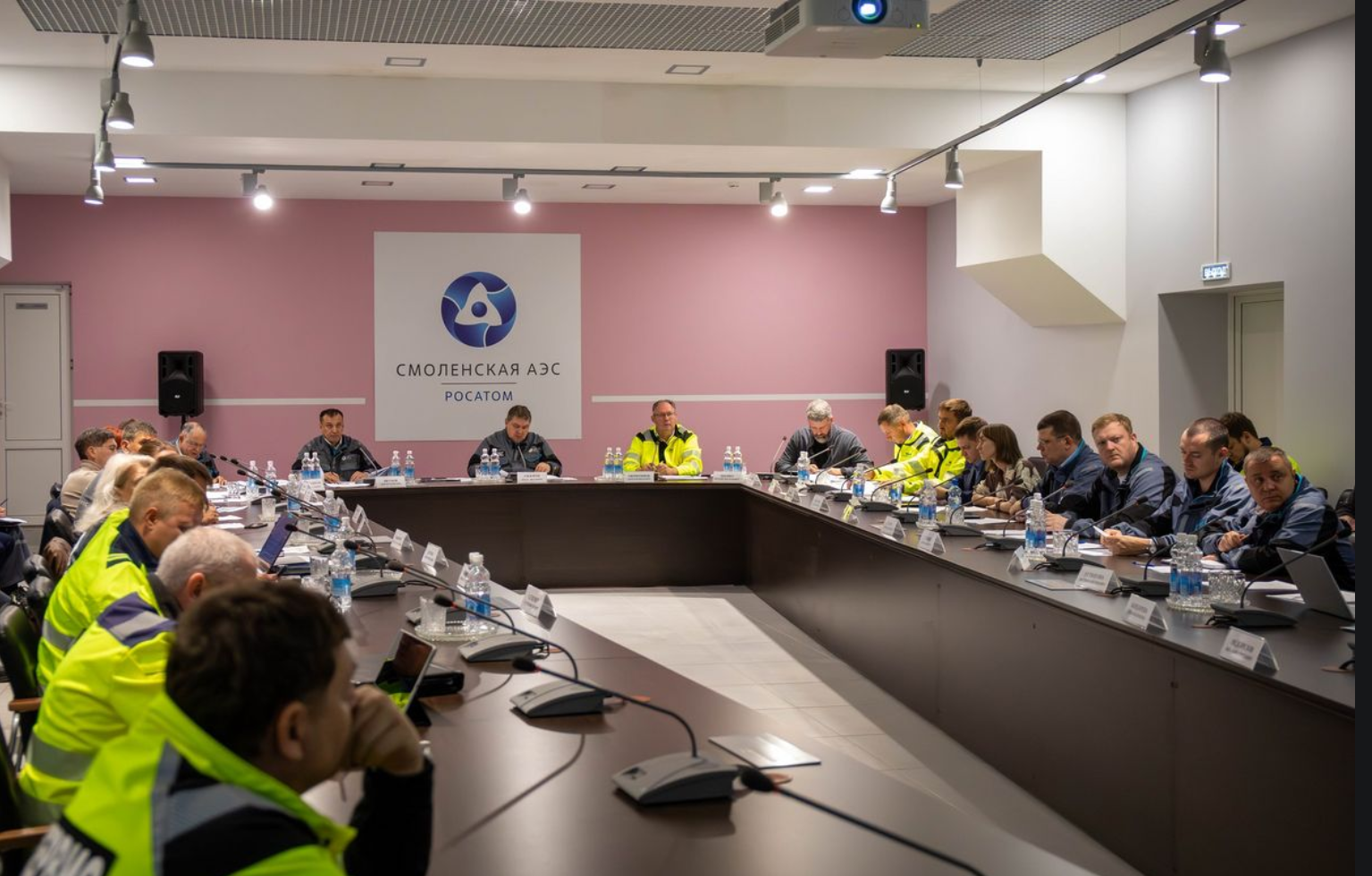
Smolensk NPP Director Ivan·Sidorov emphasized at the meeting the enterprise's sense of responsibility toward the region's residents and future generations, and stated that unit construction would strictly comply with environmental standards. He pointed out that nuclear energy is by definition one of the cleanest energy sources, but public trust in nuclear energy is not built on empty declarations, but on expert data and verified safety evidence. To this end, the project team identified environmental monitoring points in the construction area during the design phase, so that comprehensive baseline data could be established for comparative analysis after the units are put into operation.
Rosatom State Atomic Energy Corporation Director General Alexey·Likhachev stated that implementing ambitious plans such as nuclear power plant construction is a strategic choice in the field of low-carbon power generation, and nuclear energy is becoming an important foundation for the green energy transition. Leonid·Lebedev, Design Director of Smolensk NPP Phase II at Rosatom Design JSC, also added that the design of the new plant fully takes into account the reliable operating experience accumulated by VVER reactors both domestically and internationally. During the design period, detailed engineering surveys and public hearings were also conducted, and mathematical modeling was used to comprehensively assess possible impact scenarios. These measures are aimed at ensuring that the future units have minimal impact on the atmosphere, water resources, and soil.
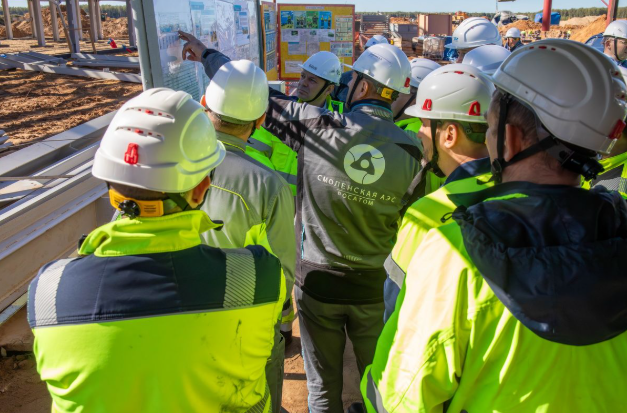
The design of the new plant incorporates a series of comprehensive environmental protection measures aimed at minimizing the impact on the surrounding ecology. The plant has planned modern wastewater treatment facilities and high-efficiency gas recovery systems, and adopts a closed-loop cooling tower reactor cooling system, which is particularly critical for protecting the ecosystem of the Desnogorsk Reservoir. Experts from the Russian Federal Service for Supervision of Natural Resources concluded after assessment that the future units' interference with the surrounding environment will not exceed established standards. In addition, the nuclear power plant's environmental department has begun monitoring the environmental conditions in the construction area and will continuously monitor environmental changes throughout the plant's entire life cycle.
Currently, the construction and installation facilities for the Smolensk NPP Phase II project are being intensively built, making full preparations for formally entering the main construction phase. The foundations for the fiber formwork workshop and concrete mixing station have been poured, and the steel structure of the rebar reinforcement workshop is being installed. On-site infrastructure construction, including roads, fencing, lighting, and fire water supply systems, is also progressing simultaneously. Among these, the transmission line connection to the construction site completed at the end of August this year enabled 24-hour lighting, allowing construction personnel to work beyond daylight hour restrictions.
The Electric Power Division of Rosatom State Atomic Energy Corporation is Russia's largest low-carbon electricity producer, currently operating 10 nuclear power plants, including the world's only floating nuclear power plant. The division has 34 units with a total installed capacity of 28.5 GW, generating approximately 19% of Russia's total electricity output. The Smolensk NPP, as a branch of the company, is not only the main energy company of Smolensk Oblast but also the pillar industry of Desnogorsk, the region's youngest city. It currently operates three units of 1,000 MW each, supplying more than 20 billion kWh of electricity annually to Russia's unified energy system.
In December 2024, the Russian government approved a master plan for the deployment of electric power facilities through 2042. According to this plan, Russia is expected to build 12 medium and large nuclear power plants and 9 small onshore and floating nuclear power plants by 2035, and deploy several nuclear power units overseas. The already-commissioned Smolensk NPP Phase II project adopts VVER optimized reactor technology and will serve as an important foundation for Russia's serial production of large nuclear power plants. The energy sector is committed to enhancing the competitiveness of the national economy, promoting the development and progress of all regions of the country, and providing industry and the public with stable livelihoods.
Disclaimer: Information republished from partner media, institutions or other websites is provided for reference and communication purposes only. It does not imply endorsement of its views or verification of its accuracy. Please contact us if any content infringes rights or requires correction.