
First Batch of Radioactive Waste Transported from New Chernobyl Waste Processing Facility
 Scan to share
The Industrial Complex for Solid Radwaste Management (ICSRM) at the Chernobyl Nuclear Power Plant has officially shipped out seven containers of low- and intermediate-level radioactive waste after completing waste processing. This batch of waste has been transferred to the specially equipped Near-Surface Disposal Facility for Solid Radioactive Waste (ENDSF) for final disposal.
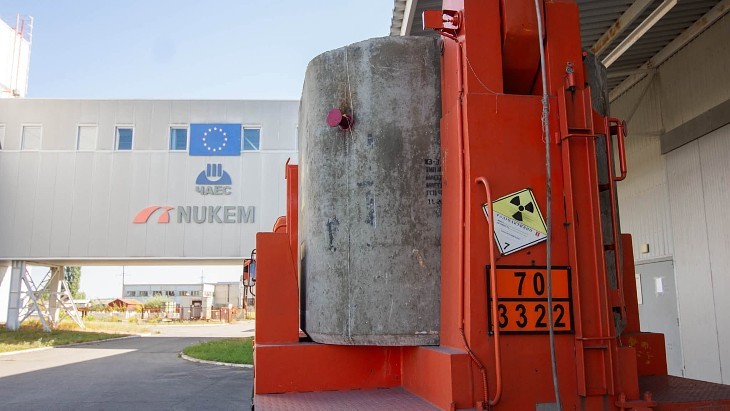
The Industrial Complex for Solid Radwaste Management officially began operations in May this year after obtaining a license from the State Nuclear Regulatory Inspectorate of Ukraine. The new complex is primarily used to process solid radioactive waste accumulated during the operation of the Chernobyl Nuclear Power Plant, which has been stored in the solid radioactive waste storage facility since 1978.
The Chernobyl Nuclear Power Plant originally had four RBMK-1000 reactor units, of which Unit 4 was destroyed in the 1986 accident, while the remaining three units were shut down in 1991, 1996, and 2000 respectively. In addition, two nearly completed but never commissioned units at the site are currently undergoing decommissioning.
According to the Chernobyl Nuclear Power Plant, the waste accumulated over the years includes discarded personal protective equipment, insulation materials, cable insulation and cables themselves, individual metal structures, soil, concrete, rebar, and ion exchange resins from water treatment system filters, among others.
The specialized solid radioactive waste extraction process has a daily processing capacity of 3 cubic meters. The extracted waste is loaded into dedicated transport containers and then sent through process channels to hot cells for the sorting of various types of solid radioactive waste and the processing of low- and intermediate-level radioactive waste.
At this stage, each batch of waste undergoes radiation characterization and monitoring. The system specifically checks for potential ionizing radiation sources and other high-level radioactive waste that might enter the processing flow. After characterization is completed, the waste is loaded into 165-liter drums and compacted. Finally, the immobilized and packaged radioactive waste is transported to the near-surface disposal facility for disposal.
The State Nuclear Regulatory Inspectorate of Ukraine approved the commissioning trial operation of the solid waste extraction facility and the solid waste processing plant at the Chernobyl site in January last year. The Industrial Complex for Solid Radwaste Management is mostly funded by the European Union and integrates four solid radioactive waste management facilities into a single technological cycle, including the temporary storage facility for long-lived low- and intermediate-level radioactive waste and high-level radioactive waste within the liquid and solid waste storage facility that was commissioned in 2010.
In addition, the complex also has a near-surface storage facility for short-lived low- and intermediate-level radioactive waste with a capacity of 55,000 cubic meters, which will receive waste for 30 years and store it for 300 years. The entire complex is subordinate to the State Specialized Enterprise for Radioactive Waste Management of Ukraine, and the site is located approximately 130 kilometers north of Kyiv and about 20 kilometers from the border with Belarus.
Disclaimer: Information republished from partner media, institutions or other websites is provided for reference and communication purposes only. It does not imply endorsement of its views or verification of its accuracy. Please contact us if any content infringes rights or requires correction.