
The "Chain-Building" Lessons from Europe's Fusion Supply Chain: An Industrial Paradigm Leap from "Building Devices" to "Nurturing Chains"
 Scan to share
When examining the global race toward commercializing controlled nuclear fusion, external attention is often drawn to record-breaking plasma temperatures, confinement times, and device scales. However, as the industry gradually enters the deep waters of transitioning from physics experiments to engineering construction, what ultimately determines whether parties can cross the commercialization chasm is often no longer merely theoretical breakthroughs in the laboratory, but rather the thickness of the industrial supply chain hidden behind the spotlight.
Recently, Europe's "Fusion for Energy" organization (F4E, Fusion for Energy) officially released the research report "Building Europe's Fusion Supply Chain: 2007—2026." This report, which systematically reviews nearly two decades of construction history, discloses that through more than €7 billion in EU public investment and over 1,400 contracts, F4E successfully mobilized approximately 2,700 industrial enterprises and 75 R&D institutions, building a vast fusion industrial foundation for Europe. This report not only reveals Europe's "chain-building" logic in the field of extreme manufacturing, but also provides the world (especially China, which is accelerating its fusion industry layout) with profound insights into how to transform large-scale scientific facilities into sustained industrial competitiveness.
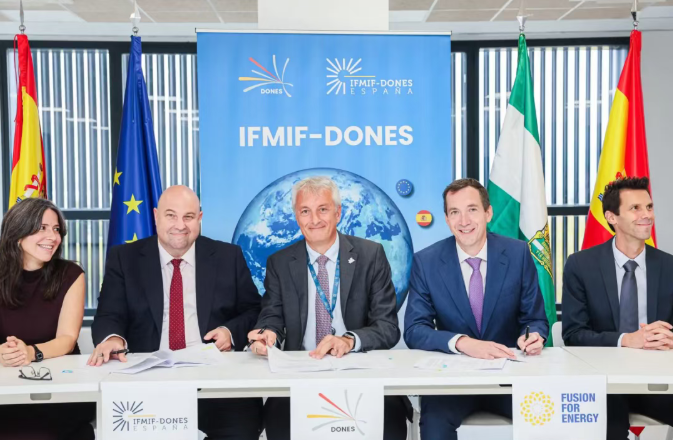
F4E's "Chain-Building" Mechanism: Transforming Public Procurement into Industrial Policy
In traditional scientific research project management, public procurement is often regarded as a passive "buyer-seller relationship"——the project owner proposes technical specifications, and industry delivers products accordingly. However, F4E's core innovation lies in directly upgrading public procurement into a systematic Industrial Policy.
Active "Pumping" of Knowledge: F4E did not wait for the industrial chain to naturally emerge, but rather, based on the EU's stringent public procurement rules, through upfront market intelligence, intellectual property strategy management, and specialized contract tools, systematically and in a planned manner "pumped" proprietary technologies and experimental data from Europe's leading research institutions to the industrial manufacturing end.
Measurable Economic Spillover Effects: The report uses solid quantitative data to break the stereotype that "fusion is a pure fiscal black hole." For example, during 2018–2020, approximately €5.62 billion in F4E expenditure directly generated approximately €5.95 billion in additional Gross Value Added (GVA) and created approximately 39,000 job-years. For policymakers, fusion R&D is not only an energy investment for the future, but also a high-quality public capital allocation capable of driving real-time growth in advanced manufacturing.
Core Survival Crisis: Supply-Side "Use It or Lose It" and Demand Imbalance
However, the most constructive part of the F4E report lies precisely in its candid confrontation of future industrial concerns. Fusion-specific manufacturing capability is an ecosystem highly dependent on continuous investment——specialized production lines, qualified process teams, and system integration capabilities are strongly subject to "use it or lose it" dynamics.
If industrial enterprises upstream in the supply chain cannot obtain credible and sustained demand expectations from project owners, their upfront investments in dedicated production lines and talent teams are highly prone to being lost during prolonged gaps. This constitutes the structural contradiction facing the current global fusion industry: suppliers dare not easily make high-risk capacity investments due to lack of order guarantees, while project owners often fall into delivery delays because the supply chain lacks ready capacity.
The trends among international peers confirm the universality of this pain point. For example, the UK government has anchored domestic supply chain expectations with a £2.5 billion five-year long-term commitment and the STEP program; the US-based Helion Energy has spent $225 million specifically to tackle domestic manufacturing of pulsed power semiconductors. These measures are essentially using "highly deterministic demand pipelines" to hedge against the systemic risk of supply chain rupture.
Innovation in Contract Tools: Making Technical Uncertainty a Manageable Variable
To resolve the above contradictions, F4E has carried out a profound toolbox upgrade in its procurement mechanisms, the core essence of which lies in Phased Procurement and risk-sharing.
Progressive Parallel R&D: In the early stages of a project, F4E refuses to lock in a final manufacturing contract all at once, but instead allows multiple enterprises to participate in R&D in parallel through phased procurement, effectively avoiding strategic missteps caused by over-specification or premature convergence on a technical route.
Risk Hedging at the Prototype Stage: Upon entering the prototype manufacturing phase, multiple suppliers simultaneously build prototypes, accompanied by tailor-made risk-sharing contracts. This mechanism reasonably distributes the economic consequences of highly challenging technical failures between project owners and industry, preventing high-quality suppliers from being ruthlessly squeezed out of the supply chain due to a single R&D setback.
Two-Way Accumulation of Intellectual Property and Capabilities: With intellectual property clauses released in phases, enterprises can smoothly complete the full curve from laboratory R&D and prototype manufacturing to industrialized mass production. F4E's ultimate goal is no longer merely "buying a few qualified components for ITER," but "leaving Europe with a standing industrial field army capable of manufacturing nuclear fusion reactors at any time."
Benchmarking Against China: From "Centralized Device Construction" to "Sustained Chain Nurturing"
Benchmarking against China's currently booming controlled nuclear fusion industry landscape, F4E's twenty years of "chain-building" experience precisely addresses the core considerations of China's next-stage development.
Currently, China has formed a prosperous multi-point development ecosystem in the field of magnetic confinement fusion. Taking Hefei as an example, as one of the poles with the highest fusion industry density in China, the EAST device once set the world record of "100 million degrees for 1,000 seconds," and institutions such as the Hefei Institutes of Physical Science, Chinese Academy of Sciences continue to make sustained efforts. The BEST (Compact Fusion Energy Experimental Device) project assembly is being comprehensively advanced, the Anhui Fusion Industry Federation has gathered nearly 300 member units, and Hefei as a whole has gathered more than 80 enterprises in the fusion industry chain, ranking among the top in the country in patent numbers. Meanwhile, private fusion enterprises and major research hubs in Shanghai, Chengdu, Beijing, and other locations are also accelerating their positioning.
However, China's fusion industry is facing a profound transformation from "nationwide system concentrated on tackling large-scale scientific facilities" to "market-oriented scale chain-building." As Europe's experience reveals: devices can be built through concentrated research efforts, but a healthy industrial chain can only be "nurtured" through sustained, predictable commercial orders.
The next challenge for China's fusion industry is precisely how to more closely couple industrial policies at all levels of local government with national-level large-scale scientific projects at the top-level. Whoever can first provide, through institutional mechanisms, a demand pipeline that is predictable, phased, and willing to reasonably share technical risks will be able to truly forge the existing "having a chain" status into a "strong chain" with global bargaining power.
Conclusion
Europe has blazed a clear industrial logic with €7 billion and twenty years: the ultimate battlefield of fusion commercialization lies not in whether perfect physical parameters can be born in the laboratory, but in whether a heavy-industry supply chain capable of self-sustaining and continuous iteration can be nurtured outside the laboratory. For China's fusion community, which is running at full speed, understanding Europe's "chain-building" logic and timely practicing "procurement itself as industrial policy" will be the key decisive factor in determining whether we can seize the high ground in the next decade of global energy transformation.
Disclaimer: Information republished from partner media, institutions or other websites is provided for reference and communication purposes only. It does not imply endorsement of its views or verification of its accuracy. Please contact us if any content infringes rights or requires correction.