
America's First "Large Reactor in a Chemical Plant" Clears the Hurdle: X-energy Xe-100 Ushers in the Conclusion of Safety Review and a Key Springboard to Commercialization
 Scan to share
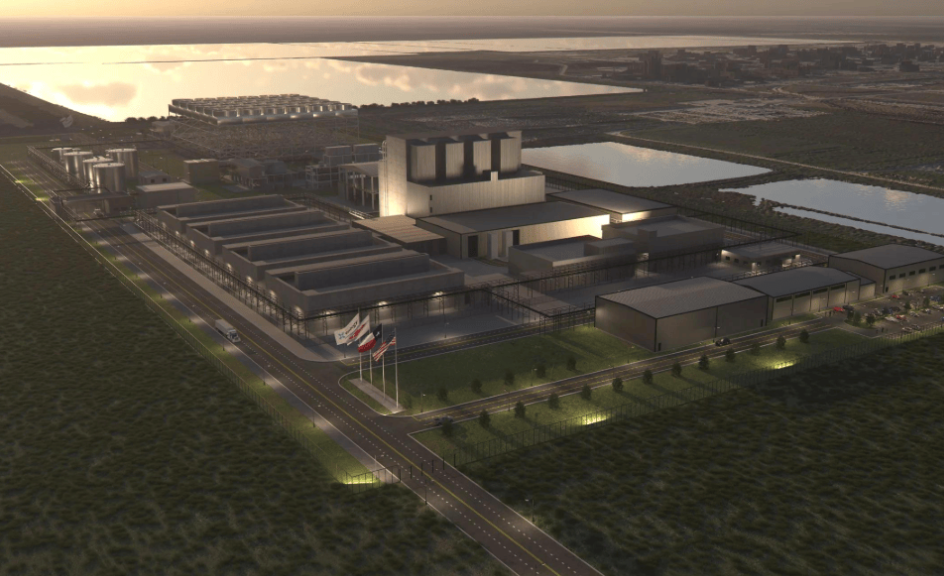
In the global race to industrialize advanced nuclear energy technologies, the high-temperature gas-cooled reactor is reaching a milestone. In late October 2026, the U.S. Nuclear Regulatory Commission (NRC) formally issued the Final Safety Evaluation Report (FSER) for the construction permit application of the Long Mott Generating Station, proposed to be built at Dow Chemical's Seadrift site along the Texas Gulf Coast.
This means that the Xe-100 high-temperature gas-cooled reactor, developed by X-energy with an installed capacity of 320 megawatts electric, has successfully passed the most central safety examination at the U.S. nuclear regulatory level, clearing the most critical technical review obstacle for this advanced reactor driving into a chemical plant.
I. A Hard-Earned Passage Through Traditional Regulations: 10 CFR Part 50 and the Landing of the FSER
The licensing pathway for the Long Mott Generating Station follows the two-step framework of 10 CFR Part 50 of the Code of Federal Regulations, which the United States has used for over half a century to license more than a hundred light water reactors (i.e., first obtaining a construction permit, then separately applying for an operating license after construction). Applying this mature framework to a non-light-water high-temperature gas-cooled reactor is a first in the United States.
The entire review system consists of two gates:
Environmental review comes first: As early as May 2025, the NRC completed the environmental assessment ahead of schedule and made a “no significant environmental impact” determination. Because the project site directly relies on existing industrial land and has an extremely limited environmental footprint, the complex Environmental Impact Statement (EIS) preparation process was waived.
Safety review concludes: The FSER issued this time, as the final chapter of the safety review, comprehensively covers the entire chain of principal design criteria, preliminary design, safety analysis, probabilistic risk assessment, and research and development programs. The independent Advisory Committee on Reactor Safeguards (ACRS), after completing its review, expressed support for issuing the license.
Although the conclusion of the review signifies that NRC staff have determined that the plant design and the site provide a safe basis for construction to begin, the project has not yet formally broken ground. According to the established schedule, the final decision on the construction permit is expected to be formally made between the fourth quarter of 2026 and the first quarter of 2027.
II. The Confidence Behind Industrial Integration: Inherent Safety Embedded Beside the Cracking Furnaces
The Long Mott station is planned to deploy 4 Xe-100 modules, which, while delivering grid-scale electricity, will directly supply 750°C-class high-temperature process steam to the Dow Chemical plant area to replace natural gas cogeneration facilities that are about to be retired. This model of deploying nuclear reactors right next to distillation columns and cracking furnaces challenges the public's perception of traditional nuclear power plants, and its confidence stems from inherent safety at the physical level.
Ceramic coating and low power density: The reactor uses TRISO-X triple-layer ceramic-coated particle fuel, a pebble-bed core, and helium cooling. Even under extreme conditions with total loss of cooling capability and complete evacuation of personnel, reactivity will self-attenuate as temperature rises, and the core temperature will never exceed the failure threshold of the fuel cladding.
Extreme compression of the physical boundary: Based on the above inherent safety, the emergency planning zone (EPZ) of the Long Mott station has been drastically reduced to only 400 meters, almost completely coinciding with the plant boundary, thoroughly breaking the conventional physical isolation practice of traditional light water reactors, which is typically 10 miles (about 16 kilometers).
III. Reusable Assets from the Licensing Pathway: The “Standardization Dividend” That Avoids Duplicative Justification
The Xe-100 is the first high-temperature gas-cooled reactor to submit a construction permit application strictly in accordance with NRC Regulatory Guide RG 1.233 (adopting a modern licensing framework that is “technology-inclusive, risk-informed, and performance-based”).
This achievement was not accomplished overnight. Since 2018, X-energy has engaged in years of high-frequency pre-application interactions with the NRC, cumulatively submitting more than 30 technical documents and obtaining safety evaluations for 14 topical reports, tackling the toughest challenges such as fuel qualification, accident source terms, and transient analysis methods ahead of time. This advanced communication mechanism successfully compressed the formal review cycle to 18 months.
Of even greater strategic value is this set of reusable licensing assets: every future Xe-100 deployed anywhere in the world can directly cite this batch of fuel and source term analysis justification documents that have already received regulatory acceptance. Currently, the UK Office for Nuclear Regulation has accepted the Xe-100 into the Generic Design Assessment (GDA), and U.S.-UK regulatory collaboration is promoting the cross-Atlantic reuse of the NRC's review results, with the goal of completion by the end of 2029.
IV. Unresolved Questions for Commercial Deployment: Financial Decisions and the Fuel Supply Chain
Although regulatory licensing is about to be realized, multiple engineering and commercial thresholds still need to be crossed before the project is fully deployed:
Final Investment Decision (FID): Dow Chemical has clearly stated that after obtaining the construction permit, it still needs to confirm that the project fully meets the company's financial objectives before making a final investment decision, and this milestone is currently scheduled for before the end of 2028.
Physical delivery of the first core fuel: The commercial operation of the reactor is highly dependent on a fuel supply chain located outside Texas. The TX-1 fuel facility in Oak Ridge, Tennessee, obtained a 40-year NRC special nuclear material license in February 2026, and its commercial production target is set for the first half of 2028, with a designed annual output of approximately 700,000 fuel pebbles, aimed at supplying fuel for multiple Xe-100 units in the initial phase.
Conclusion
The clearance of the Xe-100 at the Texas chemical plant site not only blazes a clear regulatory path for the U.S. advanced nuclear energy industry, but also proves to the global industrial community the practical feasibility of high-temperature gas-cooled reactors as an “industrial heat source.” With the announcement of the construction permit approaching, this “miniature sun” deeply embedded in a petrochemical park is steadily taking a decisive step toward commercial operation in the early 2030s.
Disclaimer: Information republished from partner media, institutions or other websites is provided for reference and communication purposes only. It does not imply endorsement of its views or verification of its accuracy. Please contact us if any content infringes rights or requires correction.