
IEA Upgrades Nuclear Power Forecast, Says Crisis Fuels Revival
 Scan to share
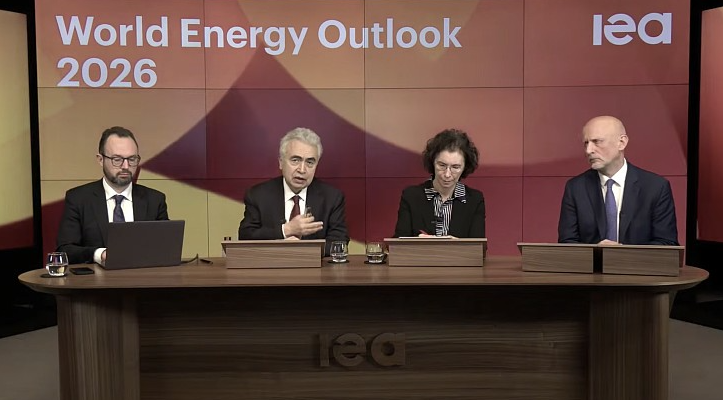
Recently, the International Energy Agency (IEA) officially released the World Energy Outlook 2026, noting that the energy turmoil triggered primarily by the Middle East war and the disruption of shipping through the Strait of Hormuz will drive a nuclear revival, and it has upgraded its nuclear power forecast. The IEA stated that the report is being released at a time when the world faces unprecedented uncertainty, with the impacts of the Middle East conflict and the disruption of shipping through the Strait of Hormuz on energy markets having spread across the globe, compounded by a broader backdrop of geopolitical tensions, trade frictions, intensifying climate risks and cyberattacks.
In the face of cumulative supply losses in the Gulf region of 2.8 billion barrels of oil and 60 billion cubic meters of natural gas, the IEA said the global energy system has shown considerable resilience, but as other buffer mechanisms gradually run out, consumers will bear increasing pressure and face high energy prices. While measures taken by countries to respond to the crisis vary, they share common features such as diversifying energy sources and suppliers, a greater preference for domestic resources, and accelerating electrification. The report notes that the biggest beneficiaries of the shift to domestic energy will be renewables (led by solar photovoltaic power) and nuclear power, both of which show strong growth across the report's various scenario projections.
The IEA believes that, similar to the situation in the 1970s, the 2026 crisis will further drive the nuclear revival; as of mid-year, nearly 90 GW of new nuclear capacity is under construction worldwide, the highest level in 35 years, and more than 50 countries have now established nuclear power plans or targets, including new technologies such as Small Modular Reactors (SMRs). The IEA also stated that compared with the World Energy Outlook 2025, the nuclear power generation forecast has been upgraded, with most of the increase coming from the People's Republic of China and the United States of America, and projections show that nuclear power could grow faster than electricity demand, with nuclear's share in the power mix rising from the current 9%.
In addition to the three commonly used exploratory scenarios, the World Energy Outlook 2026 adds an "Additional Response Scenario" and a "Strait of Hormuz Low Tide Scenario" to expand the analysis of the potential impacts of the Middle East conflict. Under the "Current Policies Scenario," global nuclear installed capacity will increase from 420 GW in 2024 to 583 GW in 2035 and reach 825 GW in 2050 (higher than last year's forecast of 728 GW); under the "Stated Policies Scenario," installed capacity will increase from 592 GW in 2035 to 886 GW in 2050 (also higher than last year's forecast of 728 GW); under the "Net Zero Emissions by 2050 Scenario," nuclear installed capacity will increase from 734 GW in 2035 to 1,203 GW in 2050 (higher than last year's forecast of 1,079 GW).
The report notes that the current geopolitical and energy security environment may further drive nuclear power development, as nuclear power can diversify energy mixes, reduce market volatility risks and enhance energy reliability for electrified economies. Many countries have confirmed or strengthened nuclear power plans and extended the lifetimes of existing reactors in response to the 2026 energy crisis, and some countries are reconsidering restrictions on nuclear energy development. Emerging demands such as electrification, Artificial Intelligence (AI) and data centers also highlight the importance of stable energy. IEA Executive Director Fatih Birol said that the Strait of Hormuz crisis has delivered a massive shock to the entire system, and the longer the crisis lasts, the more profound its impact will be, and there is no practical way for the energy world to return to its pre-crisis state. Sama Bilbao y León, Director General of the World Nuclear Association, said she welcomes the report's clear recognition of nuclear power's key role in the global energy system; nuclear power has been a pillar of decarbonization and energy security for decades, now providing about a quarter of the world's low-carbon electricity and setting a new global nuclear power record last year, and sustained action and close cooperation are needed to turn projections into reality.
Disclaimer: Information republished from partner media, institutions or other websites is provided for reference and communication purposes only. It does not imply endorsement of its views or verification of its accuracy. Please contact us if any content infringes rights or requires correction.