
Search Results
Keyword:RI

Qinshan Nuclear Power Completes Overhaul Validation of Grille Cleaning Robotic Arm
The grille cleaning robotic arm, an integrated system of UAV-based intelligent inspection and robotic arm automatic cleaning independently developed by the Mechanical Team of the Fourth Maintenance Division at Qinshan Nuclear Power, recently completed on-site validation during the Unit 2 312 overhaul at Qinshan Phase II. Designed for seawater system intake grille cleaning scenarios, this equipment transforms the original manual operation requiring entry into deep wells into an unmanned operation conducted under ground-based remote monitoring. The intake grille serves as a critical barrier for the cooling water system of a nuclear power plant, and its unobstructed condition is directly related to the stable operation of the unit. In traditional cleaning methods, workers were required to enter narrow shafts more than twenty meters underground to perform inspection and cleaning in confined spaces, which involved high labor intensity, low efficiency, and safety risks such as falls from height...
2026-09-03

Chinese Research Team Develops Novel Adsorbent Material for Uranium Extraction from Seawater
On September 2, it was learned from the Qingdao Institute of Bioenergy and Bioprocess Technology, Chinese Academy of Sciences (hereinafter referred to as "QIBEBT") that the research team has recently made a series of advances in the field of uranium extraction materials from seawater. The team introduced discrete molecular topological design into porous organic cage systems for the first time, synthesizing the phosphate-functionalized material PhosCage, and further compounded it with aramid nanofibers to prepare composite aerogel microspheres AC-POC possessing high selectivity, high capacity, and anti-biofouling capability. The relevant results were published in the international academic journals Journal of Hazardous Materials and Separation and Purification Technology. The deep ocean harbors a vast uranium reservoir, but how to economically and efficiently extract uranium from it remains...
2026-09-03

New Monitoring Well Characterizes Hexavalent Chromium Plume at Los Alamos National Laboratory
LOS ALAMOS, New Mexico — The U.S. Department of Energy Environmental Management Los Alamos Field Office continues to advance characterization efforts for the hexavalent chromium plume at Los Alamos National Laboratory to inform future remediation alternative selection. According to reports, its legacy cleanup contractor, Newport News Nuclear BWXT-Los Alamos LLC, has completed drilling of a new groundwater monitoring well. Designated R-80, the well reaches approximately 1,030 feet below ground surface and will be used to further characterize the northeastern extent of the hexavalent chromium plume and evaluate different remediation alternatives. Completion of this monitoring well also marks the achievement of a Fiscal Year 2026 consent order milestone for the hexavalent chromium remediation project...
2026-09-02

Demolition Begins on Contaminated Buildings in Isotope Area at Oak Ridge National Laboratory
The Oak Ridge Environmental Management Office in Tennessee recently initiated demolition of a group of highly contaminated buildings in the Isotope Area at Oak Ridge National Laboratory. Located in the laboratory's central campus, this area is considered one of the more challenging sites in the local cleanup effort. The Isotope Area comprises 10 facilities, constructed between the late 1940s and early 1960s, which once served the laboratory's isotope program. These facilities were used for decades in the production, processing, and research of chemical elements for medical, industrial, and scientific applications. As the laboratory evolved, the facilities were taken out of service in the early 1990s but remained standing. According to reports, the area retains contaminated...
2026-09-02

LUX-ZEPLIN Experiment Reports Anomalous Event in Dark Matter Search, More Data Needed for Verification
On September 1, the LUX-ZEPLIN (LZ) dark matter direct detection experiment released a new analysis result: researchers recorded a single-particle interaction event in the data whose characteristics could be interpreted as a Weakly Interacting Massive Particle (WIMP) signal, but the current evidence is insufficient to confirm a dark matter discovery. The LUX-ZEPLIN main detector is shown in a surface laboratory before being installed underground. (Matthew Kapust/Sanford Underground Research Facility) The LZ experiment involves approximately 250 scientists and engineers from 39 institutions, with the detector located nearly one mile underground at the Sanford Underground Research Facility in South Dakota, USA, and managed by the U.S. Department of Energy's Lawrence Berkeley National...
2026-09-02
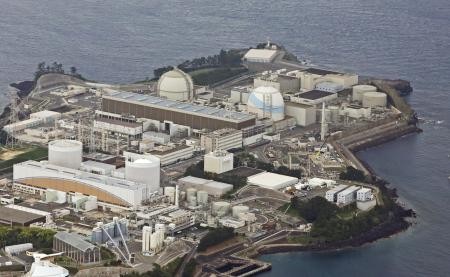
Unit 4 of Japan's Genkai Nuclear Power Plant Receives 72 New Fuel Assemblies
Kyushu Electric Power Co. announced on September 1, 2026, that Unit 4 of the Genkai Nuclear Power Plant has completed the receipt of a batch of new fuel. The new fuel was processed and shipped by Mitsubishi Nuclear Fuel Co., Ltd., with transportation carried out from August 27 to September 1, 2026. According to Kyushu Electric Power, the new fuel delivered to Unit 4 of the Genkai Nuclear Power Plant consists of 72 fuel assemblies, transported in 36 shipping containers via both land and sea routes. Two control rod assemblies were also transported along with this batch of fuel. Fuel used in nuclear power plants...
2026-09-02
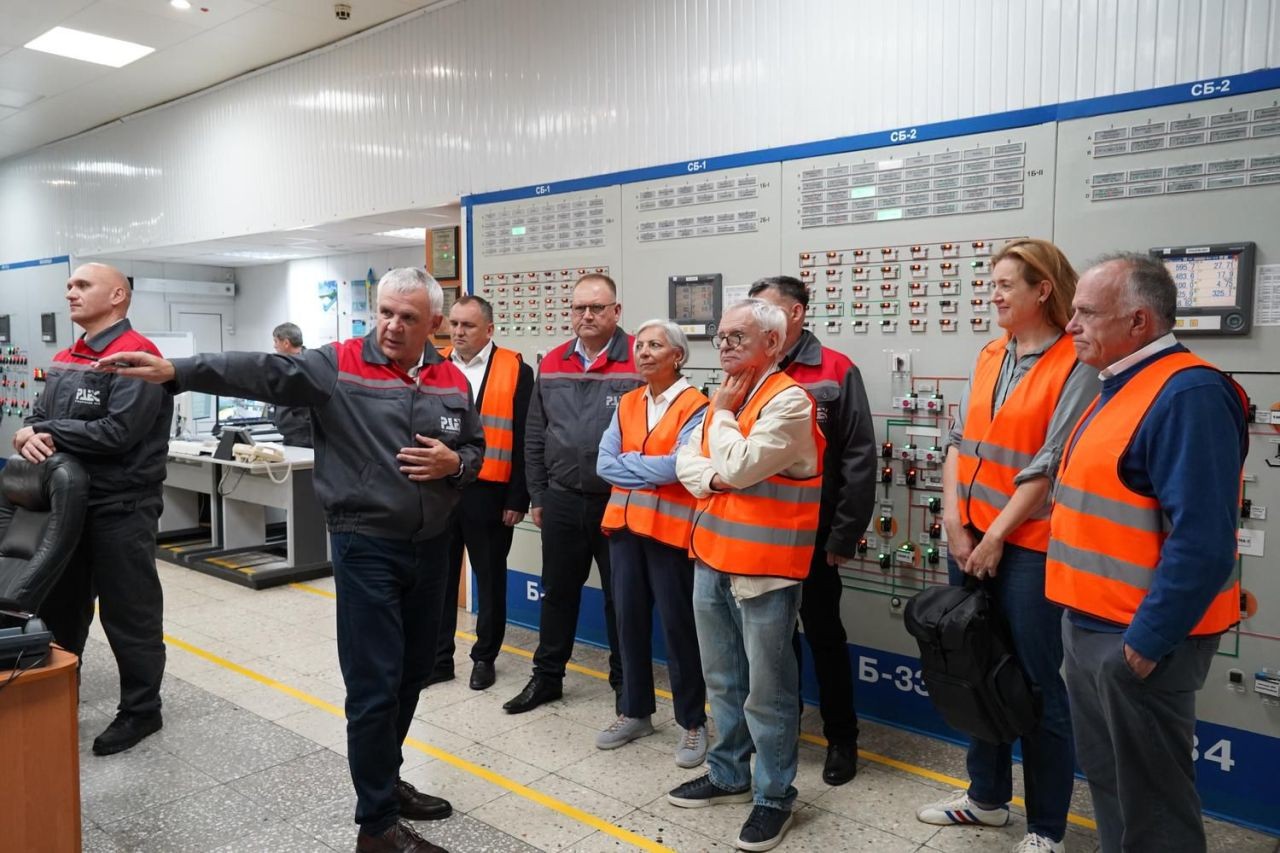
Ukraine's Energoatom Supervisory Board Visits Rivne Nuclear Power Plant
From August 25 to 28, the Supervisory Board of Ukraine's National Nuclear Energy Generating Company (Energoatom) conducted a four-day working visit in Ukraine and inspected the Rivne Nuclear Power Plant. During the visit, the Supervisory Board held meetings with Ukrainian government officials, parliament members, G7 ambassadors, and relevant stakeholders, focusing on the follow-up implementation of corporate governance reforms. The Energoatom Supervisory Board commended the company's preparations for winter operations. Supervisory Board Chair Luminita Vercell stated that Energoatom holds significant strategic importance both now and in the future. She noted that the company has developed a comprehensive winter response plan, with some planned outage maintenance work already completed; upon completion of relevant repairs, the company will be ready for autumn-winter operations. Energoatom has also procured critical spare parts and organized additional emergency preparedness training for its employees.
2026-09-02

U.S. to Conduct Underwater Neutrino Detection Tests in Lake Superior and Vermilion Lake
From October 2026 to approximately April 2027, a team of researchers from U.S. universities and government agencies will conduct underwater neutrino tests in Lake Superior and Vermilion Lake. The project, named the Experimental Neutrino Detector (END), aims to validate a baseline detection system in natural water bodies to identify the NuMI neutrino beam produced by Fermi National Accelerator Laboratory and distinguish it from cosmic-ray backgrounds and other noise in shallow-water environments. END will place underwater neutrino detectors on the lakebed of Lake Superior where the Fermilab neutrino beamline passes through—near Two Harbors, Minnesota. The beamline will continue toward...
2026-09-02
Japan Approves Adjusted Tsunami Height Assessment for Genkai Nuclear Power Plant
At its regular meeting held on September 2, Japan's Nuclear Regulation Authority (NRA) formally approved Kyushu Electric Power Co.'s assessment of the maximum potential tsunami height at the Genkai Nuclear Power Plant site in Saga Prefecture. Under this adjustment, the maximum tsunami height on the northwest side of the Genkai plant site has been raised to 14 meters; previously, the maximum tsunami height on the north side of the site was 6 meters. The NRA determined that the ground surface on the northwest side of the Genkai plant site is covered by bedrock with an elevation of 16 meters, and therefore no additional disaster prevention measures are required even under the new tsunami height assessment. In July, the NRA had already approved the review report draft submitted by Kyushu Electric Power...
2026-09-02

Hiconics Signs Contract for Main Helium Circulator Variable Frequency Drive Project at Xuwei Nuclear Heating and Power Generation Plant
Recently, Hiconics signed a contract for the main helium circulator variable frequency drive (VFD) project for the high-temperature gas-cooled reactor (HTGR) at the Jiangsu Xuwei Nuclear Heating and Power Plant, and will supply multiple sets of HC2000W four-quadrant water-cooled high-voltage VFDs for the project. This marks the second application of Hiconics' VFD technology in drive scenarios for key equipment related to Generation IV nuclear power, following the HTGR demonstration project at Huaneng Shandong Shidao Bay Nuclear Power Plant. The Jiangsu Xuwei Nuclear Heating and Power Generation Project is a comprehensive nuclear energy utilization project that adopts a coordinated operation model of "nuclear reactor – turbine generator unit – heating system," focusing primarily on industrial heating while also supplying electricity. Phase I of the project plans to construct two Hualong One pressurized water reactors and one HTR-PM600S high-temperature gas-cooled reactor...
2026-09-02
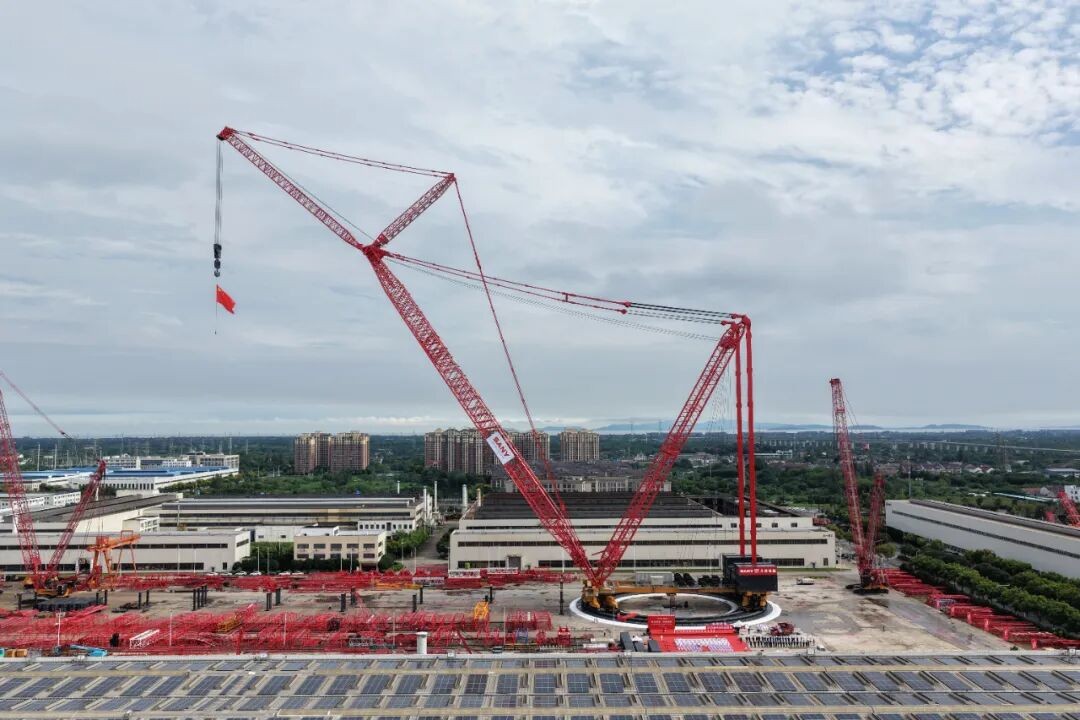
World's First 250,000 Tonne-Meter Ring Crane Rolls Off Production Line, Supporting Hualong One 2.0 Nuclear Power Construction
On August 31, the world's first 250,000 tonne-meter ring crane, jointly developed by SANY Heavy Lift and China Energy Engineering Group Guangdong Thermal Power & Litte Company, rolled off the production line at SANY's Huzhou Industrial Park in Zhejiang. Designed for the "one crane, two islands" construction requirements of Hualong One 2.0, the equipment can address the engineering challenge of covering module hoisting for two nuclear islands with a single unit, marking a key domestic localization breakthrough in China's ultra-large-tonnage nuclear power hoisting equipment. With the advancement of the Hualong One 2.0 "one crane, two islands" construction method, nuclear power projects have imposed higher requirements on the working radius, load capacity, and hoisting precision of heavy lifting equipment. In the past, related high-end equipment technology was long controlled by a few overseas companies. The 250,000 tonne-meter ring crane rolled off the production line this time has undergone seven years of technical research, achieving breakthroughs in structural design, manufacturing processes, and assembly control.
2026-09-02

Institute of Nuclear Technology at Samarkand State University Introduces Radiation Monitoring Training Equipment
On August 24–25, 2026, experts from Doza Scientific Production Enterprise (NPP Doza) visited the Institute of Nuclear Technology at Samarkand State University named after Sharof Rashidov (SamSU) and completed the installation and commissioning of a demonstration model of the Fregat radiation monitoring system. The equipment has been integrated into the institute's teaching and research infrastructure and will be used for laboratory courses, student practical training, and related research work. Through this demonstration model, students and young professionals can gain exposure to modern technological solutions in the field of radiation monitoring, enhancing their understanding of the operation and application scenarios of relevant equipment. This installation...
2026-09-02
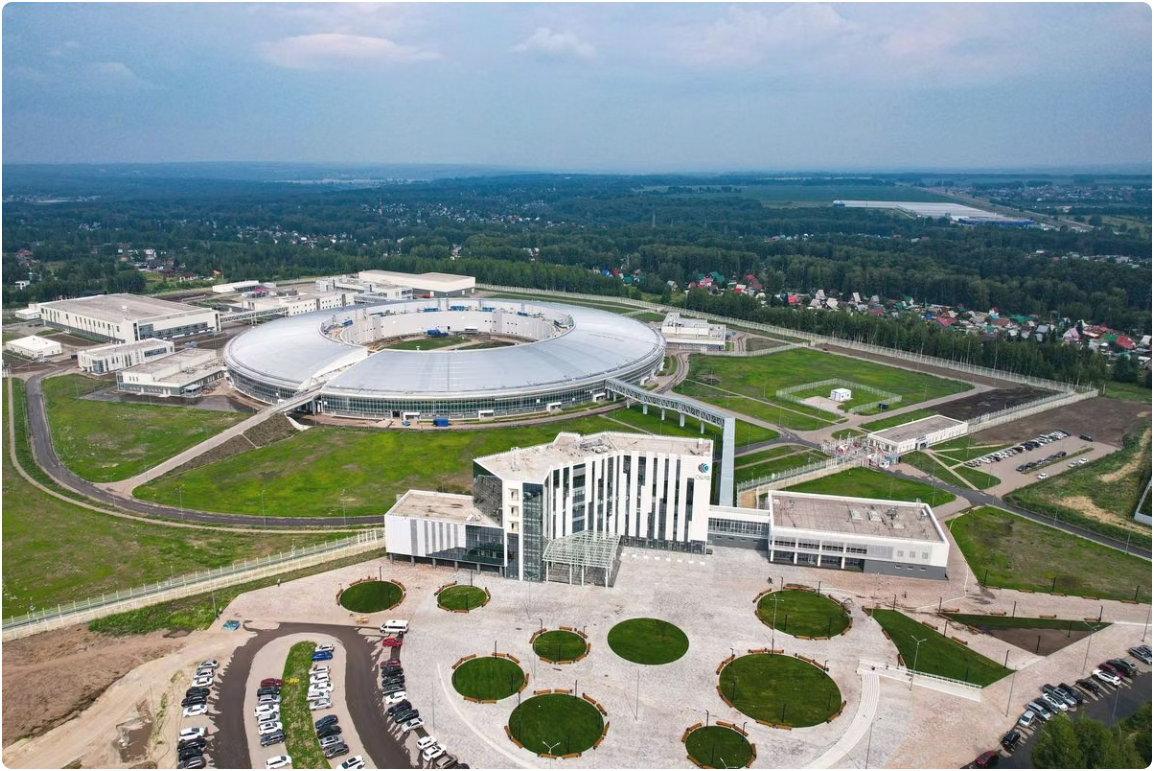
Russia's SKIF and China's HEPS Explore Building Joint Synchrotron Radiation Experimental Station
The Siberian Circular Photon Source (SKIF) synchrotron radiation facility in Russia is considering closer cooperation with China's High Energy Photon Source (HEPS), including exploring the construction of a joint experimental station. Yevgeny Levichev, Director of the SKIF Collective Use Center, stated that the Russian side plans to sign cooperation agreements with three synchrotron radiation facilities in China by the end of this year, including the Shanghai Synchrotron Radiation Facility, the Beijing High Energy Photon Source (HEPS), and a synchrotron radiation facility in Hefei. Among these, Russia is particularly interested in advancing joint projects with HEPS, potentially even establishing a joint experimental station. Levichev noted that the Russian and Chinese synchrotron radiation facilities are complementary in terms of energy range, which will facilitate joint experiments by researchers and improve the utilization efficiency of large-scale scientific facilities.
2026-09-02

U.S. Plans to Build Second Uranium Conversion Plant
Raven-Flint Nuclear Corporation announced on August 31 that it has been selected for the Nuclear Energy Startup Platform project advanced by the U.S. Department of Energy (DOE) National Reactor Innovation Center (NRIC) at Idaho National Laboratory (INL), and plans to build a pilot uranium conversion facility named "Torch" at INL. The company stated that the Torch facility aims to become the second uranium conversion plant in the United States, with a designed annual processing capacity of 500 metric tons of uranium, capable of converting uranium into uranium hexafluoride (UF6). According to the company, this scale can meet the fuel demand of two large nuclear reactors. Upon project completion, it is intended to serve the U.S. Department of Energy and its affiliated agencies, and may provide domestically produced uranium hexafluoride for specific needs.
2026-09-02

AI-Enhanced MRI System Deployed at Utah Medical Center for Cardiac and Cancer Imaging
Intermountain Medical Center in Murray, Utah, has begun using a new magnetic resonance (MR) system for imaging cardiac and cancer patients. The facility stated that the GE HealthCare SIGNA Sprint Elite MR system was placed into service earlier this year, making it the first of its kind in Utah and the second in the United States. According to the hospital, the system integrates artificial intelligence software designed to reduce image noise and enhance scan clarity. The facility believes that clearer images will help clinicians assess cardiac tissue and cancer-related conditions, while also potentially reducing the time patients spend undergoing MR exams. Cardiac imaging is one of the system's key application areas.
2026-09-02