
Search Results
Keyword:gamma rays
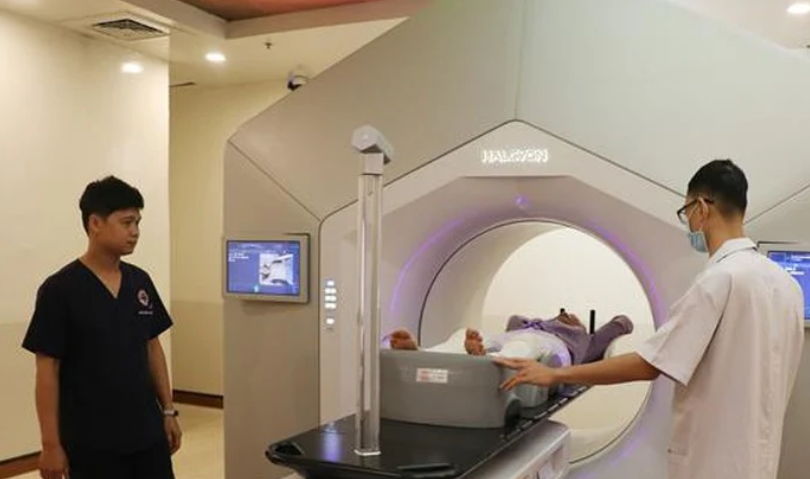
Dong Nai Province, Vietnam: Nuclear Medicine Applications Drive Modern Medical Development, Focusing on Early Cancer Diagnosis and Precision Treatment
In the development of modern medicine, atomic energy technology is moving from the laboratory to the clinical frontline, becoming an important pillar for early disease screening, precise diagnosis, and effective treatment. In recent years, Dong Nai Province has continuously applied nuclear medicine technology to medical examinations and treatments, particularly in areas such as cancer, stroke, traumatic brain injury, cardiovascular diseases, and bone and joint injuries. Through equipment such as X-ray, gamma rays, CT, and MRI, doctors can observe deep structures and lesions of the human body within a relatively short time, giving patients the opportunity for earlier detection and faster intervention. At Dong Nai General Hospital, approximately 500 patients undergo X-ray or related imaging examinations each day, with digital X-ray systems and multi-slice spiral C...
2026-08-12
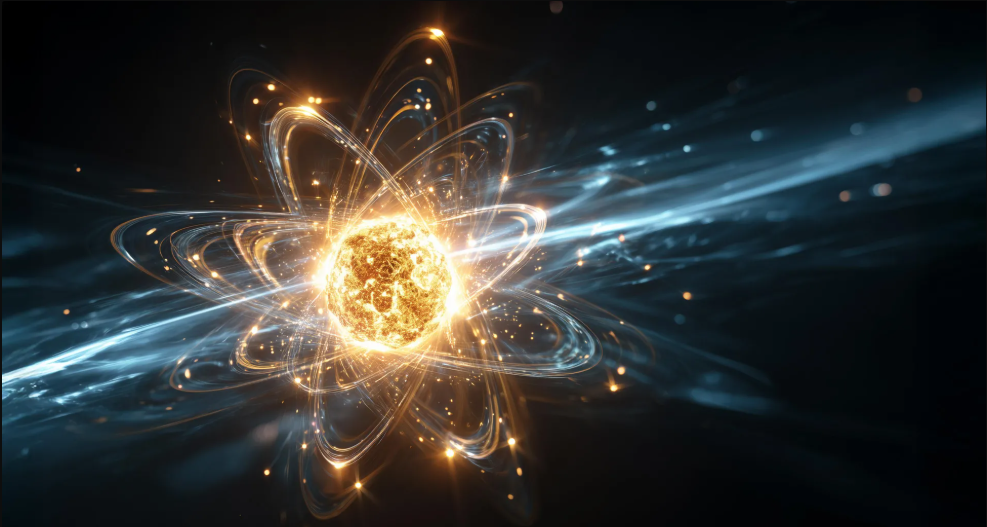
U.S. Team Traces Source of Anomalous Gamma Rays from Zinc-70, Nuclear Magnetic Transitions May Improve Models of Heavy Element Formation
An international research team led by scientists from the Facility for Rare Isotope Beams (FRIB) at Michigan State University has recently identified the source of the large number of low-energy gamma rays emitted by zinc-70 nuclei. The study suggests that magnetic transitions occurring within the nucleus are the key reason for this anomalous signal enhancement. The findings were published in the journal Nature under the title "Magnetic character of the low-energy enhancement in 70Zn." Gamma rays are electromagnetic radiation released when excited atomic nuclei transition to lower, more stable energy levels. For a long time, scientists have observed an anomalous increase in the number of low-energy gamma rays in some atomic nuclei, known as the low-energy enhancement (LEE), but its physical mechanism had remained unclear...
2026-08-02
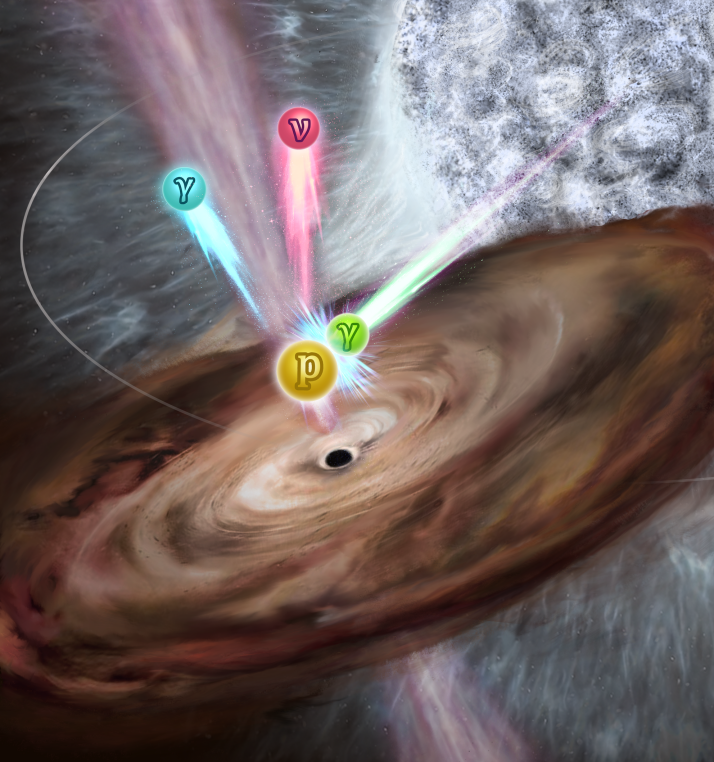
LHAASO "Sees" for the First Time How Black Holes Produce the Highest-Energy Particles in the Universe
How do black holes accelerate particles to the highest energies in the universe? The latest research provides the answer. On July 31, it was learned from the Institute of High Energy Physics of the Chinese Academy of Sciences that the Large High Altitude Air Shower Observatory (LHAASO, "Lasso"), a major national scientific and technological infrastructure, has for the first time clearly observed the process by which a black hole, while devouring material from its companion star, regularly produces the highest-energy particles in the universe like a metronome, and has identified the first PeV gamma-ray variable source. The related research results were published in the *National Science Review*. Cygnus X-3 is a binary system located in the constellation Cygnus, consisting of a black hole and a massive companion star. The gravitational pull there is extremely strong, and the black hole frantically accretes the stellar wind blown off by its companion. LHAASO detected...
2026-07-31