
Dong Nai Province, Vietnam: Nuclear Medicine Applications Drive Modern Medical Development, Focusing on Early Cancer Diagnosis and Precision Treatment
 Scan to share
In the development of modern medicine, atomic energy technology is moving from the laboratory to the clinical frontline, becoming an important pillar for early disease screening, precise diagnosis, and effective treatment. In recent years, Dong Nai Province has continuously applied nuclear medicine technology to medical examinations and treatments, particularly in areas such as cancer, stroke, traumatic brain injury, cardiovascular diseases, and bone and joint injuries. Through equipment such as X-ray, gamma rays, CT, and MRI, doctors can observe deep structures and lesions of the human body within a relatively short time, giving patients the opportunity for earlier detection and faster intervention.
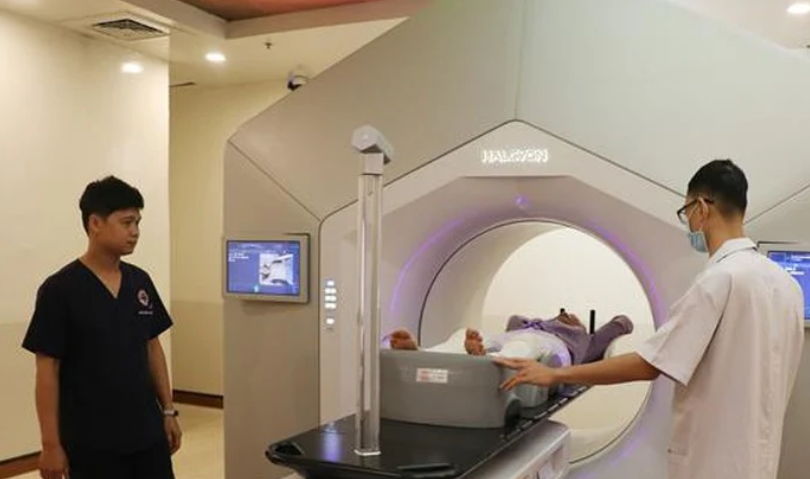
At Dong Nai General Hospital, approximately 500 patients undergo X-ray or related imaging examinations each day, and digital X-ray systems and multi-slice spiral CT scanners have become essential tools for clinical diagnosis. According to the head of the hospital's Oncology and Nuclear Medicine Department, nuclear medicine is currently used mainly in two directions: diagnosis and treatment. In diagnosis, it helps detect bone metastases, thyroid cancer, hyperthyroidism, and other conditions, and supports techniques such as renal scintigraphy and myocardial perfusion imaging. In treatment, radiopharmaceuticals are introduced into the body to selectively destroy diseased cells while minimizing impact on healthy tissues.
In addition to Dong Nai General Hospital, institutions such as Shinmark University Medical Center are also accelerating equipment upgrades. The center is equipped with fixed and mobile X-ray machines, a 128-slice CT scanner, mammography equipment, bone densitometry devices, and cancer radiotherapy systems. Among these, the 128-slice CT plays a prominent role in emergency settings, enabling rapid assessment of craniocerebral injuries from traffic accidents, as well as examination of thoracic and abdominal organ damage, acute lesions, and tumors, providing a basis for doctors to formulate treatment plans in a timely manner. The center has also invested in a digital subtraction angiography system and sent medical staff for specialized training to promote the local adoption of interventional and radiation therapy techniques.
Data shows that Dong Nai is one of the earliest regions in Vietnam to apply atomic energy technology to medical examinations and treatments. The locality began using CT scanning in the 2000s, introduced MRI around 2009–2010, and subsequently deployed cancer radiotherapy equipment step by step. The widespread adoption of these technologies has significantly improved hospitals' diagnostic capabilities for craniocerebral diseases, cancer, and stroke, while also enhancing emergency care and treatment levels. Local health authorities believe that continued investment is still needed in radiotherapy systems, SPECT, and other specialized equipment so that more patients can receive advanced diagnosis and treatment locally, reducing the pressure of referrals to higher-level hospitals.
As the scope of nuclear medicine applications expands, radiation safety is being given greater prominence. Experts emphasize that equipment design and operational management, radiation dose monitoring, standardization of technical procedures, and training of medical personnel are all key to ensuring the safety of patients and healthcare workers. In the next phase, Dong Nai Province plans to build on existing achievements by continuing to advance the development of specialized centers for oncology, cardiovascular diseases, otorhinolaryngology, and other fields, gradually modernizing equipment, and exploring the integration of atomic energy technology with artificial intelligence to provide new momentum for high-tech medical development and the enhancement of regional healthcare service capacity.
Disclaimer: Information republished from partner media, institutions or other websites is provided for reference and communication purposes only. It does not imply endorsement of its views or verification of its accuracy. Please contact us if any content infringes rights or requires correction.