
Search Results
Keyword:CT
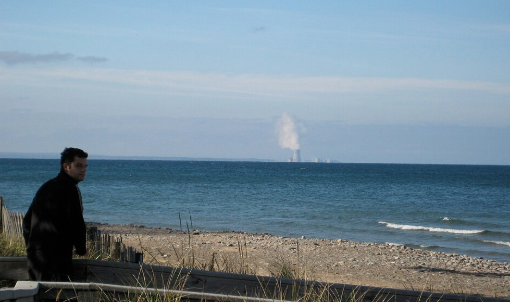
New York New Nuclear Project Screens Ten Developers: One Million Kilowatts of Power—Why Can't a Reactor Be Chosen First?
A million-kilowatt-class nuclear power plant often begins with document screening far from the construction site. On November 12, the New York Power Authority announced the results of its qualification evaluation for new nuclear developers, with ten companies entering the scope of potential subsequent cooperation. The project aims to add at least one million kilowatts of nuclear power capacity in upstate New York. The list covers both large reactor and small modular reactor pathways. This arrangement leaves the question that truly needs to be answered: the same reliable electricity that the grid needs—what unit scale, what site, and what financing structure should provide it? Screening partners first means which conditions remain undetermined? The New York Power...
2026-11-17
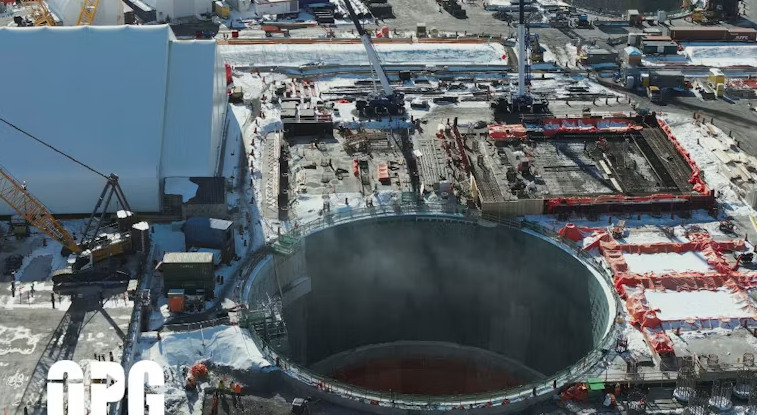
Ontario Power Generation Adjusts SMR Project Schedule
Recently, Ontario Power Generation (OPG) of Canada officially announced that the first unit project of the BWRX-300 Small Modular Reactor (SMR) at its Darlington Nuclear Generating Station in Canada has encountered objective pressures affecting cost and schedule. OPG President and CEO Nicolle Butcher publicly confirmed that, following the latest comprehensive assessment, Unit 1 is expected to be unable to achieve commercial operation by the originally planned October 2030, and the project's final cost will also exceed the previously announced budget...
2026-11-17
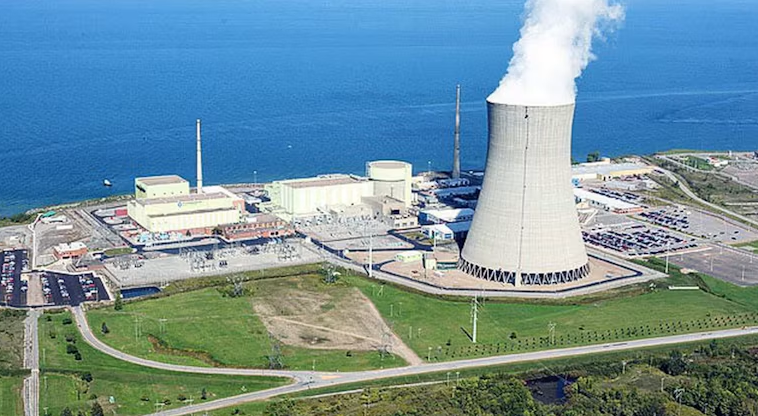
New York State Power Authority Selects 10 Nuclear Power Developers
Recently, the New York Power Authority (NYPA), a U.S. public energy enterprise, formally selected 10 developers as potential cooperation candidates, aiming to advance the state's plan to build up to 1 gigawatt (GW) of new nuclear power. The project covers the coordinated deployment of large reactors and Small Modular Reactors (SMRs), and New York State officials expect the selected developers to formally begin construction no later than 2032. NYPA stated that its pre-qualification application launched in May this year received a total of 21 response proposals. After rigorous review, a total of 10 companies stood out and were listed as candidates for subsequent...
2026-11-17
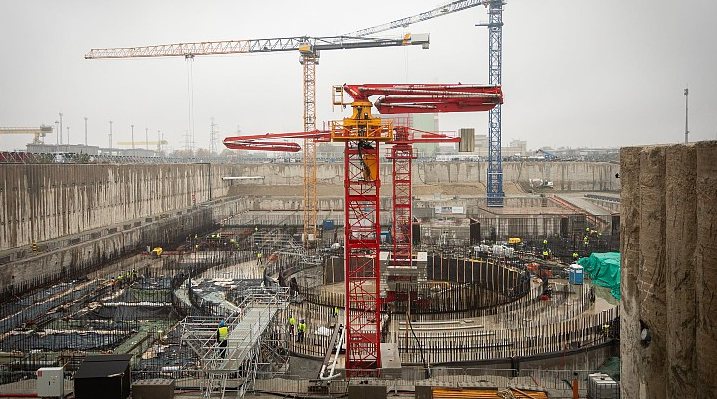
Hungarian Government Advances Comprehensive Audit of Paks II Nuclear Power Project
Recently, the Hungarian government is conducting a comprehensive and in-depth formal audit of the Paks II nuclear power project, while Rosatom is actively cooperating and proceeding with planning for the next year's work program. Since this year's change of government in Hungary and the assumption of office by new Prime Minister Peter Magyar, the new government has launched a full-scale review of the operational life extension of the Paks Nuclear Power Plant, the Paks II contracts, and the overall investment process, with a focus on assessing project costs and execution feasibility. Attila Sagodi, Chief Executive Officer and Chairman of the Paks II project...
2026-11-17

French and US Companies Join Forces to Supply Advanced Lead-Cooled Fast Reactor Recycled Fuel
Recently, French innovative nuclear energy company Newcleo and US advanced nuclear recycling technology company Curio have formally entered into a strategic cooperation. Under the agreement signed by both parties, Curio will supply Newcleo's planned US-based mixed oxide (MOX) fuel fabrication facility with recycled nuclear materials and transuranic feedstocks recovered from spent nuclear fuel, thereby building a safe and reliable closed fuel cycle supply chain for its future commercially deployed lead-cooled fast reactor (LFR). As the core technical support for this cooperation, Curio possesses its independently developed proprietary technology—NuCycle technology...
2026-11-17
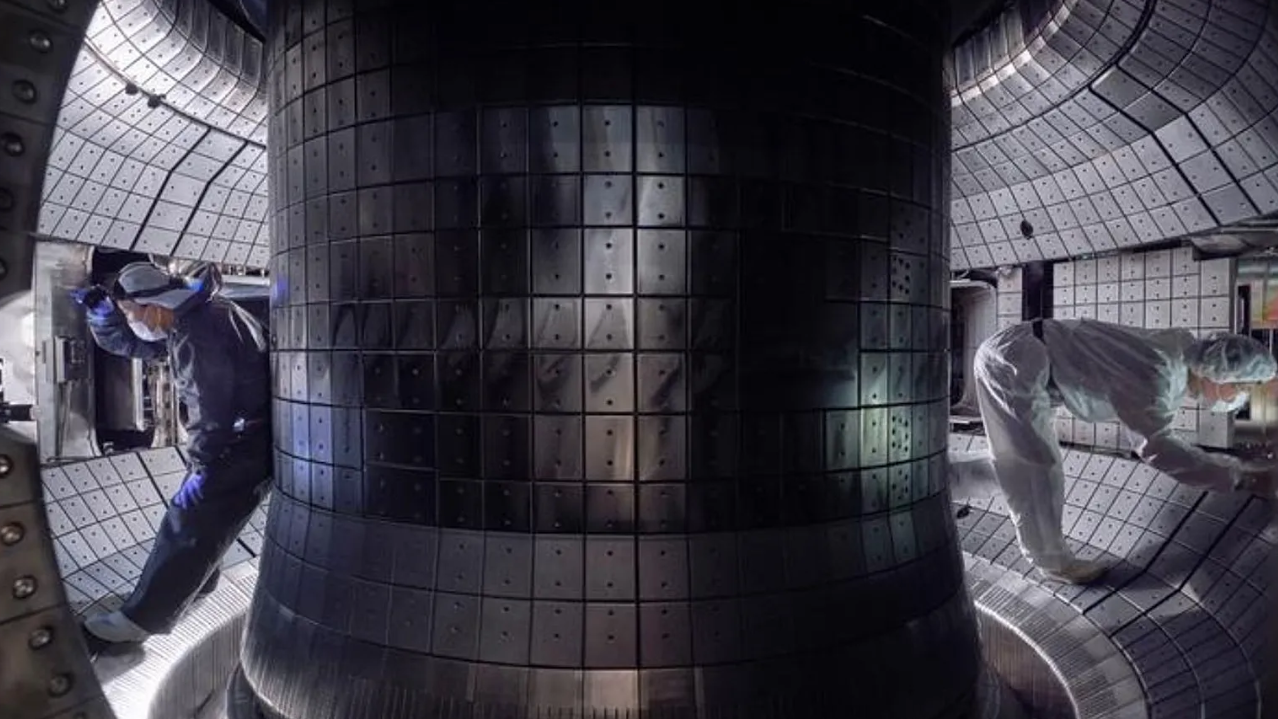
South Korea Adds 1 Trillion Won in Fusion Investment: From 48-Second High-Temperature Plasma to an Industrial System Capable of Building Reactors
Inside the KSTAR device in Daejeon, South Korea, the duration of high-temperature plasma is measured in seconds; in Naju, a newly approved national R&D project has placed construction and technology verification on a ten-year timetable. On November 5, South Korea confirmed the advancement of a fusion core technology development and demonstration infrastructure construction project with a total scale of 1.4813 trillion won, with an implementation period from 2027 to 2036. What is more noteworthy about this investment is the attempt to complete the verification chain from plasma experiments to energy engineering: what has South Korea already accumulated, and for which unresolved problems is it preparing to build test conditions? What capabilities will the trillion-won budget be directed toward first? To understand this round of investment, one must first...
2026-11-17
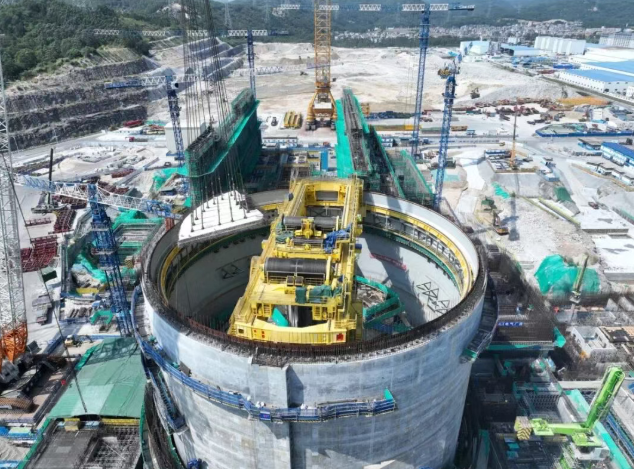
CNNC 24th Construction Refreshes Construction Progress at Nuclear Power and Key Projects in Multiple Locations
Recently, China Nuclear Industry 24th Construction Co., Ltd. has reached intensive construction milestones across multiple core nuclear power projects and key livelihood projects, fully entering the sprint phase to decisively achieve annual goals. From Zhangzhou in Fujian to Haiyang in Shandong, from Xiapu Shidao Bay to Xuwei in Jiangsu, major nuclear energy and clean energy infrastructure projects are advancing on multiple fronts, accelerating construction through modular construction and process optimization. At the Zhangzhou Nuclear Power project site, the prefabricated roof module of the CIS water tank in the nuclear island internal structure of Unit 4 was successfully hoisted as a whole. The project team, through continuous iteration of construction logic, moved high-altitude assembly and cross-operation to off-site prefabrication and integral hoisting, significantly reducing...
2026-11-17

Aktis Oncology Expands Clinical Enrollment for Actinium-Based Radiopharmaceuticals
Recently, Aktis Oncology of the United States disclosed the latest expanded enrollment arrangements for two clinical studies of innovative targeted radiopharmaceuticals based on Actinium-225. While continuing to advance the established dose-escalation trials, the company has added dedicated supplementary enrollment cohorts at selected dose levels for AKY-1189 targeting Nectin-4 and AKY-2519 targeting B7-H3, respectively, aiming to comprehensively observe the safety, tolerability, and preliminary antitumor activity of the drugs in specific patient populations, and to accumulate detailed data for subsequent large-scale clinical development. In terms of specific clinical progress, the Nectin-4-targeting AKY-...
2026-11-16

Texas A&M University Conducts Electron Beam Pest Sterilization Trials
Recently, the research team at Texas A&M AgriLife Research announced that it has successfully completed multiple rounds of electron beam irradiation testing on pupae of the New World screwworm. As an important attempt to deeply integrate high-energy physics with insect biological control, this study comprehensively evaluated the reproductive capacity, flight performance, and overall life cycle of adult insects after electron beam treatment. Preliminary results confirmed that this technology can effectively achieve male sterility while perfectly preserving the core physiological functions required for them to perform natural mating tasks. Sterile Insect Technique (S...
2026-11-16

MEPhI Achieves Breakthrough in Composite Material Fabrication for Fusion Reactor Walls
Recently, the research team from the "Materials Physics Problems" Department of the National Research Nuclear University MEPhI (NRNU MEPhI) announced the successful development of a high-performance composite material fabrication technology for the plasma-facing wall of future thermonuclear reactors. Through the innovative introduction of a specific nickel-iron alloy interlayer, the technology successfully bonded a porous structure of high-melting-point tungsten mesh with the reactor's conventional structural steel substrate into an integral component, effectively overcoming the material thermal mismatch and brittle fracture challenges that have long plagued the fusion engineering community. In magnetic confinement nuclear fusion devices, the reactor's first...
2026-11-16
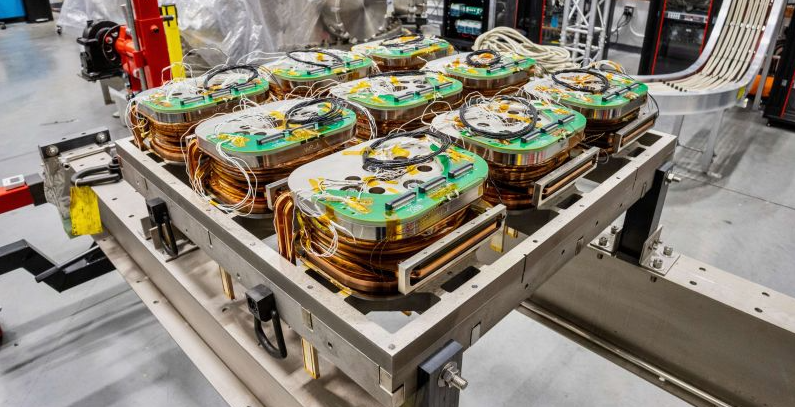
A New Approach to Fusion Magnets: Can Flattening Stellarator Coils Reduce Power Plant Manufacturing Difficulty?
On the manufacturing floor of a fusion device, whether a coil can be delivered on schedule often depends on whether winding, insulation, support, and cryogenic testing can each pass inspection. For stellarators that require three-dimensional magnetic fields, turning a physics design into reproducibly manufacturable hardware is especially difficult. On November 4, the U.S. company Thea Energy announced a new magnet testing collaboration with MIT to validate the encircling coils for its Eos device. This development raises a specific question: if complex coils are decomposed into planar coils that are easier to manufacture, can fusion devices truly reduce the burden of construction and maintenance? Coils flattened, yet the magnetic field must still maintain a three-dimensional structure. Stellarators rely on external coils to form a magnetic field with spatial torsion characteristics...
2026-11-16

Purdue University and DOE Collaborate to Advance Nuclear Power Construction Technology
Recently, the Purdue Applied Research Institute (PARI) at Purdue University officially signed a strategic cooperation agreement with the National Reactor Innovation Center (NRIC) under the U.S. Department of Energy (DOE) to jointly conduct testing and validation of construction processes and materials for advanced nuclear reactors in Indiana. This collaboration marks a substantive step forward for Indiana, under the full support of Governor Mike Braun, in accelerating its march toward leadership in nuclear innovation and clean energy development nationwide. According to the cooperation plan, the project...
2026-11-16

From Spent Fuel to Recycled Metals: What Exactly Does the Russian Nuclear Industry's Deep Recycling Recover?
Once a batch of fuel is discharged from a reactor, why is it still possible to generate electricity again? And why can steel that was once used in nuclear facilities re-enter industrial production? The circular economy materials released by Rosatom on November 15 place spent fuel, contaminated metals, industrial waste, and waste paper within the same narrative. Together they point toward improving resource utilization efficiency, but the corresponding technical difficulty and regulatory requirements differ greatly. What truly merits analysis is how the nuclear industry determines which materials can be recycled, where recovered materials go, and how the non-recyclable portions are placed under long-term management. Spent fuel still has energy value, but safety requirements do not decrease accordingly...
2026-11-16

Brookhaven National Laboratory Uses Generative Machine Learning to Improve Nuclear Detection
Recently, a research team at the U.S. Brookhaven National Laboratory successfully developed a novel generative machine learning method aimed at efficiently extracting weak particle jet signals from complex heavy-ion collision backgrounds, opening a new pathway for data processing at large-scale scientific facilities. In high-energy physics experiments, the high-density particle environment produced by heavy-ion collisions is extremely complex, and traditional data processing methods often face enormous challenges in identifying and reconstructing weak signals. The research team innovatively introduced unsupervised learning and generative model architectures, which can automatically learn and strip away strong background interference, thereby significantly improving jet...
2026-11-14
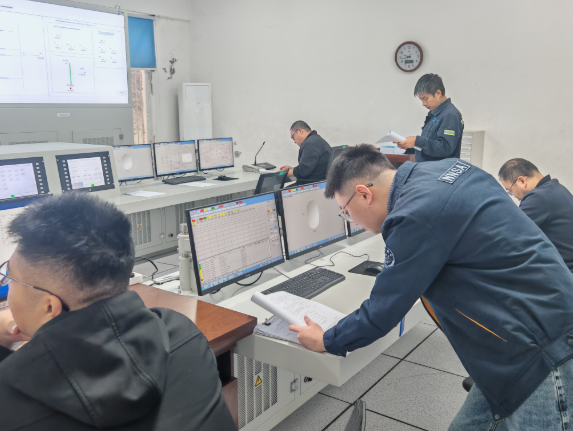
China Nuclear Power Institute Completes Operator Certification for Medical Isotope Reactor
Recently, the National Nuclear Safety Administration dispatched the Southwest Supervision Station to formally complete on-site supervision of the first batch of operator license examinations for the Medical Isotope Solution Test Reactor of the China Nuclear Power Research and Design Institute, and simultaneously conducted a comprehensive pre-commissioning inspection of the project's simulation platform. As a key link in ensuring the safe and stable operation of medical nuclide production facilities, the professional qualifications and license examinations of operators are an important component of the cornerstone of nuclear facility safety. This supervisory examination covered multiple rigorous stages including theoretical examinations, simulator practical operations, and on-site oral defenses, comprehensively testing the reference personnel's emergency response capabilities under complex operating conditions of the test reactor and their proficiency in standard operating procedures...
2026-11-14