
New York New Nuclear Project Screens Ten Developers: One Million Kilowatts of Power—Why Can't a Reactor Be Chosen First?
 Scan to share
A million-kilowatt-class nuclear power plant often begins with document screening far from the construction site. On November 12, the New York Power Authority announced the results of its qualification evaluation for new nuclear developers, with ten companies entering the scope of potential subsequent cooperation. The project aims to add at least one million kilowatts of nuclear power capacity in upstate New York. The list covers both large reactor and small modular reactor pathways. This arrangement leaves the question that truly needs to be answered: the same reliable electricity that the grid needs—what unit scale, what site, and what financing structure should provide it?
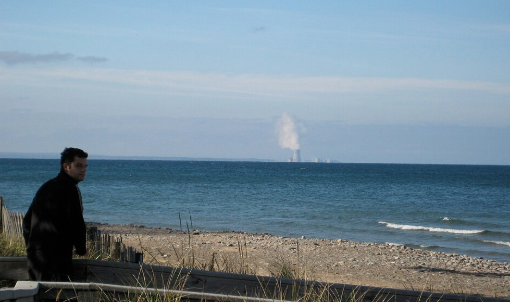
Screening partners first means which conditions remain undetermined?
The New York Power Authority (NYPA) conducted a Request for Qualifications (RFQ), primarily to determine whether potential partners possess the technical and project delivery capabilities. The solicitation issued in May received 21 responses, with ten companies ultimately passing the qualification screening. Passing the screening means entering subsequent procurement or cooperation procedures; it does not equate to being awarded a construction contract, nor can it be regarded as having selected a reactor technology.
Placing large units and Small Modular Reactors (SMRs) within the same development plan reflects that the owner is still comparing different delivery pathways. Large units can achieve greater capacity with fewer main units; multi-module schemes may be commissioned in phases, reducing the scale of capacity added at one time. However, an increased number of modules also brings changes in shared facility configuration, phased construction interfaces, and operations and maintenance organization—the comparison cannot stop at per-unit power output alone.
At least one million kilowatts describes a capacity target; it does not yet specify at what price or in what year the project can sell electricity steadily. NYPA also plans to select host communities, technology, and development partners, indicating that these three conditions are still being coordinated. Keeping multiple options at this stage helps ensure that site requirements and actual bids participate in decision-making; if a certain reactor type were treated as the sole answer too early, subsequent choices might be limited to site and supply chain conditions tied to it.
Where a nuclear plant is built changes what electricity it can provide
A nuclear power plant delivers not only annual generation but also output available during specific periods. For continuously operating factories and other high-load users, long-duration low-carbon supply has value, but two schemes with the same total annual generation may not have the same system role. Unit maintenance schedules, unplanned outages, and transmission constraints all affect whether that energy is available at the location and time needed.
A transparent calculation can illustrate the difference between capacity and energy: assuming a one-million-kilowatt unit operates at a 90 percent annual capacity factor, its annual generation would be approximately 7.9 billion kilowatt-hours. This is only an illustrative calculation, not an operating commitment for the New York project. Actual results also depend on reliability and dispatch after commissioning. When evaluating new nuclear additions, these conditions should be matched against grid load forecasts—installed capacity figures cannot be directly treated as guaranteed supply security.
The physical conditions of a site further change the relative merits of schemes. After the heat generated by a reactor passes through the power conversion cycle, a considerable portion still needs to be discharged to the environment; cooling water temperature, available water quantity, and cooling method all affect the design. Using cooling towers can change water intake and heat rejection methods but increases equipment and operational requirements; reusing an existing industrial site still requires reassessment of hydrology, geology, external hazards, and environmental impacts.
The distance from the plant to load centers must also be entered into the engineering ledger. If the local transmission grid cannot accommodate the new output, interconnection studies and network upgrades must be undertaken. On-site equipment construction can proceed in parallel with some transmission works, but if the two cannot be synchronized at commissioning, the unit's capacity will be difficult to fully realize. Therefore, community willingness to host the project is an important starting point but cannot replace verification of power delivery conditions.
Large units and multi-module schemes bear different financial risks
Nuclear cost discussions often revolve around Capital Expenditure (CAPEX), but the same engineering quote may correspond to different financial pressures. The construction phase requires upfront payment for equipment, civil works, and engineering services, while electricity sales revenue forms after commissioning. Delays may not only increase construction expenditure but also extend the period of capital occupation. When financing costs are high, schedule uncertainty is amplified into future electricity prices.
Phased construction offers the opportunity for earlier-commissioned modules to generate revenue, but this advantage requires complete calculation. If the first phase bears all road, cooling, security, and grid connection facilities, the unit cost of the first module may be higher; if subsequent modules are cancelled, the previously expected cost sharing would also change. Large units require concentrated organization of larger construction funds. Each bears a different risk profile—the word "modular" cannot be used to declare a cost winner in advance.
New York has not published directly comparable total project costs, financing terms, or electricity sales quotes, so no conclusion can be drawn at this stage as to which pathway is cheaper. A quote with judgment value should specify the price basis, contingency, owner's costs, and the boundaries of financing and transmission supporting facilities, and also clarify who bears design change and delay risks. Only when these items are placed on the same basis can low quotes be meaningfully compared.
From shortlist to executable project, the key is to write responsibilities clearly
After developer qualification screening, the project must still produce design and site evidence that can withstand review. The U.S. Nuclear Regulatory Commission (NRC) licensing process requires applicants to demonstrate that the safety design is compatible with specific site conditions. Construction and operating licenses have their own application and verification requirements; a state-level development plan cannot substitute for federal nuclear safety licensing.
For potential suppliers, the most valuable signal at this stage is whether stable, repeatable orders may form in the future. If engineering designs are frequently adjusted, companies find it difficult to decide when to invest in dedicated tooling and train welding and non-destructive testing personnel. Project owners need to clarify technical interfaces and quality requirements as early as possible, while avoiding excessive procurement before the design is stable—so that so-called early supply chain locking does not become an inventory and rework burden.
The value of New York's new nuclear plan in the next step will be reflected in whether technology, site, and funding arrangements can form a single executable scheme: whether cooling and transmission conditions support expected output, whether licensing work matches the engineering schedule, and whether contracts clearly allocate delay risks. Ten companies passing qualification screening expands the owner's range of choices; what truly determines project value is when these choices translate into credible construction costs and power supply dates.
(This article is based on publicly available project progress from the New York Power Authority, U.S. nuclear facility licensing descriptions, and related facility imagery, and was independently written with AI-assisted retrieval and verification, aiming to explain the connections among technology choices, site conditions, and financing arrangements in new nuclear projects. The annual generation figure in the text is an illustrative calculation under explicit assumptions; cost and delivery risk analysis does not represent published quotes or operating commitments for the New York project.)
Disclaimer: Information republished from partner media, institutions or other websites is provided for reference and communication purposes only. It does not imply endorsement of its views or verification of its accuracy. Please contact us if any content infringes rights or requires correction.