
Asia's Nuclear Power Expansion: When Will Coal and LNG Demand Shift from "Slower Growth" to "Actual Decline"?
 Scan to share
Asia's nuclear power construction is changing the long-term assessments of coal and natural gas suppliers. The Global Energy Monitor's August 2026 database lists approximately 91 GW of nuclear capacity under construction worldwide, and a Reuters column on November 12 further emphasized the Asian concentration within that total. Capacity entering construction adds visibility to future power supply, but how much fuel procurement actually declines still depends on when reactors come online, how much electricity they generate annually, and how much clean electricity new demand growth can absorb.
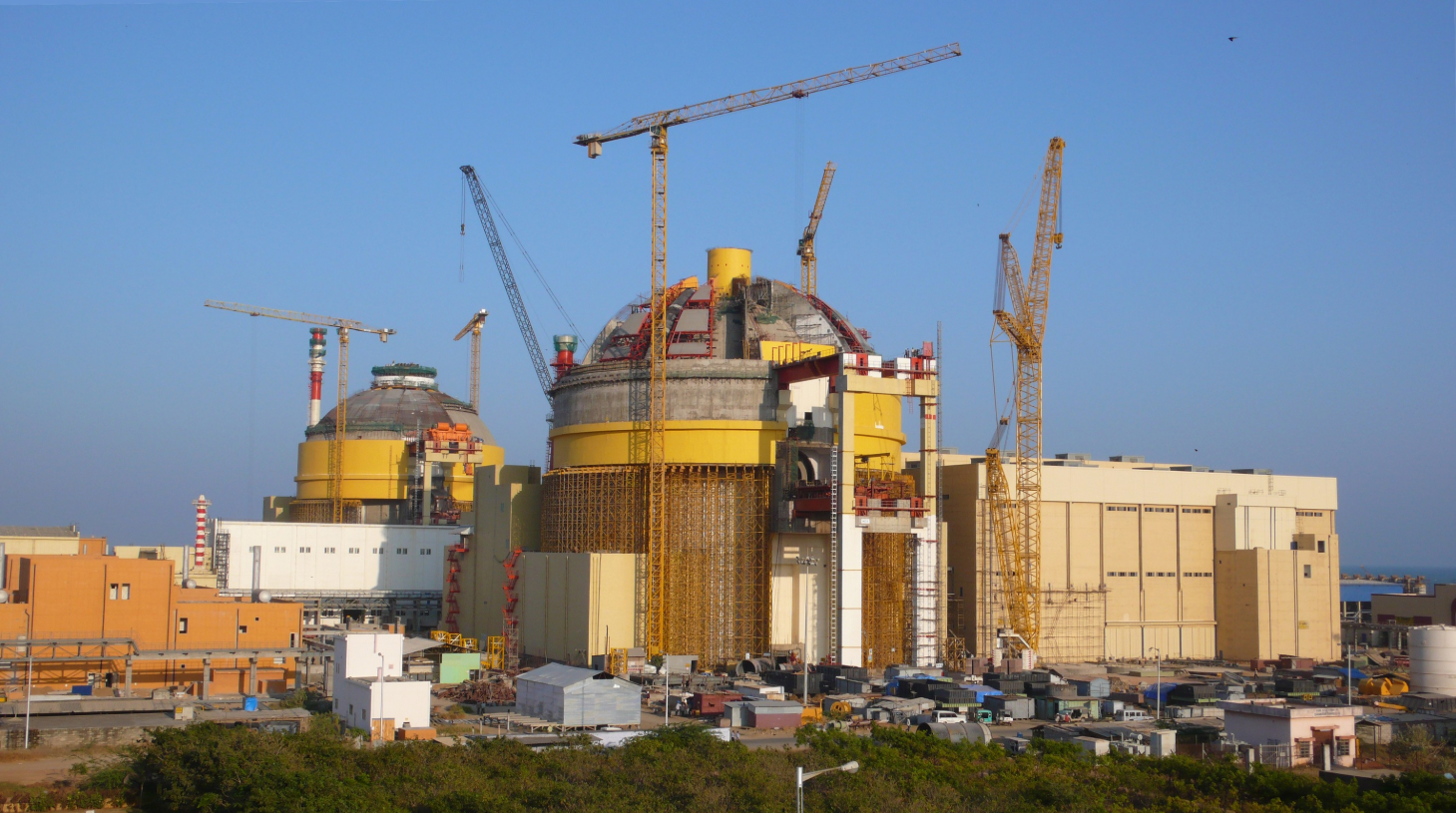
Capacity under construction must go through commissioning and stable operation before it can change the fuel ledger
To understand this round of change, one must first distinguish between the project pipeline and physical pipelines. In English-language contexts, the nuclear energy pipeline refers to the collection of projects in the planning, approval, and construction stages. Capacity at different stages has different probabilities of materialization; even projects already under construction may encounter changes in equipment, financing, and commissioning schedules. The Global Energy Monitor estimates that approximately 55 GW of projects under construction have announced commissioning targets of 2030 or earlier, though this remains an aggregation of project targets.
The first step in nuclear power reducing fuel consumption is converting installed capacity into electricity generation. Taking a unit with 1,000 MW net electrical output as an example, assuming an annual capacity factor of 90%, it would generate approximately 7.88 billion kWh per year. The capacity factor reflects the ratio of actual generation to the rated full-power generation over the year; refueling, outages, and dispatch all affect the result. This calculation illustrates the potential scale of electricity, but the actual substitution target depends on the grid in which the unit operates.
If all this electricity replaced efficient gas-fired combined cycle generation, at 58% efficiency and an LNG lower heating value of 50 GJ per tonne, this would correspond to approximately 980,000 tonnes of LNG. This assumes the substitution relationship holds completely, without accounting for upstream losses or different unit operating conditions. If the new electricity primarily serves new industrial or residential load, gas generation might grow less but not necessarily decline year-on-year. The physical substitution volume must be confirmed by dispatch and fuel records.
Nuclear power growing alongside wind and solar will first compress the utilization hours of thermal power
The combination of wind, solar PV, and nuclear power will change the generation opportunities for thermal power within a year. When sunlight is abundant, solar PV can suppress daytime residual load, wind output varies with weather systems, and nuclear power can typically provide relatively stable output. The faster low-emission sources grow, the more constrained the electricity space left for coal- and gas-fired equipment. However, during periods of extreme high load, low wind and solar output, nuclear maintenance, and transmission constraints, the system still needs sufficient dispatchable resources.
Nuclear power itself has physical boundaries. Core power changes, fuel management, turbine thermal stress, and equipment maintenance limit actual operating modes. Coastal units' cooling sources must also consider water temperature, marine organisms, and extreme weather. Scheduling a nuclear unit at absolutely constant output year-round would underestimate the impact of planned outages and common external events. The grid needs to simulate unit availability alongside wind and solar meteorological variations to determine reserve, storage, and cross-regional exchange requirements.
China exemplifies the competition between low-emission electricity and new load growth. The International Energy Agency forecasts that from 2026 to 2030, China's nuclear generation will grow at approximately 5.9% annually, while electricity consumption will grow at approximately 4.9% annually. It also expects wind, solar, and other low-emission sources to meet new demand, keeping coal generation near a plateau. This scenario indicates that nuclear power is limiting coal growth, but moving from a plateau to sustained decline requires clean electricity to exceed demand growth and be successfully integrated.
China, India, and Japan-South Korea face different substitution conditions
India's constraints differ. The International Energy Agency still expects its coal generation to continue growing through 2030, even as coal's share declines and nuclear and renewables increase. In a grid where total electricity consumption is expanding rapidly, a declining share and rising absolute fuel consumption can occur simultaneously. Evaluating the role of India's new reactors requires comparing how much additional non-nuclear capacity would be needed without these units, and which loads actually use the new generation.
Japan and South Korea's dependence on imported LNG makes changes in nuclear availability more readily reflected in fuel procurement. However, capacity under construction and restarts of existing units should be analyzed item by item, and long-shutdown projects cannot be treated on the same timeline as continuously constructed projects. After nuclear units come online, how dispatch is managed among coal, gas, pumped storage, and cross-regional electricity is also affected by fuel contracts, electricity prices, and grid conditions. It is difficult to estimate national import volumes based solely on newly added nuclear capacity.
LNG contracts can also cause generation changes and import changes to diverge. Take-or-pay provisions in long-term contracts, tank inventories, and resale arrangements can affect short-term procurement adjustments. Natural gas demand from residential, industrial, and other sectors may still grow. Coal imports involve domestic mine supply, transportation, coal quality, and non-power sectors. Nuclear power reducing part of thermal power consumption can change marginal demand, but national fuel imports need to be accounted for separately by sector and supply source.
Even with less fuel burned, the grid must still pay for reliable supply
The economic impact falls first on utilization hours. With less thermal generation, coal and gas consumption can decline, but fixed equipment and personnel costs must still be paid, and equipment may also undergo more frequent start-stop cycles. Maintaining reserve capacity requires corresponding revenue arrangements. New nuclear construction must bear upfront capital, schedule, and financing risks. Power planning needs to compare low-carbon electricity, reliable capacity, and system support costs simultaneously, rather than looking only at the standalone generation cost of any single type of unit.
The pressure of Asia's nuclear expansion on fossil fuels should be tested by actual incremental net generation, thermal utilization hours, and fuel consumption adjusted for demand changes. Only if clean electricity consistently exceeds demand growth and transmission and flexibility resources keep pace will thermal fuel consumption be positioned for a stable decline. For suppliers, commissioning and maintenance schedules need to be verified year by year, and "reduced growth" and "reduced total" should be written as distinct procurement scenarios.
(This article uses the Reuters column provided by the user as a topic lead, combines the Global Energy Monitor project database and International Energy Agency power reports, and was independently written after AI-assisted organization. The main text contains 1,552 Chinese characters; fuel substitution volumes are engineering estimates under stated assumptions; project commissioning targets and power forecasts are all subject to materialization conditions.)
Disclaimer: Information republished from partner media, institutions or other websites is provided for reference and communication purposes only. It does not imply endorsement of its views or verification of its accuracy. Please contact us if any content infringes rights or requires correction.