
The Cost Threshold for Nuclear-Powered Container Ships: Who Pays the $354 Million Gap Between the First-of-a-Kind and Mass-Produced Ships?
 Scan to share
In the quotation for a large container ship, the reactor line item can be $92.7 million or $447.3 million. The two ships have the same speed and the same installed electrical power, and the $354.6 million difference comes from two estimates of reactor manufacturing cost. For shipowners, the cheaper tier is only expected to be achievable after repeated manufacturing and a mature supply chain, while the expensive tier is closer to the cost scenario that first-of-a-kind projects must face. Ships have already demonstrated historically that they can sail on nuclear energy. For modern container ships to make money on nuclear power, someone still has to pay for the journey from first-of-a-kind to mass production.
A report by the University College London (UCL) Energy Institute takes a large container ship with a capacity of between 14,500 and 19,999 twenty-foot equivalent units (TEU) as the comparison object and calculates the total cost of ownership (TCO) of the conventional fuel, ammonia dual-fuel and nuclear power routes. The report is dated October 27, 2026, and the university launched the publication page in November. The favorable scenario presented in the study begins in 2040 and requires both marine reactors to achieve unproven low costs and the International Maritime Organization's emissions mechanism to take effect.
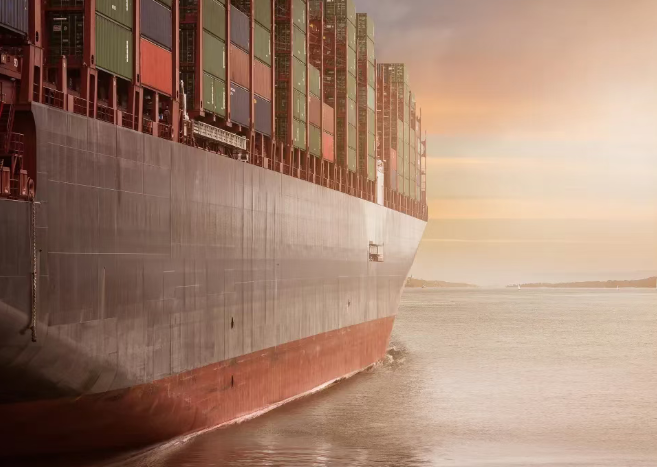
At the same 14.85 knots, the reactor line item alone can rewrite the shipbuilding accounts
At a comparable speed of 14.85 knots, Table 7 of the report gives per-ship capital expenditure (CAPEX) of $119.6 million for the conventional fuel ship, $148.5 million for the ammonia dual-fuel ship, $228 million for the low-cost nuclear power option and $582.3 million for the high-cost nuclear power option. These figures are inputs to an international shipping model published by the UK research team in 2026 and are denominated in US dollars. The data are drawn from different studies and industry estimates, and the report does not uniformly label a price base year for Table 7. The additional capital expenditure of the ammonia dual-fuel ship comes mainly from the engine and fuel storage system. The two nuclear power options use the same hull and electric propulsion system estimates, and the whole-ship price difference comes from the reactor line item.
The low-tier reactor is calculated at $2,578 per kilowatt of installed electrical power and represents the cost scenario expected to be achievable after multiple units are repeatedly built (Nth-of-a-Kind, NOAK). The high tier is calculated at $12,434 per kilowatt and represents the high-cost scenario of a first-of-a-kind design (First-of-a-Kind, FOAK). Repeated production has the opportunity to spread design and verification costs and can also improve suppliers' tooling utilization through stable orders. But when shipowners sign the first contracts, they need to pay for the equipment that can be delivered at that time. Shipyards likewise need sufficient orders to justify investing in dedicated production lines, personnel training and nuclear-grade quality management. Low prices require accumulated orders, yet orders must first appear at the high-price stage—this is the most difficult stretch for commercialization to cross.
Nuclear fuel can last a long time, but acceleration still comes at an installed-power cost
Nuclear-powered ships reduce dependence on conventional fuel resupply, which easily brings to mind faster liner services. But when speed increases, hull resistance and propulsion power demand still rise. Under the approximations used, the UCL model lets propulsion power rise roughly with the cube of speed. What is compared here is the propulsion load; whole-ship installed power must also account for other electrical loads. After the study raises the nuclear-powered ship from 14.85 knots to 25 knots, the required installed electrical power increases from about 36 MW to about 115 MW. Even using the optimistic per-kilowatt reactor price, whole-ship capital expenditure rises from $228 million to $490.9 million.
Whether a fast ship can recover this investment depends on whether the extra transport capacity can be sold. When a ship arrives early at port, berths, cargo handling and onward connections still have their own schedules. The revenue created by higher speed depends on additional voyages, actual container load and how much premium shippers are willing to pay for time. UCL allows high-speed ships to increase annual transport volume in the model, and the results still show that a larger reactor significantly pushes up costs. This conclusion is related to the model's assumption that reactor cost scales linearly with installed power. If real marine reactor quotations become available in the future, the first thing to test will be the price difference between power ratings.
Emissions compliance can generate revenue, provided surplus units can be sold
The draft International Maritime Organization (IMO) Net-Zero Framework (NZF) uses the life-cycle greenhouse gas intensity of marine energy as the basis for compliance. The draft sets different intensity targets, and ships below the corresponding thresholds can obtain Surplus Units for banking or transfer to ships with compliance gaps. Nuclear propulsion produces no carbon dioxide emissions from conventional fuel combustion while operating on board, but the emissions accounting of the entire energy chain still needs to consider upstream stages. Even if the final rules recognize the relevant surplus, revenue will still depend on the accounting method, the transferable quantity and buyer demand.
In the no-net-zero-framework scenario tested by UCL, the conventional fuel ship is always the lowest-cost option. The 14.85-knot nuclear-powered ship using the low-cost reactor comes closest to the ammonia dual-fuel ship but is still more expensive than the fuel ship. Only when the emissions policy set in the report and low reactor costs hold at the same time does the low-speed nuclear power option show a cost advantage from 2040. The high-cost reactor option remains uncompetitive overall. As of November 10, the Net-Zero Framework still awaited formal adoption, and the next session of the IMO Marine Environment Protection Committee was scheduled for November 30 to December 3. For shipowners, the surplus unit revenue in the model can be used for scenario calculations, but the amount that can be written into financing contracts must wait for rules and markets to take shape.
The first route must prove how many container slots can be delivered each year
The report also notes that the hull cost of the nuclear power option is based on a conventional ship and does not separately list nuclear-specific integration costs such as radiation shielding. Insurance for the nuclear-powered ship is estimated on the basis of the ammonia dual-fuel ship agent and does not separately account for reactor-specific maintenance, while decommissioning costs are roughly estimated as a certain proportion of reactor capital expenditure. Actual projects must also confirm port access, emergency arrangements and nuclear damage liability port by port, and include downtime caused by maintenance in the schedule. Even if the same ship obtains flag-state approval, its commercial value depends on how many destination ports it can call at on schedule and how many container slots it can sell after shielding and equipment occupy space.
The most valuable deliverable of the first-of-a-kind ship is a verifiable route cost account. It should list the actual integrated construction cost, insurable conditions, ports of call, planned downtime days and annual sellable container slots, and then separately list emissions compliance revenue. Only when the second ship can deliver comparable transport capacity at lower cost will shipowners have a basis to write the cost reductions from manufacturing learning into the next batch of orders. At that point, who bears the first-of-a-kind cost and who shares the mass-production benefits will also become a negotiable contract issue.
(This article is based on the total cost of ownership report of the UCL Energy Institute, the IMO Net-Zero Framework draft explanation and meeting materials, and was independently written after AI-assisted organization, aiming to explain the cost and policy boundaries of nuclear-powered merchant ships. The amounts in the text are scenario inputs in the report, and 2040 is the commissioning point in the model scenario.)
Disclaimer: Information republished from partner media, institutions or other websites is provided for reference and communication purposes only. It does not imply endorsement of its views or verification of its accuracy. Please contact us if any content infringes rights or requires correction.