
The Three Commercial Hurdles for Floating Nuclear Power: Shipyards Can Deliver Power Plants, but How Do Ports Take On Decades of Operation?
 Scan to share
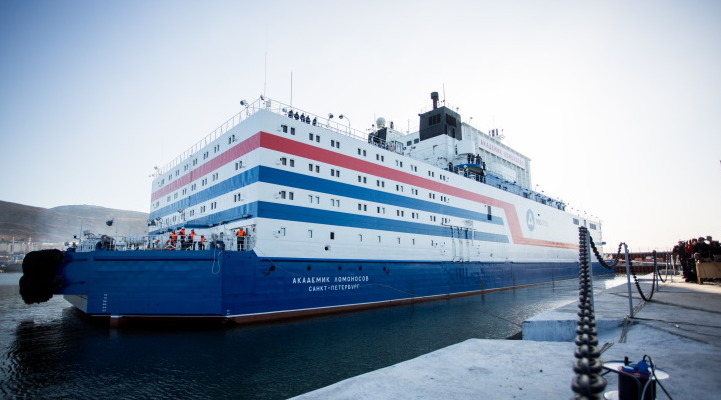
At the Russian Arctic port of Pevek, the Akademik Lomonosov supplies power to the Chukotka regional grid and provides district heating to the local town through onshore facilities. This floating nuclear power plant was first connected to the grid in December 2019 and entered commercial operation in May 2020. It carries two KLT-40S pressurized water reactors (PWRs), with a total gross electrical output of 70 MW. This case turned the basic concept of floating nuclear power into an operating reality, and it also makes the next question concrete. If another port were to introduce a similar plant, what exactly could be replicated: a shipyard manufacturing scheme, or an industrial system that operates together with the port, fuel, and emergency response systems?
The Nuclear Innovation Alliance (NIA) released a report on November 2, which drew attention from nuclear industry media on November 9. The report concentrates the commercial barriers to U.S. civilian floating nuclear power plants (FNPPs) in three areas: nuclear security, spent fuel and certain radioactive waste management, and nuclear damage liability. The three share one common feature. By the time the floating body is completed at the shipyard, these issues will still run through towing, berthing, operation, refueling, and decommissioning. Whether the first project can be replicated depends largely on whether the handoffs between these stages can form executable arrangements.
The harbor basin is both the location of the cold source and the interface between safety and security
After a floating power plant berths, heat flows along two paths. Part is converted into electricity in the turbine, and the remaining heat must be discharged through the cooling system. A heating-type plant can also deliver thermal energy to shore through an independent heat exchange loop. Even when the reactor is shut down, fission products in the fuel still release decay heat. The port scheme must therefore answer both how to cool during routine power generation and how to continuously remove residual heat under accident conditions. For cold ports, sea ice and water intake conditions deserve separate verification. For storm-prone sea areas, it is also necessary to assess whether waves, storm surges, and floating debris could simultaneously affect mooring, water intake, or onshore power supply. Seawater can serve as a cold source, but the engineering still needs to demonstrate that equipment can draw water under specified conditions and continuously transfer heat out.
The first barrier cited in the report is nuclear security, with emphasis on preventing deliberate sabotage and unauthorized approach. Ports have commercial vessels, tugs, workers, and contractors, and the waters also have routine navigation needs. Nuclear facility operators, coast guards, and port authorities each hold different resources and authorities, and the division of responsibility during towing and fixed berthing may also differ. The U.S. Nuclear Regulatory Commission and the U.S. Coast Guard signed a memorandum of cooperation on civilian maritime nuclear projects in June 2026, providing a framework for coordination. For a specific project, it is still necessary to clarify how to define managed waters, how to share information, and who commands onshore and on-water forces during an incident. The hull and reactor compartment can adopt a generic design, but this set of arrangements must match the traffic and emergency conditions of a specific port.
The floating body can be towed away, but spent fuel still needs somewhere to be received
Project developers often propose a division of labor in which the plant operates at the user's port and is sent back to a dedicated base during refueling or major overhaul windows. This has the potential to reduce the nuclear fuel handling facilities that each user port needs to build, but it concentrates refueling capability at a small number of service bases. Spent nuclear fuel with shorter shutdown time still has relatively high decay heat and must maintain cooling, shielding, and monitoring as designed. If fuel is unloaded at the user's port, the port must have the corresponding handling and temporary storage conditions. If it returns with the floating body, it must be demonstrated that the corresponding transport state meets requirements, and the receiving facility and its available windows must be secured.
For a port that supplies heat, a delay of one window at the service base could mean the plant's departure extends into the next heating season. Contracts need to specify what facilities supply power and heat during this period, who bears replacement costs, and how to handle the situation when the receiving party is temporarily unable to accept fuel. The Nuclear Innovation Alliance also separately lists Greater-Than-Class-C waste (GTCC) in the U.S. classification. Certain metal components near the core become activated after long-term neutron irradiation and may require packaging and disposal pathways different from spent fuel during decommissioning. A service arrangement capable of receiving spent fuel must also verify item by item whether it can cover these components. The so-called cost advantage of centralized services depends on whether cooling, transport, reception, and temporary storage can connect on schedule.
For the same plant, liability may change from towing to berthing
Imagine an in-harbor collision that damages the wharf, shuts down the plant's power generation, and suspends some operations in the port area. Hull repair, business interruption, and losses to other port users need to be clarified under their respective contracts, liability rules, and insurance terms. If the incident also involves nuclear damage, the applicable regime and funding sources for third-party compensation must be confirmed separately. The U.S. Price–Anderson Act provides a financial protection framework for public liability in nuclear accidents. The report notes that where a floating plant is located, what license it holds, and whether it is in operation or transfer will all affect judgments about the specific scope of protection. The interface between traditional maritime insurance and nuclear damage liability insurance is also something projects need to verify item by item.
These clauses directly affect project pricing. Power producers must estimate premiums, backup power, and outage risk; ports must verify the liability they may bear; and lenders need to judge who supports cash flow and debt if the project experiences a long outage. Comparing floating nuclear power with other power and heat options should use the same port, the same reliability target, and the same heating temperature, and should include berths, onshore heat networks, transmission, backup boilers, refueling logistics, and decommissioning preparation. Existing public information is insufficient to provide a unified cost per kWh or heat cost applicable to different ports.
The first project should deliver three verifiable operating arrangements
The most noteworthy aspect of the first U.S. commercial demonstration is whether it can simultaneously provide port joint exercise records, a spent fuel service arrangement with receiving conditions and time windows, and a compensation and financial protection scheme covering towing and berthing stages. If the plant also supplies heat, it should also explain the alternative heating arrangement during departure for refueling. Whether the next port can follow these practices will directly test how much of the time saved by shipyard series manufacturing can be converted into actual early project delivery.
(This article is based on a policy report by the Nuclear Innovation Alliance, U.S. Nuclear Regulatory Commission maritime nuclear project materials, and technical and operational materials of operating plants. It was independently written after AI-assisted organization and is intended to explain the engineering interfaces and commercial conditions of floating nuclear power. The discussion of U.S. institutions in the text corresponds to U.S. civilian projects, and the Pevek case is used to illustrate the actual operating form.)
Disclaimer: Information republished from partner media, institutions or other websites is provided for reference and communication purposes only. It does not imply endorsement of its views or verification of its accuracy. Please contact us if any content infringes rights or requires correction.