
Salem Nuclear Power Plant Proposes Approximately 200 MW Uprate: How Can Old Units Generate More Power?
 Scan to share
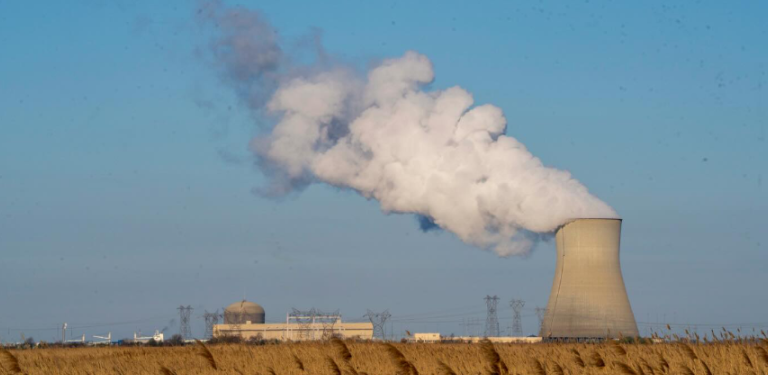
For a nuclear power plant to deliver 200 MW more to the grid, construction may begin with a steam component beside the turbine. Public Service Enterprise Group (PSEG) disclosed on November 2 that the two units at the Salem Nuclear Power Plant in New Jersey are jointly proposed to add approximately 200 MW of generating capacity, of which about 112 MW would belong to PSEG. Investor materials subsequently published by the company divide the modifications across 2027 to 2029, including both an approximately 7% increase in reactor thermal power and modifications to the steam-water loop. The former figure measures the additional capacity at the grid interface, while the latter measures the change in core heat output. Only by separating these two figures can one clearly see where the additional electricity from an old nuclear power plant comes from.
The First Stop for the Uprate Is the Turbine Building
The two Salem units use Pressurized Water Reactors (PWR). Heat generated in the core is carried by the primary loop to the Steam Generator, where it is transferred to an independent secondary loop. Secondary-loop steam drives the turbine and then condenses back into water in the condenser. Along this path, there are two ways to increase electrical power. The reactor can produce more heat, or the same steam can do more work in the turbine. Salem has scheduled both approaches into the same project, but construction and nuclear safety reviews can proceed in phases.
PSEG plans to modify the Moisture Separator Reheater in 2027 and 2028. After steam expands in the high-pressure turbine, a portion of it condenses into water droplets. Separation and reheating help improve the quality of steam entering the low-pressure turbine, reduce droplet erosion of the last-stage blades, and affect the work efficiency of the entire turbine. The company has scheduled the core thermal power increase and the Unit 2 low-pressure turbine modification for 2029. Phased implementation can take advantage of existing outage windows and also allow each stage to undergo separate performance verification. How much additional electricity is generated after a given stage is accepted must be assessed together with the core power, cooling conditions, and auxiliary power consumption at that time.
When Thermal Power Goes Up, Existing Safety Margins Must Be Recalculated
A key quantity constrained by a nuclear power plant operating license is reactor thermal power. After thermal power is increased, the steam generators must transfer more heat, and the main steam, feedwater, and condensing equipment must also match the new operating conditions. At the same time, engineers must determine whether the fuel at the locally hottest positions can continue to receive sufficient cooling, and whether, in postulated events such as pump trips or loss of feedwater, the protection systems can complete their response within the analytical acceptance boundaries. Even if the two units are of similar design, safety analysis bases must be re-established in light of each unit's equipment condition, measurement uncertainties, and historical modifications.
The U.S. Nuclear Regulatory Commission (NRC) classifies nuclear power uprates into different categories, distinguished by factors including the means of increasing power, the magnitude, and the unit's original design margins. The company's approximately 7% proposal gives an order of magnitude, but the specific licensing approach and the equipment covered by review still depend on the submitted licensing materials. Secondary-loop efficiency improvements also have their own constraints. Turbine blades, generators, transformers, and transmission lines must withstand new loads, while the actual backpressure at the condensing end varies with environmental and cooling conditions. For the same core thermal power, the net output ultimately delivered to the grid will change with these conditions.
200 MW of Installed Capacity: How to Convert It into Annual Generation
Based on 8,760 hours per year, if the full 200 MW increment can be realized and a simple scenario calculation is performed at a 90% incremental utilization rate, approximately 1.58 billion kWh could be generated per year. This is a dimensional conversion. Refueling outages, seasonal output variations, phased commissioning, and transmission constraints will all change the result. The 94.3% capacity factor for the first nine months of 2026 disclosed by PSEG reflects the historical operating basis of its nuclear fleet; directly applying it to Salem's future increment would conflate different units and different stages.
The economic appeal of brownfield modifications comes from assets that can continue to be used. The site, operating team, maintenance system, and grid connection facilities already exist, and the additional generation has the opportunity to spread part of the fixed O&M costs. However, the project still must pay for turbine equipment, design analysis, installation and acceptance, and possibly increased outage losses. Even without extending the total number of outage days, construction may occupy windows originally intended for other maintenance tasks. When comparing it with new-build generation, a reasonable basis is to compare the incremental electricity and capacity that can be delivered over the same delivery period at the same grid node, and to include licensing risk and electricity not generated during modifications in the cost. The materials disclosed this time do not provide a sufficiently detailed total investment for the Salem uprate, so the project's incremental levelized cost of electricity cannot be reliably calculated.
More Critical Than Design Figures Is the Net Output After Modification
There are three subsequently verifiable milestones for Salem. After the steam-water system modifications, the first is to see how much net output increases under the same thermal power and comparable cooling conditions. After the thermal power license changes, the next is to see which equipment verifications and power ascension tests the units have completed. Finally, availability over a complete operating cycle must be examined to determine whether the new equipment brings additional maintenance burden. For this old plant, the commercial value of 200 MW will be determined by whether each outage window can be completed on schedule and whether these increments can be reliably delivered when the grid needs them.
(This article is based on quarterly and investor materials submitted by PSEG to the U.S. Securities and Exchange Commission and on NRC uprate classification materials, and was independently written after AI-assisted organization. The annual generation figures in the article are scenario calculations under explicitly stated assumptions, intended to explain the physical and business logic of uprating existing nuclear power plants. Project commissioning timing and effects are subject to licensing, acceptance, and operating data.)
Disclaimer: Information republished from partner media, institutions or other websites is provided for reference and communication purposes only. It does not imply endorsement of its views or verification of its accuracy. Please contact us if any content infringes rights or requires correction.