
Singapore's Nuclear Energy Preparations Enter a New Phase: No Decision Yet to Build a Plant, Why Build Judgment Capacity First
 Scan to share
When a country prepares to develop nuclear power, the first thing to appear may not be a reactor order. It may instead first establish a research team to analyze technical options, train regulatory personnel, and study how to handle spent fuel decades from now. This work is far from the construction site, yet it determines whether the country can understand the proposals put forward by suppliers in the future and whether it has the capacity to bear the corresponding responsibilities.
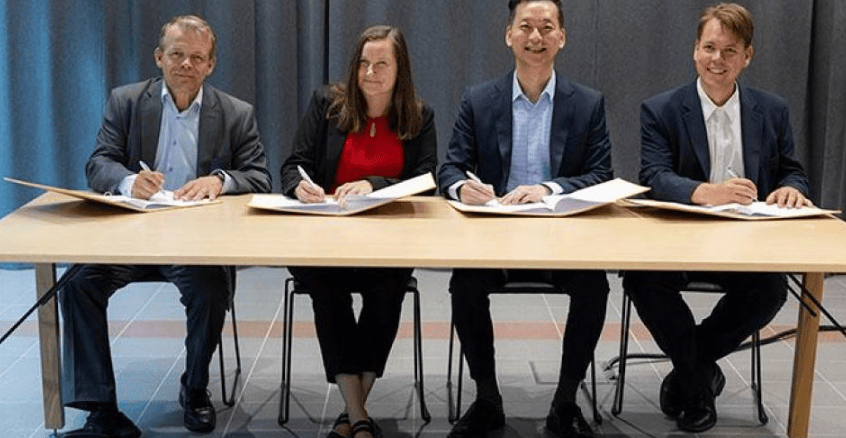
On October 30, the VTT Technical Research Centre of Finland and the Singapore Nuclear Research and Safety Institute (SNRSI) under the National University of Singapore announced a five-year cooperation arrangement covering reactor technology assessment, safety analysis, radioactive waste and spent fuel management, and other areas. Singapore simultaneously made clear that it has not yet decided to adopt or deploy nuclear energy.
What makes this development noteworthy is that it separates "studying nuclear power" from "deciding to build a nuclear power plant." For countries considering entering the nuclear energy field, building independent judgment capacity first can both support future adoption of nuclear energy and provide a basis for deferring or abandoning a particular option.
Being able to buy a reactor does not mean having the conditions for nuclear power operation
Nuclear power equipment can be acquired through international cooperation, but national-level responsibilities cannot be outsourced along with the equipment. Whether a site is suitable, whether the operating organization has the capability, whether regulatory requirements are enforced, and whether waste and emergency arrangements are adequate all require continuous judgment by domestic institutions.
The International Atomic Energy Agency's Milestones Approach for nuclear power infrastructure divides the preparation work for a new nuclear power program into different phases, covering 19 infrastructure issues including legislation, regulation, human resources, grid, financing, and waste management. Infrastructure here includes both facilities that can be built and institutional and professional capabilities.
Singapore plans to undergo an Integrated Nuclear Infrastructure Review (INIR) Phase 1 mission in 2027. The Singapore government explains that this phase assesses whether the country can make an informed decision, rather than deciding for Singapore whether to deploy nuclear power, nor approving any particular reactor type.
This distinction has practical significance. The review may identify human resource or institutional conditions that need to be strengthened, enabling policy choices to be based on clearer boundaries of cost and responsibility. Only by identifying these gaps can technology comparisons avoid remaining limited to power output, building dimensions, and supplier quotations.
Small Modular Reactors Still Require Complete Safety Demonstration
One reason Small Modular Reactors (SMRs) have attracted attention is that individual modules are smaller in scale and can adopt different construction and deployment approaches. But "small" itself cannot answer site, safety, and economic questions; specific capabilities still depend on the design.
Nuclear reactors need to remove decay heat after shutdown. Some advanced designs use natural circulation, gravity, or larger heat capacity to improve accident response, but these capabilities all have applicable conditions. Evaluators need to understand where the heat ultimately goes, how extreme environments would affect this process, and which equipment and operations must remain available.
For highly urbanized areas, site discussions also involve surrounding population, industrial facilities, transportation, and emergency arrangements. Even if suppliers propose smaller facility footprints, the basis of their analysis still needs to be reviewed; conclusions from specific projects in other countries cannot be directly applied locally.
Therefore, Singapore's cooperation with VTT on safety and technology assessment goes further than simply expressing interest in a particular reactor type. Its potential value lies in cultivating a team capable of asking questions, checking calculations, and identifying evidence gaps. However, a memorandum of cooperation is only a working framework; how much capability is actually developed still depends on how research, training, and technical support are sustained.
Nuclear Economics Must Be Compared Within the Complete Energy System
Countries considering nuclear power typically seek energy that is stable, low-carbon, and capable of long-term supply. But whether nuclear power is economic cannot be determined by comparing fuel prices alone. Construction investment, financing conditions, operation and maintenance, backup arrangements, as well as decommissioning and waste management all affect the final cost.
The smaller per-project investment scale of SMRs may reduce the one-time financial commitment, but does not automatically mean cheaper electricity per unit. How economies of scale in equipment manufacturing, batch orders, on-site construction, and licensing costs are allocated requires specific projects to demonstrate. Future cost targets given by developers must also be distinguished from contracts already signed and actual construction results.
Grid conditions are equally important. When a larger unit goes offline, the system needs corresponding backup and regulation capacity; using multiple smaller modules can change the scale of single power loss, but also increases the number of modules and their operation and maintenance arrangements. Technology choices need to consider both the unit and the grid, not just what is inside the reactor.
This is also why early-stage capacity building has economic value. A professional team can compare different options under consistent boundaries of supply reliability, financing, and life cycle, identifying which costs already have evidence and which remain assumptions. The return on research investment is first reflected in reducing the possibility of erroneous decisions.
Only by Starting with Waste Management Can Long-Term Responsibilities Be Clearly Seen
This cooperation includes radioactive waste and spent fuel management within its scope, indicating that nuclear power preparation needs to cover the complete life cycle. After a reactor operates, fuel and some equipment will form radioactive materials requiring continuous management. How storage, transport, processing, and final disposal are arranged requires both a technical pathway and clear responsibilities and funding sources.
These issues cannot wait until the first unit is near commissioning. What fuel is used, how long the refueling cycle is, and in what form spent fuel is stored will all affect subsequent facilities and licensing. Even when utilizing international services, legal responsibilities and long-term guarantees beyond contracts need to be clarified.
For the public, understanding nuclear energy choices also requires this type of specific information. Communication cannot only showcase the advantages of safety design; it should also explain issues still under study, the costs of different options, and how the government plans to handle uncertainties. Publishing research results is an important condition for enabling society to participate in judgment.
Whether Singapore's current round of preparation will ultimately lead to nuclear power construction currently has no definitive answer. What is more worth observing going forward is whether research can produce public, comparable technical conclusions, whether domestic teams can independently review proposals, and whether full life-cycle responsibilities can be clearly defined. With these capabilities in place, whatever energy pathway is ultimately adopted, decisions will have a solid basis.
(This article is based on public information from Finland's VTT and Singapore's energy and environmental authorities, combined with IAEA nuclear power infrastructure methodology materials, and was produced with AI-assisted information verification, mechanism explanation, and independent writing. It aims to explain why potential new nuclear entrants need to build assessment capacity in advance; research cooperation, talent programs, and international reviews do not equal a decision to deploy nuclear power, nor do they represent that any specific reactor type has obtained local licensing.)
Disclaimer: Information republished from partner media, institutions or other websites is provided for reference and communication purposes only. It does not imply endorsement of its views or verification of its accuracy. Please contact us if any content infringes rights or requires correction.