
Haiyang Nuclear Power Phase III Commencement: From First Concrete to the Real Threshold of China's Batch Nuclear Power Construction
 Scan to share
The moment a nuclear power plant first enters public view is often when concrete begins to be poured. The reactor pressure vessel is not yet on site, nor is the turbine operating, but rebar, embedded parts and construction equipment have already been organized according to design. Part of the structural foundation on which decades of subsequent operation depend begins to take shape here.
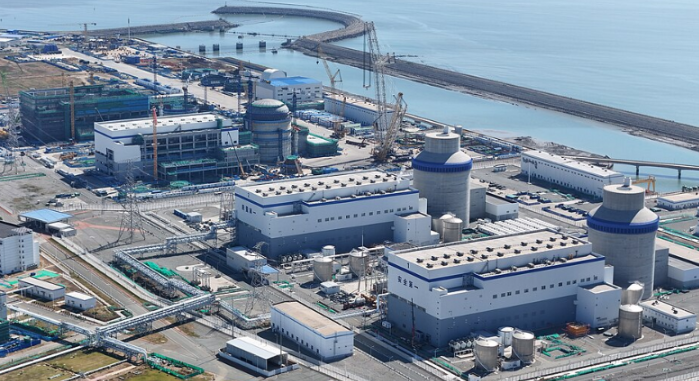
On October 31, the nuclear island of Unit 5 at Shandong Haiyang Nuclear Power Plant began pouring first concrete, marking the commencement of the Haiyang Nuclear Power Phase III project. Phase III plans to build two units, Units 5 and 6, adopting domestically produced third-generation advanced passive pressurized water reactor technology. For a site that already has operating and under-construction units, the value brought by new units is not only the future increase in generating capacity, but also a test of whether existing experience can be translated into more stable construction efficiency.
What inspections had the project undergone before first concrete
First concrete for the nuclear island, known in English as First Concrete Date (FCD), is an important construction milestone in nuclear power projects. The commencement referred to here has clear engineering and regulatory meaning; it is not the first time construction machinery appears on site. Site preparation, investigation, design and a series of reviews had already been carried out beforehand.
The construction permit documents for Haiyang Units 5 and 6 are dated October 29. The National Nuclear Safety Administration confirmed that Unit 5 meets the corresponding pouring conditions, and set the first nuclear island concrete pour for Unit 6 as a control point, requiring release before work may proceed. This shows that even when two units of the same project jointly obtain a construction permit, they must still separately satisfy specific construction conditions.
Earlier on-site inspections went deeper into areas such as the concrete batching plant, laboratory, raw material storage and rebar processing. The inspection reports recorded both preparation status and rectification requirements. These contents reveal a basic logic of nuclear power construction: safety requirements must be translated into inspectable construction activities; correct design drawings must also be matched by on-site manufacturing and installation as required.
After concrete pouring, some rebar, embedded parts and internal interfaces will be difficult to access directly. Therefore, material inspection, position confirmation and record completeness before pouring bear on whether project quality can be demonstrated later. The importance of first concrete comes from the fact that it connects design commitments with permanent structures.
The capability of passive safety must be delivered through manufacturing and installation
Passive Safety Systems use physical mechanisms such as gravity, natural circulation and stored energy to achieve safety functions under specified conditions. They can reduce dependence on AC power and active equipment in certain accident response processes, but this does not mean the systems require no maintenance or can operate outside design conditions.
After reactor shutdown, decay products in the fuel continue to release heat. Whether residual heat can be continuously removed is one of the core issues of safety design. Establishing natural circulation requires suitable temperature differences, flow resistance and equipment layout; relying on gravity-fed water also requires appropriate height, effective water volume and reliable flow paths. The physical principles themselves are stable, but engineering implementation requires every interface to meet the conditions.
This creates a direct link between foundation construction and safety design. Equipment supports, piping installation space and embedded positions affect subsequent installation and inspection. Even if a certain deviation can be handled through design changes, it may increase verification and construction work. Therefore, early construction quality bears on both safety functions and construction progress.
For domestically produced third-generation nuclear power, maturity cannot be judged only by whether equipment can be manufactured, but also by whether design, procurement, civil construction, installation and commissioning can remain consistent. Only by reliably connecting all these links can the design capability of passive technology be translated into whole-plant performance.
Continuing construction at the same site: how experience translates into cost advantages
Subsequent Haiyang units can draw on the personnel, management and supply chain experience accumulated at the existing site. For construction teams, similar structures and equipment are no longer entirely unfamiliar; for the owner, problems exposed in earlier units can feed into design reviews and procurement requirements. This learning effect is an important economic source of batch nuclear power construction.
But experience does not automatically become savings. Problems in earlier projects need to be accurately recorded, analyzed and incorporated into subsequent documents; personnel turnover, supplier changes and design adjustments may also cause existing experience to lose its applicable conditions. Only by continuously reducing repetitive errors will batch construction demonstrate repeatable efficiency.
Nuclear power Capital Expenditure includes not only the prices of steel, concrete and equipment, but is also affected by construction time. Extended schedules mean increased capital occupation, delayed revenue, and possibly more on-site management and equipment storage work. Therefore, one focus of nuclear power cost control is improving the credibility of plans.
However, necessary inspections must not be compressed in exchange for superficial progress. Timely rectification after problems are found may sometimes increase local schedule duration, but can avoid later rework. Construction efficiency should be judged by plan completion, quality problems and the effectiveness of their closure, not merely by comparing the speed of a particular lifting or pouring milestone.
As the site scale expands, system capabilities must grow in tandem
The electricity value of new units must ultimately be realized through transmission, dispatch and operational arrangements. Concentrated construction at the same site helps form a specialized operations and maintenance system, but maintenance scheduling for multiple units, spare parts requirements and personnel allocation will also become more complex. Increasing installed capacity is only part of expanding energy supply capability.
If nuclear heating is further developed, heat network investment, transmission distance and seasonal load must also be addressed. Generating capacity and heating potential cannot simply be added together as already realized benefits; specific projects still need to determine heat source configuration, backup plans and user demand. The comprehensive utilization value of a large site must be delivered item by item through supporting projects.
What is worth watching next for Haiyang Phase III is whether construction quality, delivery of key equipment and installation and commissioning can be linked according to plan, and whether earlier experience truly reduces repetitive problems. The competitiveness of China's batch nuclear power construction will be reflected more in the stable delivery of multiple consecutive projects: each unit can form verifiable quality records, and each repeated construction can retain and improve effective experience.
(This article is based on information on the commencement of Haiyang Nuclear Power Phase III, licensing and inspection documents of the National Nuclear Safety Administration, and publicly available technical materials on pressurized water reactor safety systems. It was independently written with AI-assisted material verification and principle explanation. It aims to explain the relationship between nuclear power commencement milestones, engineering quality and batch construction; the new units are still in the construction stage, and subsequent schedule, cost and comprehensive utilization benefits cannot be replaced by planning targets.)
Disclaimer: Information republished from partner media, institutions or other websites is provided for reference and communication purposes only. It does not imply endorsement of its views or verification of its accuracy. Please contact us if any content infringes rights or requires correction.