
First Concrete Poured for Unit 4 of Zhejiang Sanao NPP: How Can a Single Site Balance Construction, Commissioning and Operation?
 Scan to share
When Unit 4 broke ground, Unit 1 was already supplying power to the grid
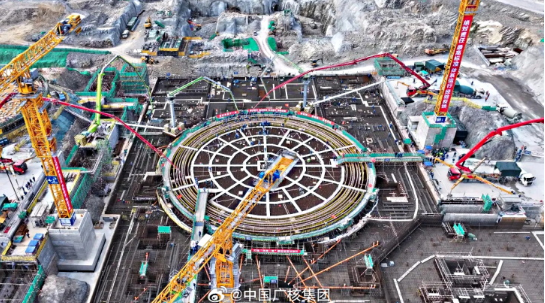
At 8:28 on November 10, first concrete was poured for the nuclear island of Unit 4 at the Sanao nuclear power project in Cangnan, Zhejiang, marking the start of main construction. At the same site, Unit 1 entered commercial operation on April 29, Unit 2 has completed its first fuel load, and Unit 3 began main construction of its nuclear island in December 2025. The four Hualong One units are respectively in operation, startup preparation and construction. For site managers, Sanao now has to deal with two types of issues simultaneously: how to pass on the construction experience of identical units to the next one, and how to protect systems already in operation or under commissioning from interference by adjacent construction.
First concrete has clear engineering and licensing significance. Prior site preparation, surveying and setting-out, rebar and embedded works must form verifiable records before pouring. Once the foundation is formed, the positions of nuclear island equipment and main structures are progressively fixed along the survey datum. If a civil deviation is only discovered when equipment is being positioned, the cost of correction rises markedly. At the same time, first concrete only advances the project to main construction; structural works, equipment installation and system commissioning still lie ahead. The start date provides a schedule starting point, and subsequent milestones depend on how these processes are linked.
Replicating an identical unit mainly means replicating interfaces and experience
When identical reactor types are built consecutively at the same site, design and construction teams can reuse mature drawings, tooling and acceptance procedures. Take equipment positioning as an example: the earlier-built unit can leave measured records of lifting space, embedded interfaces, delivery sequence and construction preparation time. Subsequent units can use these records to check their construction organization and potentially reduce waiting at work fronts. If a certain type of embedded part was once adjusted because the civil drawings and equipment interfaces were insufficiently coordinated, Unit 4 can recheck the relevant positions before pouring. The earlier interface problems are found, the less impact they will have on subsequent installation.
Reuse still requires configuration management. When a drawing is revised, it must be clear whether the change applies to other units, which version is being used on site, and whether equipment already procured can match the revised interface. If a change relates to the construction status of different units, separate records must be kept. Nuclear power construction requires traceability among equipment, drawings, technical requirements and actual installation status. The man-hours truly saved by series construction come from getting validated experience into construction procedures faster while keeping each unit's engineering records complete.
Sharing construction resources also means identifying mutual impacts in advance
At a multi-unit site, transport roads, lifting crews, warehousing and some shared utilities may be interrelated. If two units need heavy-component transport at the same time, on-site roads and lifting windows must be coordinated. Units in operation have their own inspection, maintenance and emergency arrangements, and applicable access conditions must be preserved. Construction activities such as temporary power supply, water operations and hot work must also be checked for possible effects on the safety functions or commissioning status of adjacent units. Before a commissioning organization starts a system, it must confirm that its boundaries, temporary wiring, valve status and work permits all meet current test requirements.
The economic value of the site is also tied to these constraints. Consecutive construction can improve the utilization of tooling and specialized crews, and equipment procurement can form more stable batches. But if key processes overlap excessively, a specialized crew reworking on the earlier unit may leave subsequent units waiting in parallel. To measure the effectiveness of series construction, it is advisable to compare actual durations, design changes and rework counts for similar processes, and to check the occupation of shared resources by different units. A single construction-start milestone can hardly answer these questions. Only after the project enters equipment installation and subsystem handover can it be seen whether the benefits of coordination are sustained.
For Unit 4, the next step is to see how civil works hand over conditions to installation
To judge whether Unit 4 can deliver the advantages of identical-unit construction, three records can be tracked. Whether measurement deviations of embedded interfaces are handled before installation, whether long-lead equipment arrives within available lifting windows, and whether the operation and commissioning of adjacent units require extra adjustments due to construction. If these records show that work fronts are handed over on schedule, rework is reduced, and operating boundaries remain clear throughout, then the experience of the earlier-built units has truly been converted into schedule gains for the fourth unit.
(This article is based on the construction-start information for Sanao Unit 4 and the construction permit notice of the National Nuclear Safety Administration, and was independently written after AI-assisted organization. Unit milestones are disclosed facts; multi-unit resource coordination and isolation requirements use general engineering analysis, and specific construction organization is subject to project documents.)
Disclaimer: Information republished from partner media, institutions or other websites is provided for reference and communication purposes only. It does not imply endorsement of its views or verification of its accuracy. Please contact us if any content infringes rights or requires correction.