
Search Results
Keyword:nuclear icebreaker
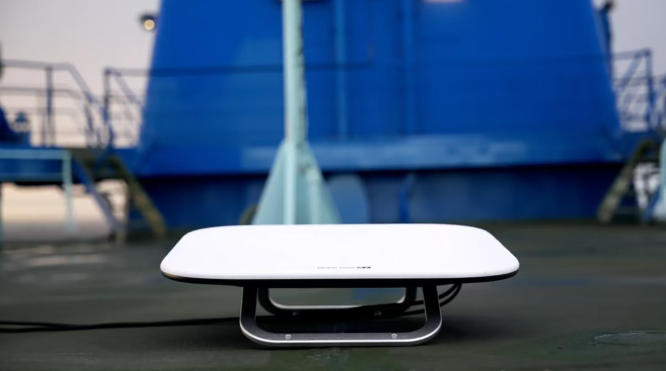
Russia's Bureau 1440 tests satellite communications on nuclear icebreaker
Recently, the Russian private aerospace company Bureau 1440, part of ICS Holding, together with the Northern Sea Route Directorate, the Federal State Unitary Enterprise Atomflot under the State Atomic Energy Corporation Rosatom, and the Federal Medical-Biological Agency (FMBA), successfully completed field tests of a new-generation domestic low-orbit satellite communication system under actual navigation conditions along the Northern Sea Route. The tests were conducted aboard the Project 22220 universal...
2026-11-18

Russia's Leningrad Nuclear Icebreaker to Be Launched in December
Recently, Russia's Baltic Shipyard (Baltic Shipyard) is stepping up construction of the Leningrad, the fifth Project 22220 universal nuclear-powered icebreaker, with a launching ceremony scheduled for December 3 this year, Russian Nuclear Icebreaker Fleet Day. It is noted that choosing December 3 for the launch carries profound historical commemorative significance. On December 3, 1959, the world's first nuclear-powered icebreaker, the Lenin, officially raised its flag, and this day was established as Russian Nuclear Icebreaker Fleet Day. As the fifth production vessel of Project 22220, the smooth progress of the Leningrad marks that Russia's polar nuclear-powered ship construction is maintaining...
2026-11-04

Russia's Nuclear Icebreaker Leningrad Completes Anti-Icing System Installation
Recently, the Baltic Shipyard, a subsidiary of Russia's United Shipbuilding Corporation (ОСК), announced that it has successfully installed the anti-icing device turbo-compressor unit for the Leningrad, the sixth nuclear-powered icebreaker of Project 22220 currently under construction. It is reported that this domestically produced high-performance compressor can provide large-flow compressed air, forming an air-water curtain through underwater exhaust ports on the hull, thereby significantly reducing friction between the hull and ice and scouring away ice debris and accumulated snow. Combined with the 45 mm thick special steel used in the hull's ice belt, this anti-icing system can ensure that the nuclear-powered vessel maintains optimal navigation performance and structural safety when operating in the extreme cold latitudes of the Arctic. The Leningrad is Russia's...
2026-10-30