
Indiana University Team Participates in Large Hadron Collider Detector Upgrade
 Scan to share
On July 28, 2026, physicists from Indiana University are participating in an international scientific collaboration to install new particle detector components at the Large Hadron Collider (LHC) at CERN, located near Geneva, Switzerland, to enhance scientists' ability to study the fundamental building blocks of the universe.
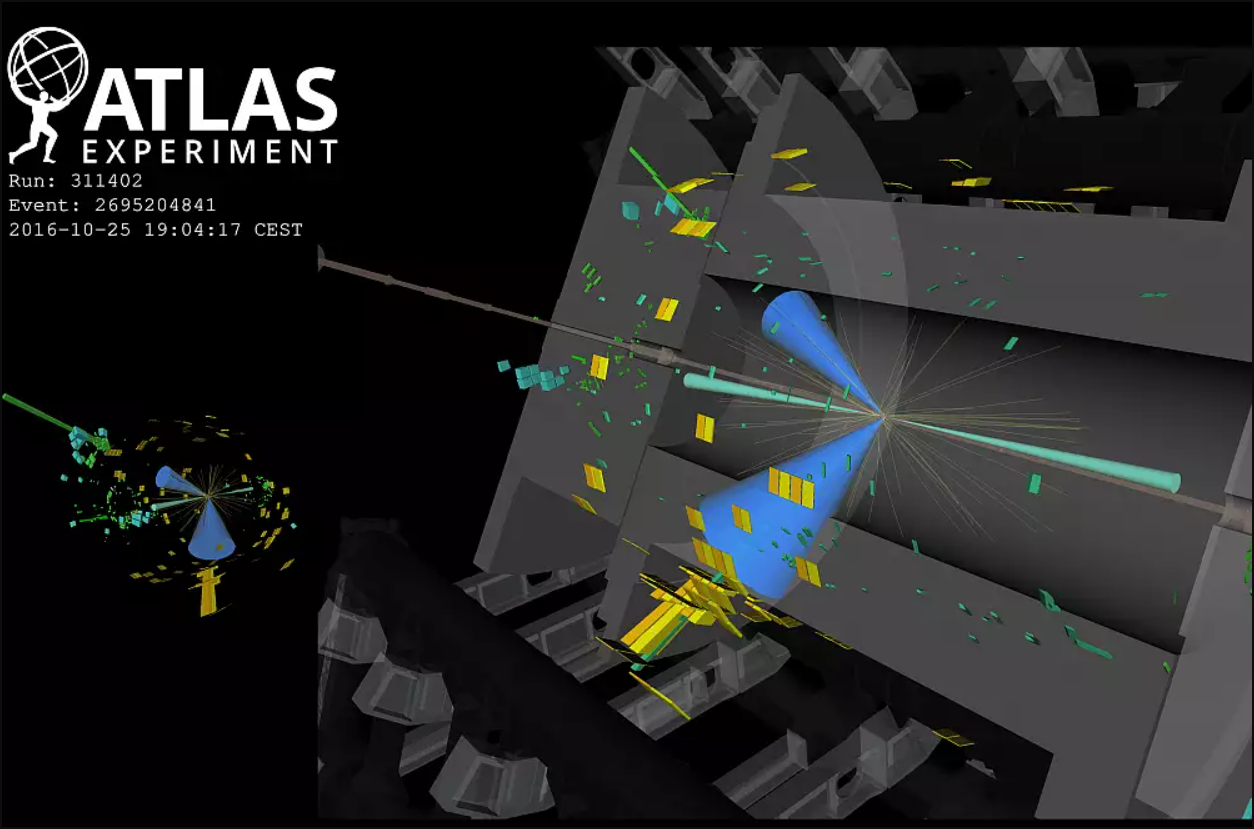
The Large Hadron Collider is currently the world's largest particle accelerator, which helps researchers explore the structure of matter and fundamental interactions by colliding protons at near-light speeds and analyzing the particles produced in the collisions. Indiana University is a member of the ATLAS experiment collaboration, which comprises approximately 245 institutions from over 40 countries, with thousands of scientists jointly participating in related detection and measurement work.
Professor Harold "Hal" Evans of the Department of Physics in the College of Arts and Sciences at Indiana University serves as the deputy manager for work related to this upgrade project. The U.S. share of the project is approximately $300 million. Indiana University has been involved in the ATLAS experiment since it began operations in 2009.
According to reports, the LHC has just concluded its third operational run, which lasted several years. During this run, the amount of collision data recorded by the LHC has more than doubled the total data from the first and second runs combined. Next, the LHC will enter a shutdown maintenance period of about three years, during which staff will rebuild the equipment to produce higher-intensity proton beams. Indiana University and its partners will use this time to install detector upgrade components that have been designed and manufactured over the past several years.
A key challenge of this upgrade is data processing capability. Evans stated that after the upgrade is completed, the detector will need to process approximately ten times more collision data per second than it currently does. The Indiana University team is designing algorithms that can run on dedicated detector chips, using machine learning technology to determine within a billionth of a second which collision data is worth keeping and which should be discarded. Such real-time filtering technology for massive, high-speed data may also be applied in relevant scenarios beyond the ATLAS system in the future.
From a scientific perspective, researchers hope to use the upgraded LHC to further test the Standard Model of particle physics. The Standard Model can predict many experimental results with high precision, but it still cannot explain dark matter or some peculiar behaviors of neutrinos. Scientists also hope to find new clues beyond the Standard Model through higher-performance detection systems.
One of the key focuses of Evans' team is double Higgs boson events. Such events are extremely rare, and precisely measuring their occurrence rate can help reveal the fundamental structure of the universe. Researchers also hope to use related experiments to search for signs of theories such as supersymmetry. Supersymmetry theory posits that every known particle may have a heavier partner particle; if this theory holds true, it could help explain the composition of dark matter.
Evans stated that while humanity already has a fairly deep understanding of the fundamental building blocks of the universe, the upgraded Large Hadron Collider will help scientists continue to ask: whether there are still undiscovered fundamental building blocks, and how these discoveries might affect our understanding of quantum mechanics and the way the universe operates.
Disclaimer: Information republished from partner media, institutions or other websites is provided for reference and communication purposes only. It does not imply endorsement of its views or verification of its accuracy. Please contact us if any content infringes rights or requires correction.